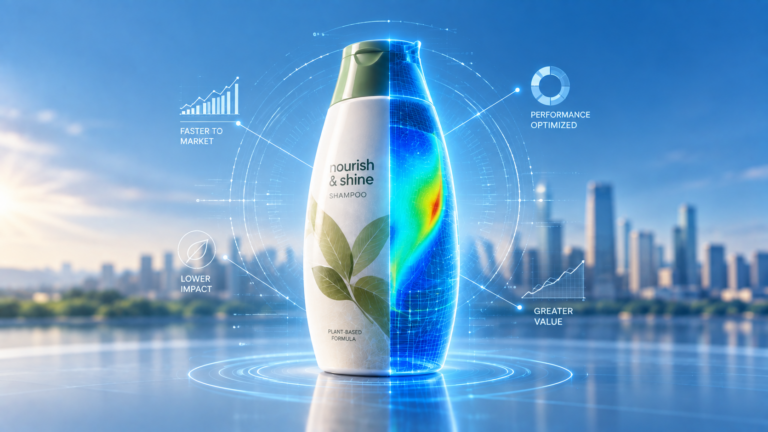
Quick answer: The EU Packaging and Packaging Waste Regulation (PPWR) is accelerating a shift toward the Generative Economy, where packaging becomes a circular, data-rich asset. PPWR’s challenges can be an inflection point to address end-to-end packaging workflows. Dassault Systèmes’ 3DEXPERIENCE platform, Industrial AI and Virtual Twin technology enable cross-industry teams to design compliant, cost-efficient sustainable packaging faster than traditional methods allow.
Sustainability has long been treated as a cost center and a compliance burden that constrains manufacturing rather than drives it forward. The EU Packaging and Packaging Waste Regulation (PPWR) challenges that assumption directly. Rather than simply raising the bar on recycling and material use, PPWR is catalyzing what Dassault Systèmes describes as the Generative Economy: an industrial model where companies generate value while simultaneously regenerating natural resources.
The urgency is real. According to Morningstar Sustainalytics (2024), 91% of companies are not on track to meet their stated greenhouse gas emissions targets. Amongst others, because of continued reliance on plastics and single-use formats. By 2028, 75% of organizations with voluntary sustainable packaging targets are expected to abandon those commitments in favor of legislative mandates like PPWR and Extended Producer Responsibility (EPR). Voluntary ambition isn’t enough.
At the 2025 Sustainable Packaging Summit in Utrecht, Willemijn Peeters, CEO of Searious Business, framed the moment precisely: “Move beyond ticking boxes to create a better box.” That shift from minimum compliance to maximum value creation is exactly what PPWR demands. This post explores how cross-industry collaboration, Virtual Twin Experiences and the 3DEXPERIENCE platform convert regulatory pressure into competitive advantage.
Why No Industry Can Achieve PPWR Compliance Alone
Under PPWR, packaging can no longer be designed in isolation. It must become a circular, data-rich asset connecting multiple industrial sectors. Yet the barriers are structural. According to McKinsey & Company (2023), the top obstacles to sustainable packaging adoption include a lack of affordable materials, uncertain structural performance and an unreliable supply of quality recycled resources. None of which a single organization can resolve on its own.
The World Economic Forum (2024) confirmed that strategic cross-industry partnerships rank among the most critical enablers of a resilient circular transformation. In practice, this means:
- Energy & Materials and Consumer Packaged Goods & Retail: PCR content targets require chemical suppliers to contribute validated, molecular-level data on bio-polymers directly into the packaging design process, verifying structural viability before any physical prototype is made.
- High-Tech and Consumer Packaged Goods & Retail: PPWR’s Digital Product Passport (DPP) mandate demands a robust digital backbone that manages complex Bills of Materials and maintains an unbroken digital thread across the entire product lifecycle.
- Industrial Equipment and Transportation & Mobility: Reusable packaging requirements and strict void-space limits force machinery builders and logistics providers to co-innovate by using virtual factory simulation to confirm performance before a single prototype is built.
- Public Infrastructure, Waste Management and Consumer Packaged Goods & Retail: Integrating real-time Life Cycle Assessment (LCA) data into early-stage eco-design aligns material choices with what recycling infrastructure can actually process.
How the 3DEXPERIENCE platform Connects the Packaging Ecosystem
Connecting these industries requires a unified source of truth and frictionless data exchange to foster open innovation. Navigating rapidly evolving packaging rules demands new investments in data management, package design, and compliance resources. One possible answer lies in moving from static models to collaborative Virtual Twin Experiences on Dassault Systèmes’ 3DEXPERIENCE platform.
A Virtual Twin Experience goes far beyond basic geometry. It’s a scientifically accurate, executable replica of the real world that lets organizations simulate “what-if” scenarios. It does not just model the physical package, but the entire value chain. It connects all stakeholders from raw material extraction to end-of-life, enabling end-to-end traceability and circular outcomes.
Teams can dynamically test the structural, operational and financial impacts of their sustainable choices before committing a single physical resource. Ultimately, 3DEXPERIENCE connects the entire ecosystem by bringing the chemical supplier’s molecular resin data, the manufacturer’s filling lines, and the municipal recycling capabilities into one shared digital environment.

Industrial AI and European Sovereign Infrastructure: the Enabling Layer
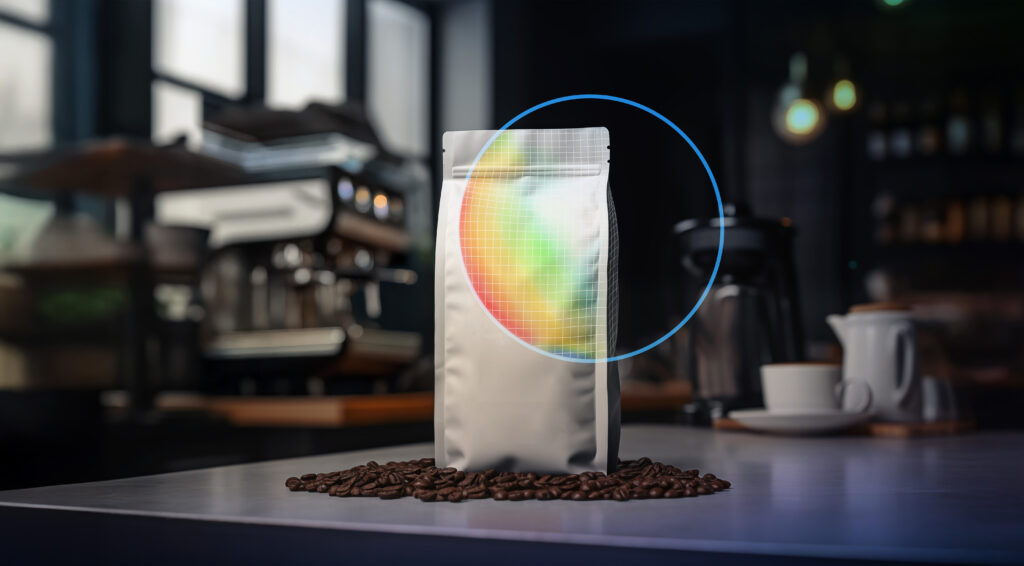
Designing for PPWR compliance with new bio-polymers requires a significant leap in computational power. Standard AI tools can’t guarantee that a sustainable package will survive a drop test or perform reliably on a high-speed manufacturing line. Dassault Systèmes’ Industrial AI is different; It’s grounded in science, physics and deep industry knowledge.
Through a strategic partnership with NVIDIA, Dassault Systèmes combines supercomputing infrastructure with precise physics-based simulation. Engineers can co-design alongside intelligent algorithms to optimize material thickness, simulate the non-linear behaviors of recycled plastics under stress and virtually validate PPWR compliance metrics. This trusted, data-driven approach empowers industry leaders to explore thousands of design variations in a fraction of the traditional time, cutting design cycles and accelerating the transition into the Generative Economy.
Cross-industry co-innovation also demands trust. When a global brand owner, a polymer provider and a packaging converter collaborate in a shared digital environment, intellectual property and data security are non-negotiable. The OUTSCALE European sovereign cloud addresses this directly. By hosting AI-driven workflows on sovereign infrastructure, companies ensure strict compliance with EU data regulations while exchanging validated material science data and manufacturing parameters without exposing proprietary trade secrets (OUTSCALE, 2026).
The Business Case for Virtual Twin Technology in Packaging
The economic and environmental case for this transformation is substantial. According to a joint study by Accenture and Dassault Systèmes (2021), Virtual Twin technology represents an opportunity to generate $1.3 trillion in economic value and reduce global emissions by 7.5 gigatons by 2030. For packaging teams, the value appears across three dimensions:
- Material cost reduction: Virtual testing identifies structural efficiencies that lower overall packaging material costs by 30% – 50% (Dassault Systèmes White Paper, CPG & Retail).
- Faster time-to-market: Eliminating reliance on physical prototypes compresses traditional 12-to-18-month design cycles down to nine months (Dassault Systèmes SIMULIA Blog) and cuts overall development time by up to 50% (Dassault Systèmes Executive Playbook, 2023).
- Compliance by design: Up to 80% of a product’s environmental impact is determined during the design phase (Dassault Systèmes ENOVIA). Embedding LCA and DPP data directly into the digital thread ensures PPWR compliance from the very start – not as an afterthought.
Where to Start: A Four-Step Transformation Path
The path toward profitable, compliant packaging follows a structured progression (Dassault Systèmes Executive Playbook, 2023):
- Establish Unified Data and Collaboration: Break down internal silos. Move from static specifications to a centralized platform managing cross-functional collaboration and standard product definitions.
- Virtual Material Verification: Work with chemical suppliers to conduct virtual lab testing at the molecular level. Assess the performance and safety of new bio-polymers and PCR resins before investing in physical materials.
- Simulation-Driven Eco-Design: Use Industrial AI and virtual simulation to test packaging designs against real-world drop tests, top-load stress and line-speed stability, confirming manufacturability before any prototype is built.
- Traceability for Global Compliance: Create an unbroken digital thread that automatically generates verifiable DPPs for consumers and regulators.
For organizations without the internal IT infrastructure to build these models from scratch, Virtual Twin as a Service (VTaaS) provides an expert-managed path forward. VTaaS accelerates the creation of a factory’s virtual twin by a factor of 10 and compresses time-to-ROI from over a year down to just weeks or months (Dassault Systèmes 3D Universes, 2026).
Real-World Results
This isn’t theoretical. A global FMCG leader used the 3DEXPERIENCE platform to scale its PCR content ratio from 10% to 76%, achieving an 18% material mass reduction per bottle and avoiding 240 metric tons of CO2 equivalent per 10 million units produced annually (Dassault Systèmes Case Study, Circular Packaging).
One of the largest CPG companies in the world has integrated its R&D function with external material and machinery suppliers into a unified digital pipeline, allowing the company to “explore virtually and confirm physically” across its entire packaging portfolio, reducing time-to-market while ensuring compliance by design (Dassault Systèmes Customer Story).
Turning PPWR into a Competitive Launchpad
PPWR isn’t a ceiling. Organizations that treat it as a design constraint will perpetually play catch-up. Those that treat it as a catalyst for cross-industry collaboration will define the next generation of packaging.
The Generative Economy requires connecting Consumer Packaged Goods, Energy & Materials, High-Tech and Industrial Equipment within a collaborative, secure Virtual Twin ecosystem. Dassault Systèmes’ 3DEXPERIENCE platform, Industrial AI and OUTSCALE sovereign infrastructure provide the foundation to do exactly that: helping your teams generate value while regenerating the planet.
The question isn’t whether to transform your packaging operations. It’s how fast you can start.

To connect with a Dassault Systèmes expert, click here.
Frequently Asked Questions
What is PPWR and how does it affect packaging design?
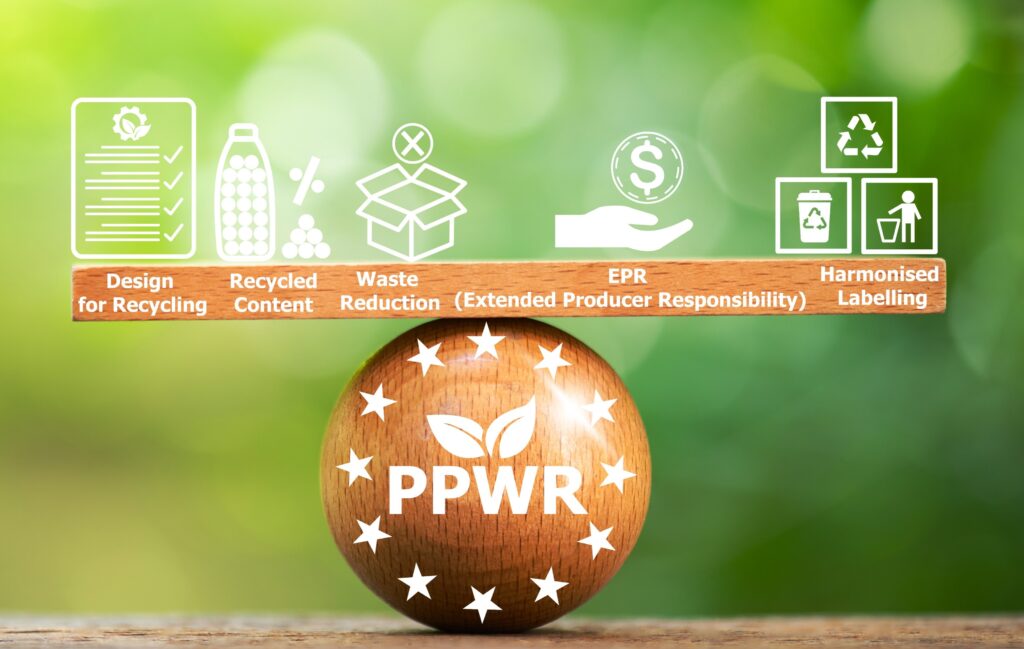
The EU Packaging and Packaging Waste Regulation sets mandatory requirements for recyclability, PCR content, reusability and Digital Product Passports across all packaging sold in the EU. Compliance must be built into the design process from the very first phase, not added as a late-stage consideration.
What is the Generative Economy?
It’s an industrial model where companies generate economic value while regenerating natural resources. For packaging, this means designing for recyclability, traceability and material efficiency from the start, rather than treating packaging as a disposable by-product.
Why can’t a single company achieve PPWR compliance alone?
PPWR compliance depends on materials, manufacturing, logistics and recycling infrastructure working in concert. Chemical suppliers, machinery builders, logistics providers and waste management operators each play a critical role, which is why cross-industry collaboration on a shared digital platform is essential.
What results can packaging teams realistically expect?
Virtual testing can cut packaging material costs by 30%–50%, compress design cycles by up to 50% and ensure compliance data is defensible from day one. One global FMCG leader achieved an 18% material mass reduction per bottle and avoided 240 metric tons of CO2 equivalent annually after scaling to 76% PCR content on the 3DEXPERIENCE platform.
Selected Sources
- Gartner. (2023). Sustainable Packaging Predictions.
- McKinsey & Company. (2023). The Path to Sustainable Packaging Adoption.
- World Economic Forum. (2024). Enabling the Circular Economy Through Cross-Industry Collaboration.
- Accenture and Dassault Systèmes. (2021). The Value of the Virtual Twin.
- Dassault Systèmes. (2023). Executive Playbook: Sustainable Packaging Transformation.
- Dassault Systèmes. Circular Packaging Case Study. (FMCG PCR Integration.)
- Dassault Systèmes. Customer Story: Large CPG firm
- OUTSCALE. (2026). Sovereign Cloud for Industrial AI Workflows.

Sarah Klinger, Consumer Industries Client Executive, Dassault Systemes. Sarah Klinger is an Industry Leader for Growth & Transformation in Consumer Packaged Goods at Dassault Systèmes, where she helps organizations leverage digital transformation, Industrial AI and Virtual Twin technologies to drive innovation and sustainable growth. With a diverse background spanning technology, strategy and business development, Sarah brings a strong focus on turning emerging technologies into tangible business value for the consumer products industry.