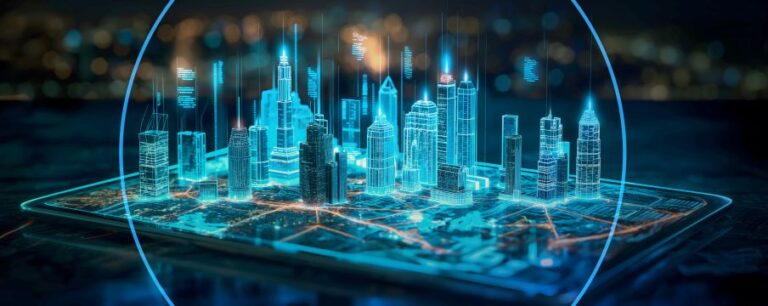
From designing sustainable aircraft to advancing electric vehicles to transforming consumer packaged goods, innovators from every industry use virtual twins to solve complex challenges.
Virtual twins are precise, scientifically accurate 3D models of physical objects, systems or processes that combine geometry, data and physics. They capture the behavior of an asset, showing its performance and response to changing conditions throughout its lifecycle and reveal transformative benefits across industries.
Virtual twins take to the land, sea and sky
Industries such as Aerospace & Defense and Marine & Offshore leverage the 3DEXPERIENCE platform to revolutionize travel and transportation. Virtual twin benefits for innovators in these industries include: detailed analysis, safety enhancements, boosted performance and simplified regulatory compliance.
- Aerospace: Deutsche Aircraft, a German aircraft manufacturer, advances sustainable air travel by developing its next-generation turboprop, the D328eco®, within the virtual environment of the 3DEXPERIENCE platform. Virtual twin technology supports ground testing before flight, thereby reducing risk across test campaigns. By engaging customers with a product’s virtual twin in operation, Deutsche Aircraft leverages AI-driven insights for continuous improvement.
- Automotive: Virtual twins drive innovation across multiple sectors, including automotive manufacturing. At Renault, a leading French automaker, Noise, Vibration & Harshness (NVH) simulation anchors the company’s shift to electric vehicle production. Renault relies on the 3DEXPERIENCE platform and Simulia Abaqus solutions to control acoustic performance inside its electric cars. Engineers can predict, understand and analyze sources of noise and vibration before physical prototypes exist. This exact scientific method guarantees acoustic comfort and meets the driver’s demand for a quiet ride.
- Autonomous Vehicles: Milla Group, a French startup, designs and markets shared autonomous transportation systems such as shuttles and pods. The organization uses virtual twins to enhance production on the 3DEXPERIENCE platform. With DELMIA, Milla Group creates dynamic virtual twins of facilities, processes and products, enabling them to track manufacturing workflows, validate new processes early and ensure compliance with safety and regulatory requirements. This reduces reliance on physical prototypes and accelerates the time-to-market
- Rail: Railroads support business, transportation and tourism every day. Safe rail operations need advanced simulation tools to get results. In Australia and New Zealand, rail safety is a key nationwide concern. Simulating workflows, such as derailment analysis, emergency braking and speed analysis, helps address risks. Virtual twin simulation lets engineers better predict vehicle behavior, so they can spot and fix potential challenges early.
- Naval Architecture: Naval architecture also benefits from modeling and simulation (MODSIM) and virtual twin technologies. These tools break down barriers in design, analysis, and validation. Many naval ship decisions depend on simulations. Most of a ship’s cost is determined at the design phase. Virtual twins let engineers simulate loads, fluid dynamics, and electromagnetic behavior. They can explore more ideas and validate them faster. Another benefit of virtual twins? They evolve with the ship and link design intent with performance.
Virtual twins in the business world
Across these industries, from design to production, virtual twins’ benefits include accelerating innovation cycles, reducing costs and guiding better decisions, ensuring long-term performance and sustainability.
- Construction: China’s Central-South Architectural Design Institute (CSADI) began building the Wuhan Next Generation Meteorological Radar tower in 2022 using the 3DEXPERIENCE platform for project management. The project set a new standard for integrated, smart construction in the Architecture, Engineering & Construction industry. The double-spiral façade, inspired by a cyclone, was completed in 18 months and symbolizes the tower’s role in monitoring weather disasters. A virtual twin enabled real-time, onsite collaboration among all stakeholders, connecting structure, water, heating, electricity and engineering disciplines.
- Technology: In the Business Services industry, Kinetic Vision has grown into a technology company, expanding its focus beyond modeling and simulation to include computed tomography scanning, visualization, machine learning and non-destructive testing. Without virtual twins, Senior Vice President Jim Topich of Kinetic Vision says all of their projects would take at least twice as long. The technology allows Kinetic Vision’s clients to save time, money and materials while fully testing and evaluating their products in the digital world.
- Manufacturing: In the High-Tech industry, French battery startup Olenergies is focused on sustainability and benefits from virtual twins to address its needs. The company uses the 3DEXPERIENCE platform to manage everything from customer collaboration to design, manufacturing and supplier integration. Virtual twins created on the platform reduce the need to ship people and physical prototypes around the world, since everyone can collaborate in real time, no matter where they are.
Virtual twins in agriculture
In the Industrial Equipment industry, global agricultural equipment providers use virtual twins to develop faster, more efficient and more user-friendly machines. Built on the 3DEXPERIENCE platform, virtual twins unify complex product data, enabling informed decision-making at every stage of the lifecycle.
These benefits of virtual twins extend beyond manufacturers. For example, farmers use machines with virtual twins simulating how hydraulics, electrics and steering interact. This virtual setting enables testing and validation for optimal performance. Similarly, in Infrastructure, Energy & Materials, virtual twins support clean energy development, optimizing wind turbine blades and analyzing reactor core heat transfer, driving progress and efficiency.
Virtual twins saving cities and lives
Virtual twins are transforming the Life Sciences & Healthcare and Cities & Public Services industries by solving critical challenges.
- Flood Management: When flooding occurs worldwide, virtual twin simulations enable planners and emergency teams to model flood scenarios. Interactive models show how water moves through neighborhoods and highlight weak points. They help create long-term strategies. Virtual twins turn flood management into proactive community protection.
- Weather Monitoring: Virtual twins empower cities to create cooler, healthier and more resilient environments. To boost climate resilience, the French city of Meudon uses this technology. In 2024, Meudon partnered with Dassault Systèmes, enabling the simulation of climate scenarios. The model not only demonstrates how heat behaves but also tests greening and design solutions, identifying the best strategies to lower temperatures. By forecasting the impact of each solution virtually, Meudon can make informed decisions and ultimately design cooler, more livable spaces.
- Healthcare: High-fidelity human virtual twins are detailed, anatomically and physiologically accurate digital models. They capture organs, tissues and body functions, such as breathing and particle release. Detailed hospital twins, digital copies of hospital spaces, help doctors and researchers study airflow, layouts and air systems to predict how particles move through clinics.
- Drug & Research Science: Developing a drug can take over a decade and cost billions. Many companies now use wet lab contract research organizations (CROs) to outsource key workflows. With mounting pressure to accelerate drug development, AI-powered CROs have proven effective. A robust understanding of disease biology, molecular pathways and medicinal chemistry is essential for candidate validation. The BIOVIA Contract Research Program meets this need by integrating Generative AI and Virtual Twin Experiences. Virtual twin technology allows the BIOVIA team to generate highly accurate, AI-driven simulations of physical systems, helping researchers predict a drug’s performance earlier and reduce reliance on trial-and-error.
Virtual twins in everyday experiences
- Consumer Goods: Virtual twin simulation lets companies scale product customization to meet specific customer needs. The Consumer Package Goods & Retail industry tests products virtually before launch, reducing costs and development time. Virtual twins also monitor and optimize processes across factories, warehouses and supply chains, enabling flexible adaptations of production lines and process modifications.
- Sustainable Packaging: AI and virtual twins are revolutionizing packaging innovation in consumer-packaged goods and retail. As a result, more companies now prioritize sturdy, eco-friendly packaging. In addition, modeling software and virtual twins accelerate the delivery of high-quality products to market. For over 15 years, Amcor, which makes boxes, bags and bottles, has used virtual twins to sustainably produce plastic. By prototyping products with SIMULIA Abaqus, the company creates lighter plastics that are as durable as their heavier counterparts.
- Personalization: In Home & Lifestyle, ASICS uses virtual twin technology to test new business models. They show how to use consumer data to create products tailored to individual customers when needed. ASICS can create custom footwear for each person’s needs. This means each pair fits perfectly and aligns with modern production, which changes quickly as demand shifts.
- Beauty Products: Cosmetic and skincare goods are complex to produce. Formulation and testing require a lot of work. Packaging also takes careful planning because materials like plastic and glass can react with the product. For example, Vitamin C serums and creams need dark glass containers to protect against light, which can cause oxidation and ruin the product. Manufacturers use advanced technologies, such as virtual twins, to test formulations and packaging. These tools predict how bottles respond to different factors and help determine the best way to preserve contents.
Virtual twins across industries
Bringing all these examples together, across every sector, the benefits of virtual twins are significant. They drive sustainability, cost-efficiency and innovation. By enabling teams to test ideas virtually, optimize system reliability and accelerate progress toward long-term success.
Read more

Charlotte Philippy is a Corporate Communications intern at Dassault Systèmes and a Public Relations student. With a strong interest in media and digital communication, she enjoys creating content that connects ideas with audiences around the world.