Today’s buyers don’t purchase a car. They buy an emotion, a lifestyle, a promise. Increasingly, they also expect that promise to survive the trip from a screen to a showroom. That’s the part most automotive sales organizations still get wrong.
Picture the now-familiar scenario. A customer spends two hours one evening configuring their ideal vehicle online: the exact trim, color, and feature set they’ve been imagining. The next afternoon, they walk into a dealership to see it in person, and none of that work follows them through the door. The salesperson doesn’t have the configuration. The price on the showroom screen doesn’t match what they saw at home. Two hours of careful research and emotional buy-in evaporate in the first five minutes of an in-person visit.
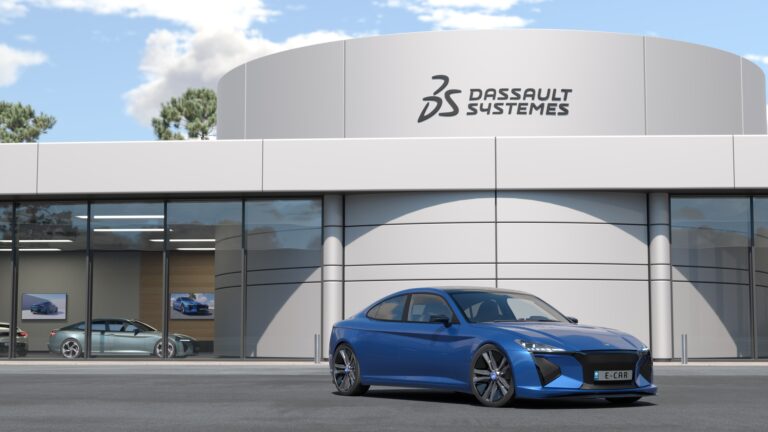
The dealership hasn’t disappeared from this story. If anything, it’s become a more demanding stage: a brand experience hub that now has to compete directly with the digital experience that preceded it, rather than simply rubber-stamping it. They are expected to deliver a smooth and seamless dealership customer experience.
The Price of the Disconnect
This isn’t a hypothetical. A 2025 study of 600 U.S. dealerships found that 81% lose customer leads or conversations because their CRM, chat, and inventory systems don’t communicate with each other. That figure is even more striking given that 70% of initial inquiries now start online. Buyers arrive at the showroom having already done their research, only to find none of it followed them there.
The cost of getting this wrong isn’t abstract. Capgemini’s Research Institute ranks automotive manufacturers and dealers 9th and 11th, respectively, for customer experience among 13 major consumer industries, trailing retail and hospitality by a wide margin. More than half of customers dissatisfied with post-purchase service say they’d consider switching brands within 6 to 18 months. Buyer switching costs have never been lower. This is a loyalty problem with a price tag attached.
And yet, according to Sophie Descours, Business Development Manager for Sales and Marketing Experience at Dassault Systèmes, the root issue isn’t the technology itself. It’s the structure around it. Marketing builds a polished digital narrative. Sales executes it with yesterday’s data, last month’s pricing, and a configurator that was never built to talk to the brand story. Nobody owns the handoff in between, so the customer feels every crack in it.
Designing the Experience, Not Just Reacting to It
It’s treating the customer journey with the same design discipline automotive engineers apply to the vehicle itself: simulate, test, and refine before the customer experiences it — not after a sale is already lost. In practice, that means three things.
First, simulate the experience before customers do. Test how different buyer personas will encounter your message and your buying journey, the same way you’d validate a vehicle design. Catch misalignment while it’s cheap to fix and not after it’s already customer-facing.
Second, give salespeople intelligence that flows in both directions. The moment a customer walks in, the salesperson should see what they configured and what mattered to them but also what’s true on the lot. Which configurations are in stock, which are overstocked and need to move, which customizations add waiting time, and where there’s room to flex on price. That’s the real shift from product presenter to experience orchestrator. Not just matching the customer to what they designed, but to what the dealership can actually deliver, and sometimes steering them toward something just as good that’s already on the lot. Third, treat every interaction, online or in person, as a feedback loop. What resonates, what doesn’t, which configuration paths actually lead to a sale: that data should flow back into how the next experience is designed, not sit unused in a dashboard.
Same Logic, New Application
For decades, Dassault Systèmes has helped engineering teams design and validate complex products, using virtual twins to simulate and refine before committing to the real world. Descours sees the same logic extending to the customer journey. The goal: model how different buyers will experience a brand’s message and configuration tools, then connect that data — on both the customer and dealership side — to what the salesperson sees the moment a customer walks in. The digital and physical experience get designed and tested together, instead of built separately and reconciled too late.
The organizations closing this gap aren’t necessarily spending more than their competitors. They’re treating the handoff between digital and physical as a design problem instead of a logistics one. In a market this competitive, that handoff might be the last place left to actually differentiate.

Prodatta Sengupta is the Transportation & Mobility Industry Marketing Lead at Dassault Systèmes. She has been with the company since 2016, building expertise in sales strategy and industry marketing for the global automotive sector. She writes about the trends and technologies redefining the industry, from Software-Defined Vehicles and EV innovation to Industrial AI and Virtual Twins. Based in Paris, Prodatta holds an MBA in International Business and Geopolitics and is passionate about art history, environmental protection and ethical innovation.