
For decades, medical research and treatment protocols have been primarily centered on men: their physiology, gender-specific diseases and male-centered diagnostics. That historical bias, present in research, clinical settings, trials and beyond, has created a gender health equity gap that continues to affect outcomes for women globally. Today, as efforts and attitudes have shifted toward ensuring equity in care, technology has become a main driver and a force for good in closing this gap.
With a tech stack inclusive of artificial intelligence, virtual twins, wearables, portable diagnostic tools and newly emerging innovations, the imbalance in gender-based care is slowly but surely being corrected. These developments, both spurred on and supported by private and public sector groups, as well as international organizations, are indicative of larger trends that point to technology’s role in solving some of society’s most pressing issues.
The gender health equity gap: How did we get here?
The modern healthcare system has, by and large, excluded women.
“For decades, the gender data gap has quietly dictated the boundaries of healthcare, resulting in systemic disparities where women are consistently underrepresented in clinical trials and medical research,” explained Claire Biot, vice president for Life Sciences & Healthcare at Dassault Systèmes.
In fact, for centuries, physicians and researchers have treated males as the default for study and diagnostics. That trend has resulted in physicians lacking the functional knowledge to understand how diseases can present differently in males and females, leading to missed diagnoses for women. It’s also meant that women were excluded from participating in clinical trials, a fact that proved disastrous.
In the late 1950s in West Germany, an over-the-counter medicine that hadn’t been tested on pregnant women became a widely prescribed remedy for morning sickness in … you guessed it: pregnant women. That drug, thalidomide, resulted in tens of thousands of children born with serious birth defects, many of whom died at birth or shortly after. Despite this raging crisis, just 20 years later, the US Food and Drug Administration recommended excluding women of “child-bearing potential” from Phase I and II clinical trials, effectively removing any study of how drugs, therapies and medical devices would uniquely affect women. That guideline was in place from 1977 to 1993, with ripple effects of female exclusion in trials still felt today.
Another consequence of male-centered healthcare research and care is the lack of diagnostic and treatment protocols for female-specific diseases and conditions. Endometriosis is one such condition. It affects 10% of women around the world and is considered clinically understudied. In the US, research funding for endometriosis made up just .038% of the 2022 budget for the National Institutes of Health, the country’s premier federal health research organization. Studies from around the world suggest that women with endometriosis experience diagnostic delays of up to 12 years, with pain and discomfort dismissed as “normal” by clinicians.
By considering men as the default, the healthcare system that has resulted has created a significant gender gap in research and treatment availability. These examples represent more than just discriminatory moments in time; they’re indicative of the attitudes that have shaped the foundation of modern medicine.
Technology’s role in the gender healthcare dilemma
In an unsurprising twist, technology offers some of the tools necessary to dismantle historical biases, deliver equitable care and close the gender health equity gap.
Diagnostics
In modern medicine, there are dozens of tools and tests used to diagnose patients with illnesses. But those tools and tests are often expensive to acquire and run – and fix, when necessary – and they also require skilled individuals to operate them. In rural and low-income areas, there is a fundamental lack of access to medical professionals and equipment, and that shortage disproportionately impacts women.
With the development of portable, AI-powered imaging, point-of-care tools and health monitoring wearables, it’s possible to detect and diagnose certain diseases and disorders without communities needing to purchase expensive machinery and employ operators for it.

Clinical Trials
Clinical trials have long suffered the consequences of the difficulty in recruiting and maintaining a representative patient population. You already know that women were, by default and then by regulatory guidance, excluded from participation in them. In the US, though minorities weren’t officially barred from participating in clinical trials, historical mistrust from racist tendencies in the medical industry has been a factor that has limited participation. Globally, diversity is a significant issue in clinical trials, leading to research, development and diagnostic outcomes that don’t accurately reflect reality.
The combination of artificial intelligence and virtual twins has the potential to correct this historical – and modern – wrong.
Virtual clinical trials, also called decentralized trials, remove the “in-person” aspect from clinical trials. Patient check-ins and monitoring are conducted almost entirely virtually, through monitoring via wearables or telehealth visits. This approach represents one method for removing some of the barriers associated with participation in traditional trials, including being physically present at regular doctor’s appointments. Some decentralized trials have already been successfully conducted, including several focused on women’s health, like the Renovia/ Obbvio Health study on women’s pelvic health.
Then, there are virtual twins of clinical trials. These can follow a similar course to virtual clinical trials, but there’s a key difference in the patient makeup. By recruiting a smaller, representative patient cohort and developing synthetic patient data from that group, clinical teams can develop a study group that accurately includes all necessary participants, including women, minorities, low-income and otherwise underserved populations, which are often left out. Then, using AI, that data is extrapolated to generate an entire cohort’s worth of virtual patients. This option is more technologically advanced and shows immense promise for closing the health gap that exists both between genders and across ethnic, cultural and socioeconomic groups, too. While still more of an emerging concept, this approach shows promise. In 2019, the FDA concluded a virtual clinical trial for their Virtual Imaging Clinical Trial for Regulatory Evaluation (VICTRE) project, which looked specifically at the use of synthetically generated patient populations in the context of breast cancer screenings.
Drug discovery and medical device development
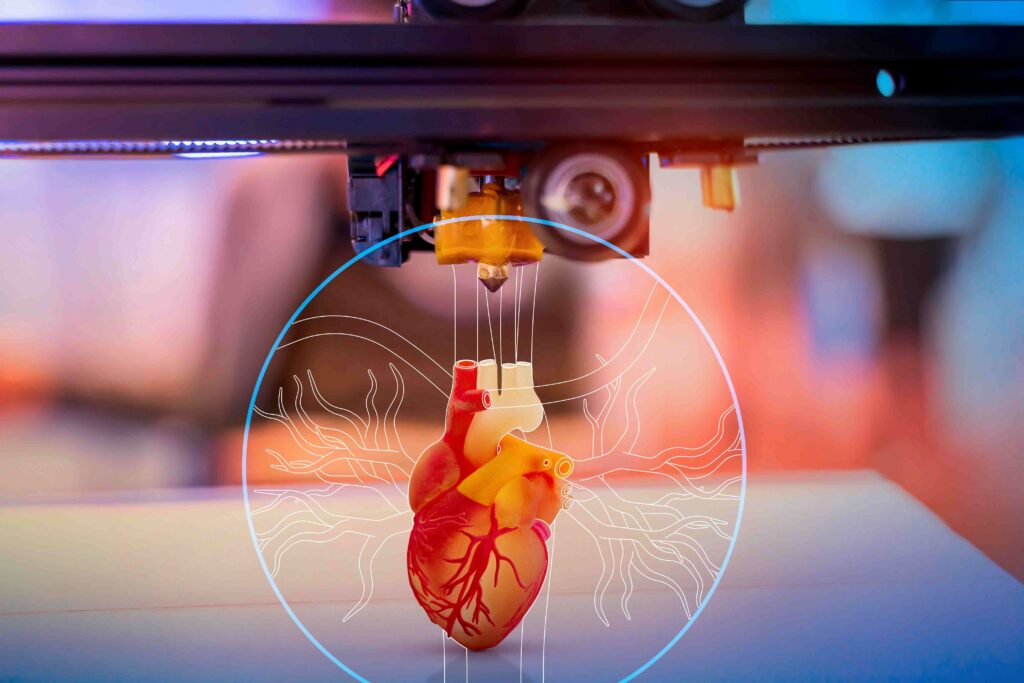
Virtual twins also have applications in the realm of drug discovery and medical device development. From 2019 to 2024, Dassault Systèmes participated in a 5-year study with the Food and Drug Administration in the US to explore the use of AI and virtual twins to evaluate the safety and effectiveness of new medical devices. BIOVIA leverages NVIDIA’s AI capabilities to test drug compounds in molecular dynamics simulations to understand their viability and reduce exhaustive tests that consistently result in failure.
These projects underscore not only the company’s commitment to ensuring the development of more equitable healthcare solutions and outcomes but also a dedication to doing so sustainably.
“Virtual twins in healthcare create a powerful link between health equity and environmental sustainability,” said Philippine de T’Serclaes, Dassault Systèmes’ chief sustainability officer. “They let us identify underserved populations in clinical research and bring inclusive and innovative therapeutics to market more quickly, saving more lives. They also ensure sustainable designs are adopted upfront and reduce the need for resource-intensive physical trials. This is how we deliver better outcomes for people and the planet.”
While global approaches can be broadly advantageous, sometimes progress occurs on a much smaller and simpler scale. One Indian start-up is indicative of exactly this. PadCare Labs, which is being incubated in the 3DEXPERIENCE Lab, saw a crisis: a majority of women in India are exposed to infections when managing their personal hygiene during menstruation. To address this gender-specific issue, the company’s founders developed a sanitary waste disposal product that reduces the risk of harmful infections while also recycling byproducts to promote sustainability. Though such an innovation doesn’t make headlines the way that some medicine and device developments do, it’s just as important a component in promoting healthcare that’s inclusive of women’s needs.
In a similar vein, the winners of this year’s annual Dassault Systèmes AAKRUTI student design competition were honored for their submission, a pedal-powered breast pump with a universal bottle-fitting system. The winning team, Team UJ Wom+n in Tech, from the University of Johannesburg, South Africa, crafted their pump to ensure that mothers could pump comfortably and conveniently anywhere without needing any electrical components, as are common in other pumps. Their attention to a local problem – South Africa faces consistent blackouts that make charging pumps difficult – resulted in a solution that directly benefits the women in their communities.
The global trajectory toward progress
“At Dassault Systèmes, we believe that achieving true health equity requires a fundamental shift from a ‘one-size-fits-all’ model to a paradigm of precision medicine. Closing the gender health gap isn’t just an ethical imperative; it is a scientific necessity that virtual twins can help accelerate, ensuring sustainable, equitable healthcare for all,” Biot said, highlighting the way in which appropriate applications of emerging technology can serve as the solution to this decades-long public health issue.
We’re on the way to achieving gender parity in the medical community, where one-third of practicing clinicians are female, but medical school classes from 2019 onward have reported majority-female enrollments. The Women’s Health Investment Outlook found that only 6% of private investment in healthcare is directed toward women’s health, though funding for women’s health initiatives has grown in recent years.
The issue of women’s health is very much in the spotlight. The World Woman Foundation’s annual forum, held in conjunction with WEF’s annual Davos summit, included extensive programming on global initiatives that advocated for advanced research, funding, collaboration, innovation and policy. The United Nations’ Sustainable Development Goals include a focus on reducing maternal mortality rates and ensuring access to reproductive care, crucial aspects for women’s health at large. From individual brands like Dassault Systèmes pioneering technological solutions for health disparity to multilateral organizations promoting such approaches on a global scale, real progress is being made.
Related resources on virtual twins in healthcare

Shoshana is a Senior Communications Manager on the Corporate Publishing team here at Dassault Systèmes. With experience in journalism, marketing, and PR, her work has been published around the world and across the internet.