

The Cyber Resilience Act changes cybersecurity from an IT concern into a product compliance, market access and business continuity issue, with potential fines adding to the cost of inaction. For consumer electronics and equipment OEMs, this matters because connected products are no longer defined by hardware alone. They combine mechanical systems, electronics, embedded software, connectivity, cloud services and third-party components. A vulnerability in one software dependency can affect a sensor, controller, robot, device, machine or installed product already operating in the field.
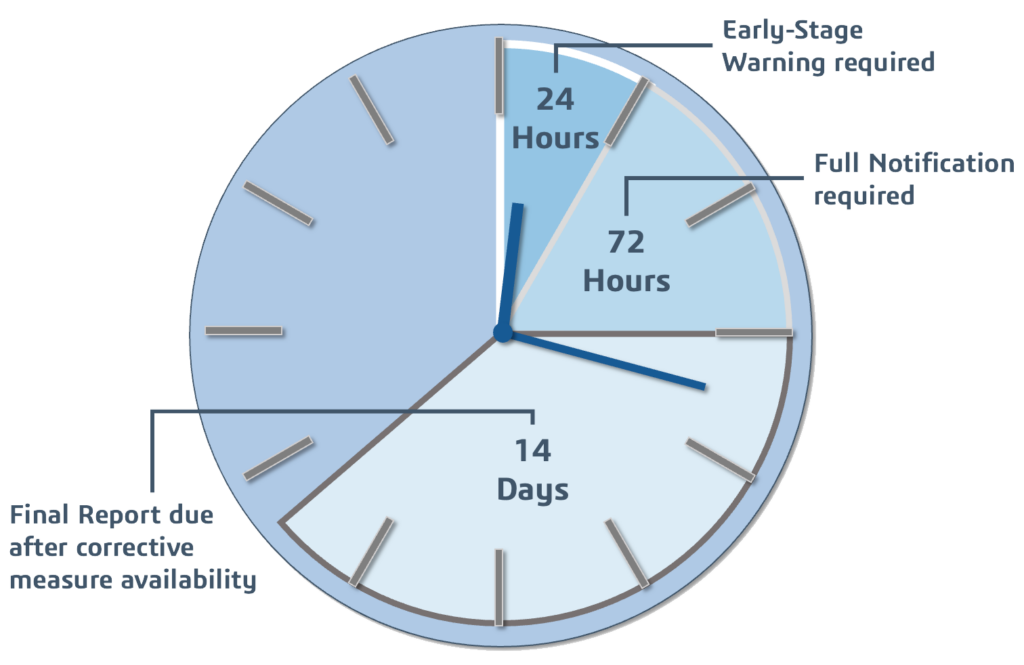
That urgency starts before full CRA product certification applies. From September 2026, reporting obligations apply to in-scope products with digital elements already made available on the EU market, not only to future launches. Once an actively exploited vulnerability or severe security incident is identified, manufacturers need to know which products, versions and configurations are affected. They then need to respond against a legal clock: 24 hours for an early warning, 72 hours for a detailed notification, and a final report no later than 14 days after a corrective measure is available. Potential fines add to the cost of delay.
Detection is only the starting point. The operational challenge is to turn a security signal into a reliable product impact assessment: Where the affected component is used, which products and configurations are exposed, what action is required and who needs to act. Many OEMs cannot do this quickly enough because the relevant data is spread across disconnected domains. Cybersecurity tools identify vulnerable software. Engineering systems define the product. Compliance teams manage evidence. Service teams know what has been delivered. Unless these views are connected, the organization will struggle to respond with confidence when CRA obligations begin.
-> CRA readiness, therefore, depends on connected product intelligence.
Why disconnected processes create risk
Many manufacturers already use software repositories, issue trackers, vulnerability scanners, engineering databases, PDFs and spreadsheets. Each system may serve its team well, but CRA response depends on the ability to connect information across domains.
When a vulnerability is identified, teams need to answer precise operational questions:
- Which software component is affected?
- Which product versions include it?
- Which physical products or customer configurations are exposed?
- Which requirements and tests are linked to the issue?
- Which corrective actions are already planned or released?
- Which evidence is needed for reporting and compliance?
Trying to answer these questions manually can consume the time that CRA obligations do not allow. A static document or isolated Software Bill of Materials is not enough. Manufacturers need a governed, traceable and continuously updated product context.
From Software BOM to product-level resilience
A Software Bill of Materials is a vital foundation. It provides a structured view of software components and dependencies, helping teams understand what is inside their products.
But for an OEM, the Software BOM becomes truly valuable when it is connected to the wider product definition. A vulnerable component must be traced to software architecture, requirements, tests, releases, hardware configurations and affected product variants.
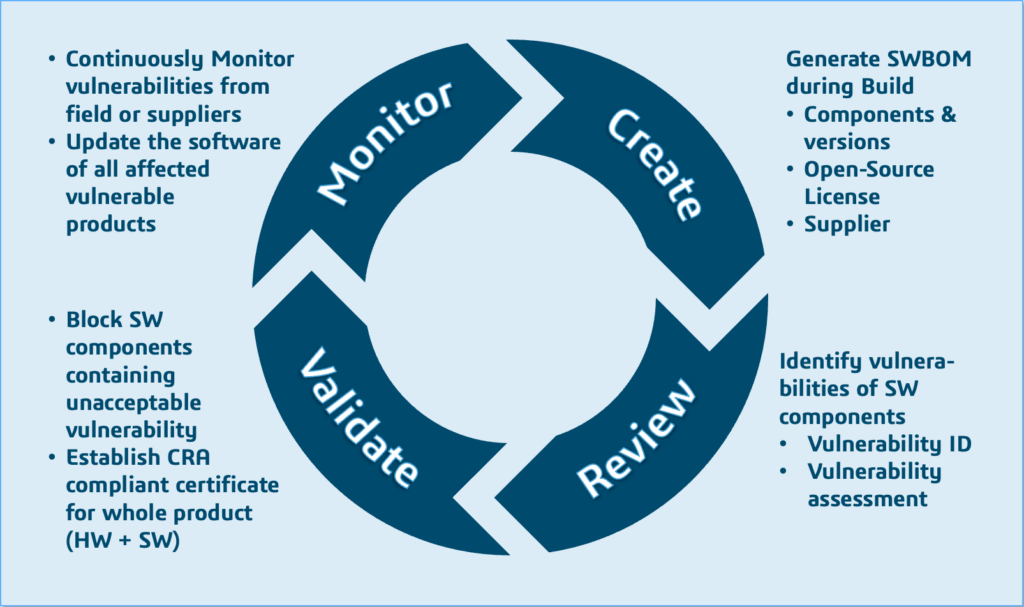
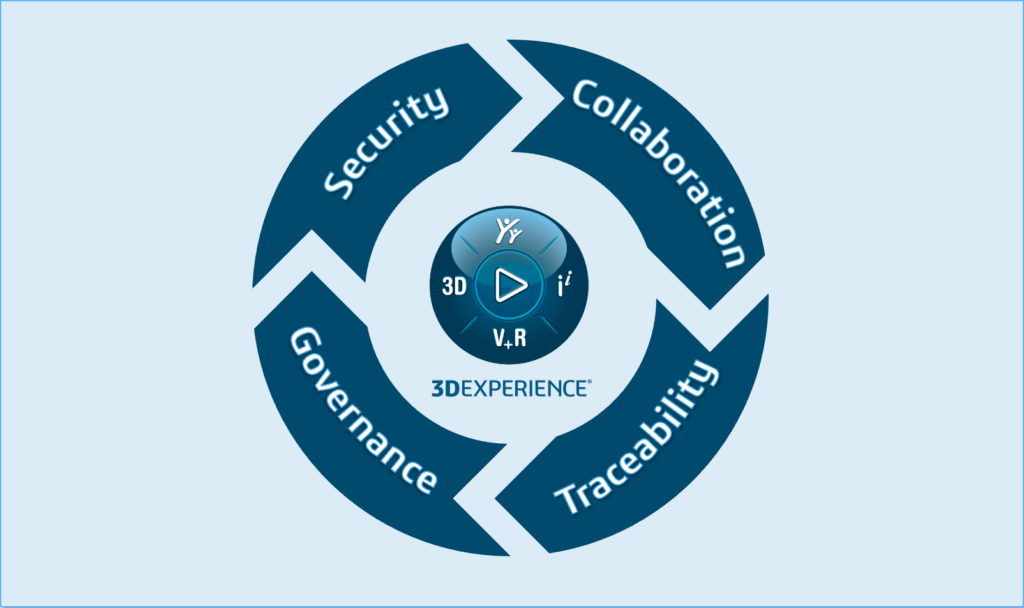
With the 3DEXPERIENCE platform, manufacturers can connect software, hardware, systems engineering, compliance and vulnerability management in a shared environment. The goal is not to replace every software development tool. It is to connect software data with product data so that vulnerabilities can be assessed in the context of the real product. This enables teams to link logical and physical software BOMs to product structures, requirements, verification evidence and change processes. It also supports collaboration between R&D, cybersecurity, IT, quality, compliance and product management. Instead of fragmented answers, teams gain a single source of truth for cybersecurity related product decisions.
Secure by design, compliant by delivery, resilient in operation
A platform approach supports CRA readiness across the product lifecycle:
- During design, teams can define cybersecurity risks and requirements early, then connect them to product architecture, software modules, dependencies and test cases. This helps make security part of engineering from the beginning, not a late-stage documentation exercise.
- During verification, teams can test and validate cybersecurity requirements, manage vulnerability assessments and build the evidence needed to support CE conformity. Compliance becomes embedded in the product development process rather than managed separately at the end.
- During operation, teams can monitor vulnerabilities, investigate impact, identify affected products and manage corrective actions. When a vulnerability emerges, connected product data helps teams move faster from signal to impact assessment, remediation and reporting.
Product focused and repository agnostic
A practical CRA strategy should not force software teams to abandon the tools they already use. The 3DEXPERIENCE platform can connect with software repositories and development environments, allowing teams to keep familiar workflows while product relevant software information becomes part of the governed product record.
This distinction is important. Software security tools can identify vulnerable code. A product innovation platform helps determine which products, configurations and customers may be affected. For OEMs, that product context is essential.
Turn CRA pressure into a platform advantage
The Cyber Resilience Act raises the standard for manufacturers selling connected products in Europe. It also creates an opportunity to enhance how software, hardware and compliance are managed together. By connecting Software BOMs, product structures, requirements, tests, vulnerabilities and remediation workflows on the 3DEXPERIENCE platform, OEMs can reduce the operational friction that makes CRA readiness difficult. They can improve collaboration, strengthen traceability, support CE marking readiness and respond faster when vulnerabilities emerge.
CRA compliance is not a one-time project. It is a permanent discipline. With a platform approach, manufacturers can move beyond reactive compliance and build cyber resilience into the way products are designed, delivered and maintained.