

Sagar Rahangdale, Industry Consultant and Solution Architect, Dassault Systèmes
Mining has traditionally been managed through a collection of specialized systems, each designed to capture a particular aspect of the operation. Geological models describe what is expected underground. Fleet management systems track equipment. Weighbridges measure tonnage. Laboratory systems determine material quality. Plant systems capture processing information, while enterprise applications translate production into commercial outcomes. Yet despite the enormous volume of data generated across a mine, operational teams can still struggle to establish a consistent, real-time view of what is happening to material as it moves through the operation.
The problem is not necessarily a lack of data. It is the fragmentation of data and the absence of a connected digital representation of the production process.
Manufacturing has faced a similar challenge for decades. Modern manufacturing organizations have developed Manufacturing Execution Systems (MES), integrated data models, industrial automation and virtual-twin technologies to connect physical production with planning and business systems. These principles are increasingly relevant to mining, where Mine Operations Management (MOM) can provide an equivalent operational layer between physical production and enterprise-level planning.
The opportunity is to take the virtual-twin philosophy beyond representing physical mine assets and use it to represent the movement, transformation and reconciliation of material across the mining value chain.
From a virtual twin to a digital production system
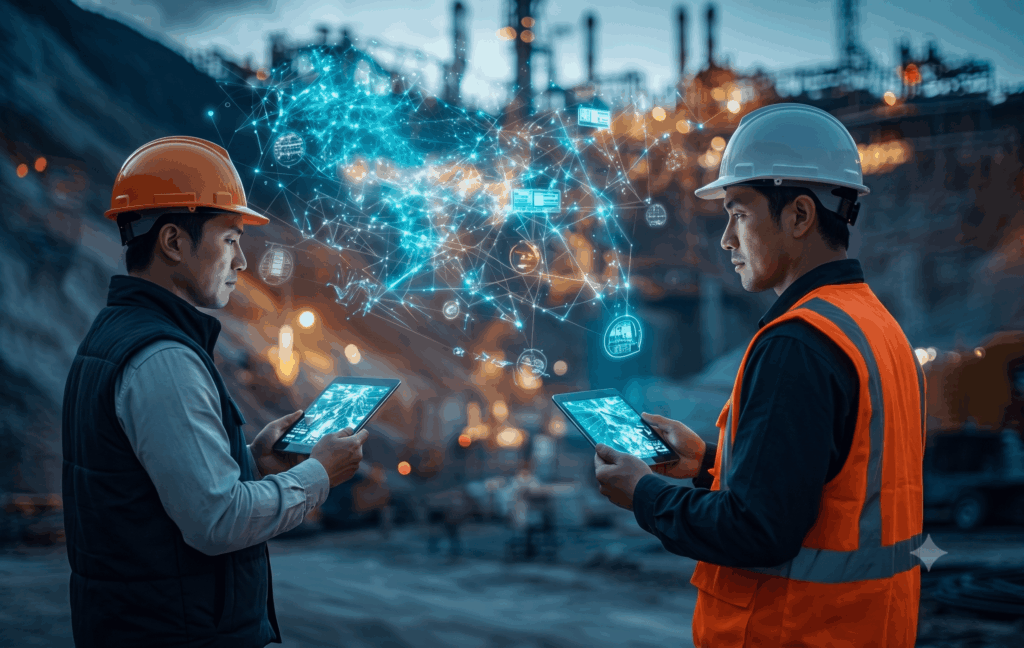
A virtual twin is more than a three-dimensional representation of a physical asset. In an industrial environment, it can represent the relationships between equipment, materials, processes, people, logistics and schedules. It can connect these relationships with operational data to create a dynamic virtual representation of how a production system behaves.
This distinction is particularly important for mining.
A mine is not simply a collection of trucks, loaders, crushers, conveyors, stockpiles and processing equipment. It is an interconnected production system in which material moves through a sequence of activities. Its characteristics are measured and reassessed as it moves. Equipment performs work on it. Stockpiles accumulate and release it. Processing changes it, and the resulting products ultimately enter the commercial value chain.
A virtual twin for mining can represent the material journey itself.
As operational data changes, this digital representation changes with it, progressively reflecting the current state of the mining operation.
The virtual model can connect geological source, material characteristics, loading, hauling, crushing, stockpiling, reclaiming, blending, processing and final movement. Each movement can become a digitally recorded operational event, with information such as source, destination, equipment, time, tonnage and material characteristics associated with it.
This changes the role of digital technology. Instead of simply recording what happened in separate systems, the digital environment can represent how different events and processes are connected.
Bringing fragmented data into one operational view
The manufacturing experience demonstrates the importance of an operational layer between physical production systems and enterprise applications. In the ISA-95 model, Level 3 provides this connection. Manufacturing organizations commonly associate this layer with MES. In mining, MOM – Mine Operations Management can fulfil a similar role.
At the physical level, mining operations generate information through equipment, instrumentation and control systems. At higher levels, geology, mine planning, engineering and enterprise applications provide information about what should happen. MOM connects these worlds.
This connection is essential because the digital identity of mined material is distributed across multiple systems.
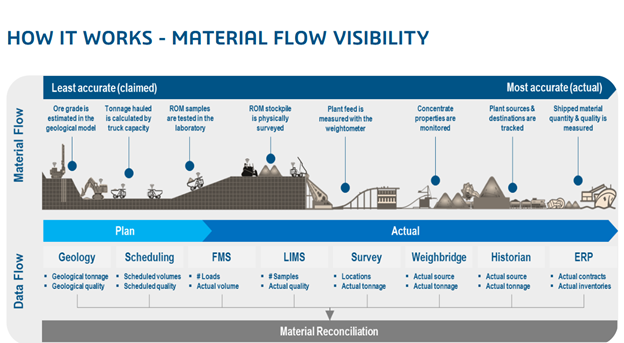
A geological system may contain expected grades. A fleet system may record the movement of equipment and the tonnage being transported. A laboratory system may provide actual assay results. Weighbridges and conveyor systems may provide measurements of material movement. Industrial historians may contain operational information such as process parameters and weight moved from conveyors, for example. Planning applications may define what material is expected to move and where.
Individually, these systems provide valuable information. Collectively, however, they can create a fragmented picture if their information is not connected.Individually, these systems provide valuable information. Collectively, however, they can create a fragmented picture if their information is not connected.
As part of a broader virtual-twin concept, MOM can establish a common operational data layer in which different sources contribute to a shared representation of material and production.
This creates an important principle: capture information once and make it available wherever it is required.
Rather than repeatedly transferring information between spreadsheets, databases and applications, data can flow into a common operational environment. This reduces manual intervention while also reducing the risk of errors introduced when information is repeatedly copied, reformatted or re-entered.
Connecting geological expectation with physical realityConnecting geological expectation with physical reality
One of the most valuable applications of a virtual twin in mining is the ability to connect what is expected to what actually occurs.
A geological model establishes an expectation about the material that will be extracted, including characteristics such as grade. As material moves through the operation, actual measurements can be introduced through sampling and laboratory analysis.
The virtual operational model can bring these different perspectives together.
Expected grade, actual assay, tonnage, location and movement history can be associated with the material as it progresses through the operation. The result is a representation that can evolve as new information becomes available.
This is fundamentally different from maintaining a static stockpile balance.
A conventional record might indicate how much material is believed to be present in a stockpile. A connected operational model can provide a richer explanation: where the material originated, what characteristics were expected, what measurements were subsequently recorded, how much material entered or left the stockpile and where it is expected to move next.
The virtual twin therefore becomes progressively aligned with physical reality. One of the most valuable applications of a virtual twin in mining is the ability to connect what is expected to what actually occurs.
A geological model establishes an expectation about the material that will be extracted, including characteristics such as grade. As material moves through the operation, actual measurements can be introduced through sampling and laboratory analysis.
The virtual operational model can bring these different perspectives together.
Expected grade, actual assay, tonnage, location and movement history can be associated with the material as it progresses through the operation. The result is a representation that can evolve as new information becomes available.
This is fundamentally different from maintaining a static stockpile balance.
A conventional record might indicate how much material is believed to be present in a stockpile. A connected operational model can provide a richer explanation: where the material originated, what characteristics were expected, what measurements were subsequently recorded, how much material entered or left the stockpile and where it is expected to move next.
The virtual twin therefore becomes progressively aligned with physical reality.
Making reconciliation a continuous capability
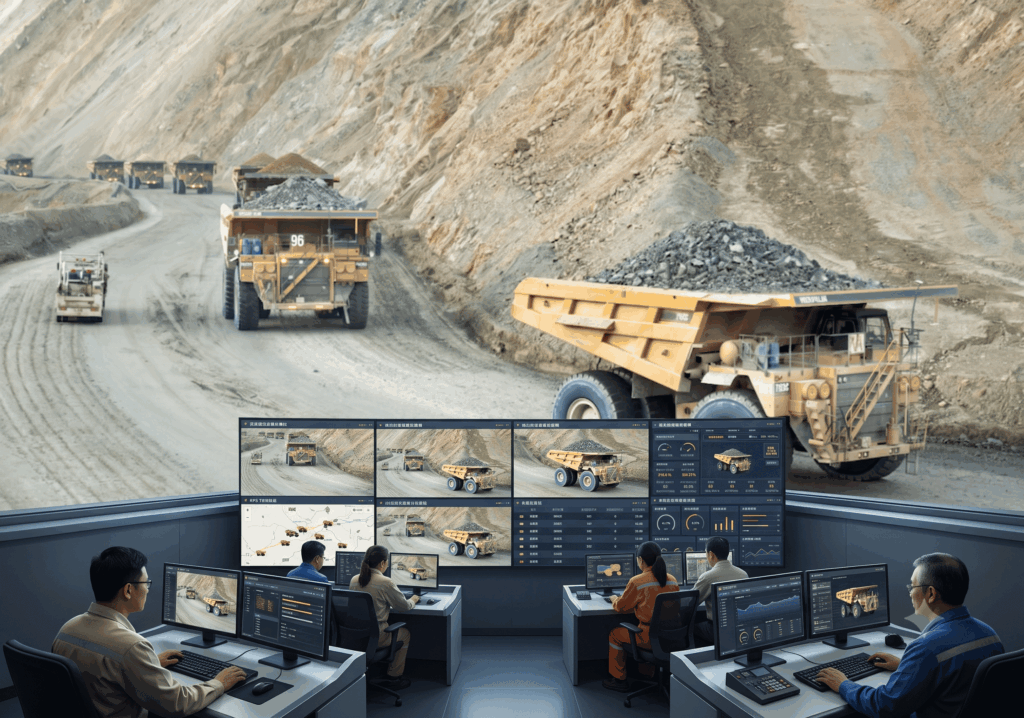
Material reconciliation is one of the clearest areas in which manufacturing-inspired digital execution principles can benefit mining.
Traditional reconciliation can be periodic. Teams may determine how much material was extracted, where it went and what its quality was at the end of a reporting cycle. If information is incomplete or inconsistent, considerable effort may be required to collect, validate and consolidate it before reconciliation can be completed.
A connected MOM environment changes this dynamic.
When material movements, stockpile information, tonnage and quality data are continuously captured, discrepancies can be identified much earlier. Plan-versus-actual performance can be assessed closer to the time at which the physical activity occurs.
This means reconciliation can become an operational capability rather than simply a reporting exercise.
A deviation can become a signal. A signal can trigger investigation. Investigation can lead to corrective action before the discrepancy becomes larger or affects downstream activities.
The objective is therefore not merely faster reporting. It is a shorter feedback loop between physical activity, digital information and operational decision-making.
From visibility to prediction
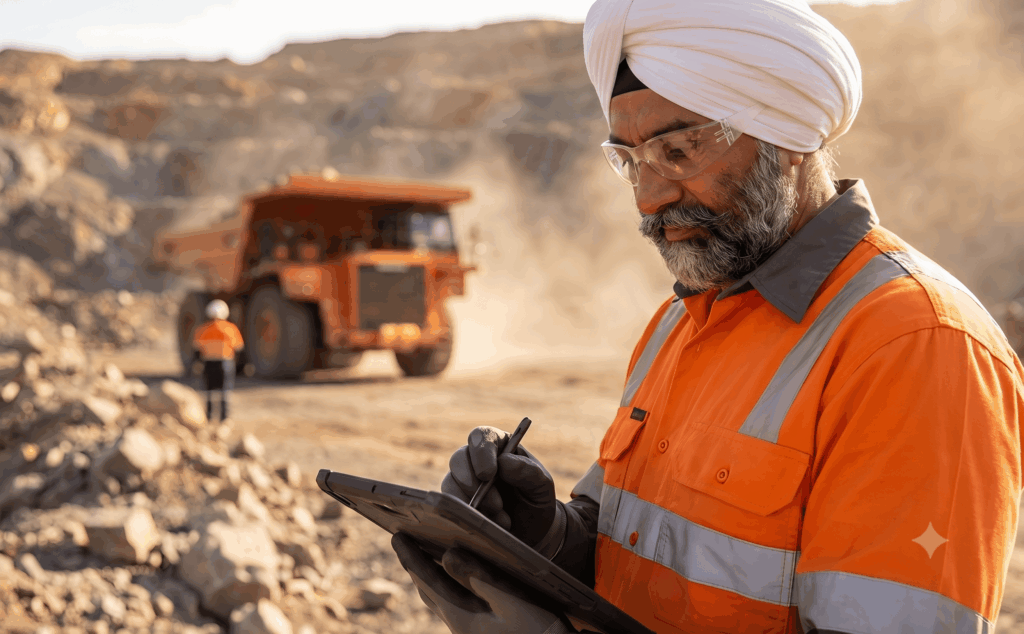
The first benefit of a virtual twin is visibility. The more strategic opportunity is optimization.
Once a mine has a reliable virtual representation of material flow, it can begin to explore questions that are difficult to answer through disconnected systems. What would happen if material were moved from one stockpile before another? How would a change in blending affect downstream processing? What would be the consequences of equipment availability constraints? Which material should be moved first? Where could rehandling occur? How could a change in mine planning affect downstream production?
The virtual environment provides a place in which such alternatives can be assessed before physical decisions are implemented.
This is where virtual-twin technology extends MOM beyond historical reporting. The system can progress from describing what happened towards helping determine what should happen next.
The progression can be understood as a series of stages: digitize existing processes, integrate operational information, represent the physical production system, reconcile expected and actual performance, predict potential deviations, and ultimately simulate and optimize alternatives.
Improving efficiency and sustainability together
The same digital foundation used in manufacturing can contribute to more efficient and potentially more sustainable mining operations.
Mining inevitably requires the movement of material, but better information can improve decisions about what should move, where it should move and when it should move.
Poor visibility can result in unnecessary movement or rehandling. Incorrect assumptions about material characteristics can affect blending and processing. Delayed information can lead to inefficient operational decisions.
A connected digital representation does not automatically guarantee a specific environmental outcome. However, it creates the information foundation required to evaluate operational trade-offs more effectively.
Virtual-twin technology can provide an environment in which material-flow alternatives can be assessed alongside their implications for equipment utilization, processing requirements, productivity and resource consumption.
In this sense, sustainability becomes part of operational optimization rather than a separate digital initiative.
The organizational foundation matters.
Technology alone cannot create a reliable virtual twin.
Before a mining organization can digitally represent a physical process, it needs to establish what that process is, which decisions it wants to improve, which information is required and who owns that information.
Data ownership is particularly important because mining information traditionally sits across organizational boundaries. Geologists, engineers, production teams, surveyors, laboratories and plant operations may each manage different elements of the information chain.
If ownership is unclear or business rules differ between departments, a digital environment can reproduce those inconsistencies rather than eliminate them.
A successful transformation therefore requires process definition, data ownership, business-rule alignment, user involvement and validation alongside technology deployment.
The readiness journey matters as much as the technology itself.
Mining’s next digital evolution
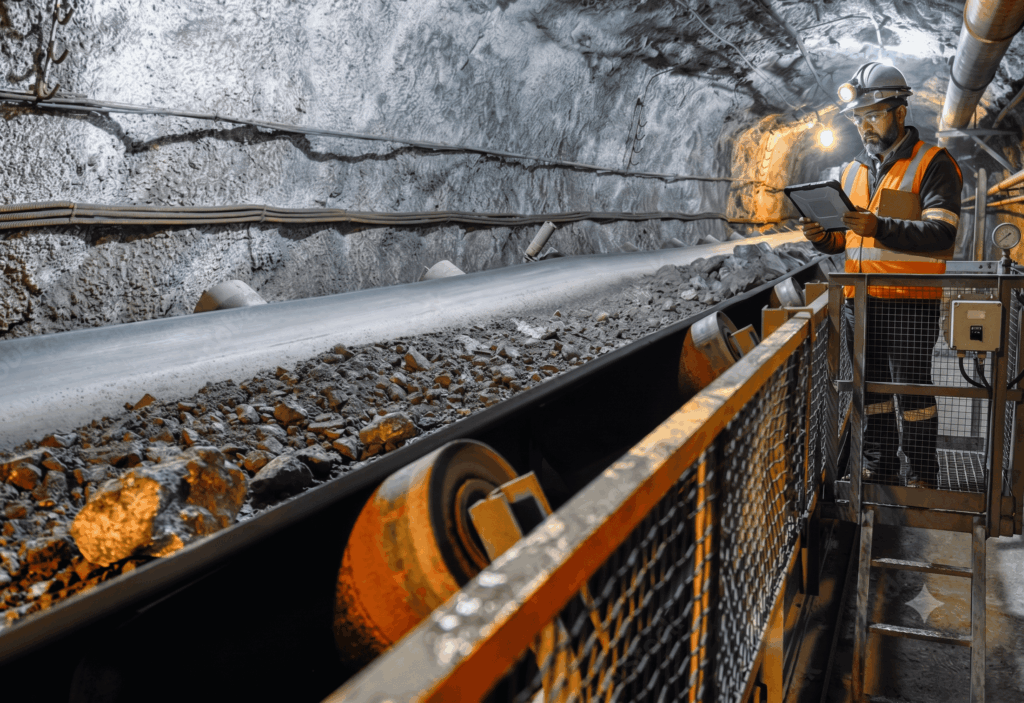
The strongest lesson mining can take from manufacturing is not that a mine should become a factory. It is that mining can adopt the digital discipline developed around connected production execution.
Manufacturing has spent decades connecting machines, materials, processes and production plans. Mining can apply the same principle to a more variable and complex production environment.
The objective is to create a digital operational representation capable of connecting geology, equipment, material, people, production and enterprise planning.
The progression is clear: track the material, understand it, reconcile it, predict what will happen, simulate alternatives and optimize the operation.
That is the deeper potential of bringing virtual-twin technologies from manufacturing into mining. The value is not simply another source of data or another dashboard. It is the creation of a trusted digital foundation in which physical activity and digital information continuously inform one another.
When material can be digitally represented from source through movement, stockpiling, blending and processing, mining organizations can move from asking “What happened?” to asking “What should happen next?” The strongest lesson mining can take from manufacturing is not that a mine should become a factory. It is that mining can adopt the digital discipline developed around connected production execution.
Manufacturing has spent decades connecting machines, materials, processes and production plans. Mining can apply the same principle to a more variable and complex production environment.
The objective is to create a digital operational representation capable of connecting geology, equipment, material, people, production and enterprise planning.
The progression is clear: track the material, understand it, reconcile it, predict what will happen, simulate alternatives and optimize the operation.
That is the deeper potential of bringing virtual-twin technologies from manufacturing into mining. The value is not simply another source of data or another dashboard. It is the creation of a trusted digital foundation in which physical activity and digital information continuously inform one another.
When material can be digitally represented from source through movement, stockpiling, blending and processing, mining organizations can move from asking “What happened?” to asking “What should happen next?”
That shift can fundamentally change how Mine Operations Management is understood – from a system for recording production to a digital environment for managing, reconciling, predicting and optimizing across the mining operation.
Dassault Systèmes positions MOM within the broader virtual-twin ecosystem of the 3DEXPERIENCE platform. The approach combines operational data integration, digital representation, execution and reconciliation to create a connected environment for managing mine production.
For more information
Learn more about how Dassault Systèmes supports connected mining operations, material reconciliation and virtual twin experiences: