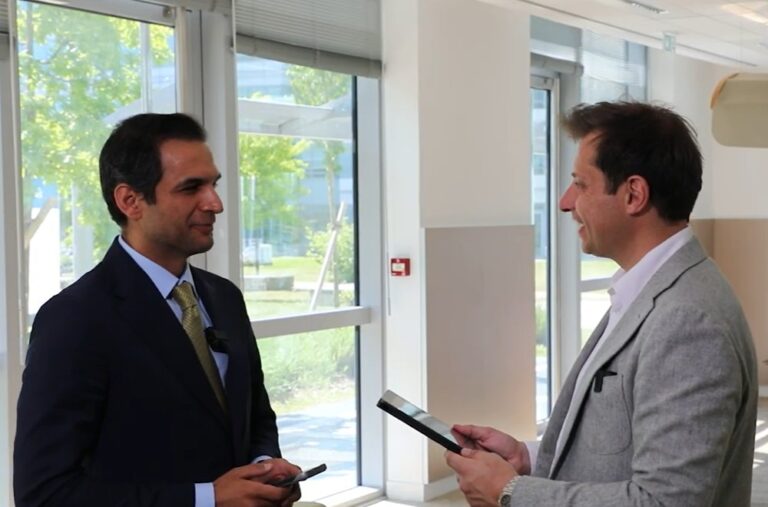
Early simulation provides the evidence and confidence needed to verify complex system requirements throughout the engineering process. For Massood Akmali, Senior R&D Engineer at Assystem, verifying complex system requirements means connecting system architecture with simulation from the earliest design stages. By coupling CATIA Magic and Dymola on the 3DEXPERIENCE platform, Assystem developed an innovative methodology that enables continuous verification of dynamic performance requirements throughout simulation, supporting the development of advanced nuclear reactor architectures.
Model-Based Systems Engineering as an Enabler for Safety
At Assystem, Massood Akmali develops advanced methodologies for verifying requirements in complex energy systems, particularly nuclear reactors.
The main challenge when it comes to complex systems is how to verify the complexities and how to verify the requirements.
In nuclear reactor development, demonstrating compliance with safety-related requirements cannot be left until the end of the project. Instead, verification must be supported throughout the engineering process.
This requires a model-based systems engineering approach that structures system architecture, requirements and engineering data while enabling collaboration across disciplines.
CATIA Magic plays a central role by providing a SysML-based environment to model system architecture, manage requirements and maintain end-to-end traceability between stakeholder requirements, architectural decisions and verification activities. This traceability helps teams connect engineering evidence, including simulation results, to the design choices that support safety objectives.
Coupling CATIA Magic and Dymola for Systems Architecture and Multi-Physics Behavior Consistency
The CATIA Magic, in one hand it ensures the traceability and the model based approach to visualize your architecture of your system. And on the other hand Dymola ensures the physical modeling and performance of your system.
This complementary approach became the foundation of Assystem’s methodology.
The team modeled a molten salt reactor architecture in SysML using CATIA Magic. In parallel, they developed a multi-physics system model in Dymola using the Modelica language. Dymola’s domain-specific libraries and equation-solving capabilities enabled the evaluation of thermodynamic and dynamic system behaviors.
By coupling both environments, Assystem connected the system architecture with its multi-physics behavior. Simulation parameters and results were exchanged between Dymola and CATIA Magic using telecommunications protocols, allowing engineering models and simulation results to remain synchronized throughout the verification process.
Continuous Verification of Dynamic Performance Requirements
Traditionally, engineers perform simulations, analyze the results separately and then manually assess whether the system satisfies its performance and safety-related requirements.
For example, classically what we did, we tried to do the simulations manually and trying to go through the really textbook […] ways to see the final results and also to see how the outcome may affect the actual safety requirements.
Assystem’s methodology streamlines this workflow.
As simulation progresses in Dymola, relevant performance data is continuously exchanged with CATIA Magic, where it can be evaluated against the defined system requirements. This enables engineers to verify dynamic performance requirements throughout the simulation process rather than relying solely on manual post-processing.
We see exactly in the same time, because of these telecommunications protocols, we’ve got the simulations and answers to the conformity.
The result is greater visibility into system behavior, improved traceability between requirements and simulation evidence, and a more efficient verification process.
A Single Knowledge Base for Multidisciplinary Collaboration
Developing advanced nuclear systems requires close collaboration between systems engineers, physicists, simulation specialists and other stakeholders. When engineering information is spread across disconnected tools, maintaining consistency becomes increasingly difficult.
By integrating CATIA Magic and Dymola on the 3DEXPERIENCE platform, Assystem established a shared engineering environment where system architecture, requirements and simulation models remain connected.
A physicist can work with the engineer and the safety engineers and also with other stakeholders. So this enhances basically all the collaborations within our system
The result is a common engineering reference that improves collaboration while preserving traceability across requirements, architectural decisions and simulation outcomes.
Conclusion
For advanced nuclear reactor development, demonstrating compliance with dynamic performance requirements benefits from tightly connecting systems architecture and simulation throughout the engineering process. By combining CATIA Magic for Model-Based Systems Engineering with Dymola for high-fidelity multi-physics simulation, Assystem developed an integrated methodology that supports continuous verification during simulation.
This approach strengthens traceability between requirements, architecture and simulation evidence, improves multidisciplinary collaboration and helps engineering teams make better-informed decisions from the earliest stages of system development.
FAQ
- What is CATIA Magic used for in nuclear system development?
CATIA Magic provides a SysML-based environment for modeling system architecture, managing requirements and maintaining traceability throughout complex engineering projects.
- How does Dymola complement CATIA Magic?
Dymola performs high-fidelity multi-physics simulations using Modelica, enabling engineers to evaluate system behavior and performance under dynamic operating conditions.
- How are requirements verified during simulation?
Simulation data generated in Dymola is continuously exchanged with CATIA Magic, allowing engineers to evaluate system performance against defined requirements throughout the simulation process.
- Why is coupling systems architecture with simulation valuable?
It connects system architecture with simulation evidence, improving traceability, supporting verification activities and helping engineering teams make informed design decisions earlier in development.
- What are the benefits of integrating CATIA Magic and Dymola?
The integration creates a unified engineering environment where requirements, architecture and simulation models remain connected, improving collaboration, reducing manual verification effort and strengthening engineering consistency.

Guillaume Belloncle is the CATIA MBSE Strategic Engagements Industry Process Director, within CATIA Industry Process Success organization