Defense and government programs rarely have the luxury of working with simple systems, small teams or clean data. Requirements can span thousands of items, legacy systems can remain in service for decades, and engineering information has to support disciplines ranging from design and testing to cybersecurity, obsolescence and mission analysis.
At that scale, the challenge is not simply creating a model. It is making the model trustworthy, reusable and useful across the program.
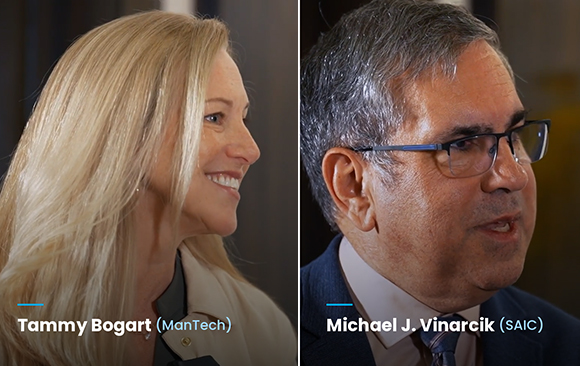
Two practitioners working with US government and defense customers, Tammy Bogart of ManTech and Michael Vinarcik of SAIC, describe complementary approaches to that problem. Both use CATIA Magic and SysML to establish a connected representation of the system. But their experiences highlight two different requirements for making that approach work at scale: automation and reuse on one side, and validation and traceability on the other.
Together, their experiences show how a model can become more than an engineering deliverable. It can become the program’s working source of truth.
The scale problem: defense systems cannot be managed as disconnected documents
For Michael Vinarcik, one of the fundamental problems is that document-driven systems engineering does not scale well to modern cyber-physical systems.
Large defense programs require methods that can manage complexity while preserving traceability. A modeling approach that works for a relatively contained subsystem cannot simply be applied unchanged to something as complex as an aircraft carrier.
That means the challenge is methodological as much as technological: organizations need ways of using their tool chains rigorously while maintaining the relationships between system information.
Michael describes the objective as being able to steward and curate that information at scale, with traceability built into the engineering approach rather than added afterward.
Tammy Bogart sees the same scale challenge from another perspective. Many of her government customers have systems that can be decades old, while budgets and schedules continue to demand faster delivery. Her approach is to reuse the models and information that already exist rather than repeatedly rebuilding the same knowledge for different engineering activities.
The common requirement is clear: the model has to work as infrastructure for the program, not as another isolated artifact.
CATIA Magic as the system’s digital source of truth
Tammy’s description of the CATIA Magic environment is particularly direct: “Systems models are our digital source of truth. Everything flows in and out of there.”
In her approach, SysML sits at the center of the digital thread. System components can be represented in the model alongside properties needed for activities such as obsolescence management. For example, manufacturer and part-number information can be associated with components, making it possible to identify what needs to be replaced and understand what those components are connected to elsewhere in the system.
This is what makes the model useful beyond architecture documentation.
The same system representation can support different questions from different teams. A cybersecurity team may need to understand system exposure. An obsolescence team may need to identify affected components. A cost team may need different information again.
Instead of creating separate representations for each question, Tammy’s approach is to reuse the underlying model and data.
She describes MBSE as a “living infrastructure” precisely for this reason: the information can move between engineering tools and be reused for different purposes.
Validation turns a model into something teams can trust
Having a central model is only useful if the model itself can be trusted.
This is where Michael puts particular emphasis on validation.
He has used CATIA Magic since the No Magic days and highlights its support for standards-conformant modeling using SysML, UAF and other modeling languages. For him, rigor means capturing design intent with enough traceability and detail to reduce errors further downstream, including during design, testing, integration, validation and deployment.
His key point is that validation should not be treated as a final inspection.
CATIA Magic allows teams to query models and derive work products from information that may be distributed across multiple relationships. But those queries are only valuable when the underlying model is complete, consistent and compliant with the organization’s methodology.
Michael summarizes the principle simply: “If the model is right and the query is right, the answer it gives you is right.”
That creates an important distinction between a model that merely contains information and one that can support engineering decisions with confidence.
Automation makes the source of truth usable at program scale
Tammy’s experience shows what happens when the model is connected to automation.
When she joined the CATIA environment, her software engineering background led her to explore the products’ Java-based extensibility. Instead of accepting repetitive modeling tasks as manual work, she began writing plugins to automate them.
One example involved a government system that was expected to take six months to build. By automating repetitive activities through plugins, her team built it in 40 hours.
The automation also provided another benefit: consistency. Repetitive operations could be performed in the same way across models, helping maintain a common structure that could then support downstream analyses.
For defense programs, that repeatability matters.
A model that is technically comprehensive but requires large amounts of manual maintenance can quickly become difficult to sustain. Automation changes the economics by allowing teams to perform the same operation repeatedly without rebuilding the process each time.
From CATIA Magic to a digital twin – and back again
Tammy’s use of CATIA Magic becomes particularly interesting when the model is connected to a digital-twin environment.
Her workflow takes information from a CATIA system model through a plugin and scripting into a hypervisor-based digital-twinning environment. There, the environment can automatically create software-defined infrastructure for testing.
A customer can therefore test a new component or software change virtually rather than first purchasing a physical product or taking an operational system offline.
Once the testing is complete, changes can be pushed back into the CATIA Magic model so that the model remains the source of truth.
This creates a closed loop:
model → virtual environment → testing → updated model
The model is not simply feeding a simulation. It remains the authoritative representation after the simulation and testing activities have taken place.
That is particularly valuable when the same information needs to support multiple stages of a system’s lifecycle.
Cybersecurity becomes another question the model can answer
The digital-twin workflow also gives Tammy a way to use the model for cybersecurity testing.
She describes taking a system model from a CATIA Magic product and pushing it into the digital-twinning environment, where teams can test new components and inject cyberattacks.
For example, they can examine what happens if an adversary gains access through an entry point such as a printer spool and determine which computers or systems could subsequently be reached.
The testing can then identify where additional hardening is required. Once the analysis is complete, the resulting information can be pushed back into the CATIA Magic model.
The significance is that cybersecurity analysis is not operating as an isolated activity. It is another use of the system representation.
The same model that describes the architecture can therefore become an input to virtual testing and then receive the resulting engineering information.
Querying the model changes what the engineering team can deliver
Michael’s experience demonstrates another advantage of having a validated, connected model: teams can derive information that is not necessarily visible in a single SysML diagram.
He describes a project delivered in firm-fixed-price increments where his team moved through reviews without rework or requests for clarification. At the final critical design review, they produced a single artifact by querying information several relationships away in the model — five or six “hops” — and presenting the result in a format tailored to what the stakeholder needed.
This illustrates an important difference between a model and a static document.
A document delivers the information it was written to contain.
A properly structured model can be queried to produce different views and answers from the same underlying information.
That capability is particularly relevant in defense programs, where different stakeholders can need different slices of the same system at different points in the lifecycle.
The Mars Octet: finding errors before they become expensive
Michael also points to the Mars Octet, an academic modeling effort involving eight student groups modeling eight different Mars missions.
The models initially passed validation. As the work progressed and the models were used as a testbed for federation methods, additional testing revealed numerous interface errors.
Those errors were not merely cosmetic modeling problems. Michael notes that, in a real system, similar interface issues could have created testing and integration problems or potentially contributed to mission failure.
The example demonstrates why validation needs to be continuous and methodical.
A model can pass one level of validation while still containing issues that become visible only when more sophisticated checks are applied.
For defense engineering, where interfaces and dependencies can cross organizational and system boundaries, this ability to progressively test the model is an important part of establishing confidence.
AI can accelerate the path from legacy information to model
Both interviews also point toward AI as a way of reducing the manual work involved in building and maintaining these large-scale models.
Michael is particularly interested in AI for processing legacy content and bringing it into the model. His goal is not to remove the modeler from the process, but to automate more of the initial, repetitive work so experienced engineers can concentrate on higher-value analysis and stakeholder engagement.
Tammy is already using AI in more targeted applications.
One of her examples is an internally deployed LLM for obsolescence management. It uses component information from the model to identify information such as end-of-life, last-sale and support dates, as well as potential replacement parts.
She also describes a chatbot that can query both the model and requirements documentation, helping users who may not yet know the model well.
Because ManTech’s customers include government organizations, Tammy emphasizes the importance of keeping this AI capability internal. The models are trained and operated on the organization’s own platform so proprietary information does not have to be sent to public AI services.
Here, AI is being treated as another controlled capability around the model rather than as a replacement for the model itself.
Rigor does not have to mean slower engineering
The experiences of Tammy and Michael challenge the idea that rigor and speed are necessarily opposites.
Tammy’s automation examples show how scripting and plugins can reduce repetitive engineering work. Michael’s examples show how validated models and queries can produce targeted information without rebuilding documents manually.
Michael describes the result as “rigor at the speed of relevance.”
That is particularly important for defense programs, where the objective is not simply to create more documentation or more models. The objective is to provide reliable engineering information when stakeholders need it, while maintaining enough rigor to trust the result.
The model becomes valuable precisely because it can serve multiple purposes without requiring teams to recreate the underlying information each time.
Scaling MBSE means scaling the method, not just the tool
Both interviews ultimately point to the same implementation lesson: putting CATIA Magic in place is not enough.
Michael stresses the importance of methodology and automated validation. He argues that organizations should use validation to demonstrate that their models conform to the methodology and accurately represent design intent.
Tammy emphasizes training and collaboration between modelers, engineers and data scientists. Her advice is to begin with the question a program office needs answered, then determine how the same underlying data can be reused to answer other questions.
In other words, scalability comes from the combination of tool capabilities, modeling discipline, automation and organizational expertise.
That is what allows the model to remain useful as the number of systems, stakeholders and engineering questions increases.
Conclusion
At defense-program scale, the value of CATIA Magic and SysML is not simply in producing a system model. It is in creating a validated, connected representation that can support many engineering activities from the same source.
Tammy Bogart demonstrates how plugins, digital twins and AI can make that source of truth reusable and operational. Michael Vinarcik shows how validation, traceability and model queries can turn it into a trusted basis for engineering decisions.
Together, their experiences point to a practical definition of scalable MBSE: one model, rigorously maintained, continuously validated and reused to answer many questions.
👉Watch the interview with Tammy Bogart (ManTech) here!
👉Watch the interview with Michael J. Vinarcik (SAIC) here!
FAQ
A centralized system model allows different engineering activities to work from connected information rather than creating separate representations. Tammy describes the model as the digital source of truth, while Michael emphasizes validating that model for traceability, completeness and consistency.
Michael highlights standards-conformant modeling capabilities, APIs and integration with other tools. He also points to the ability to query the model and derive work products from connected information, provided the model has been validated for traceability, completeness and consistency.
Tammy describes exporting information from a CATIA system model through a plugin and scripting it into a digital-twin environment. After virtual testing, changes can be pushed back into the model, allowing it to remain the source of truth.
Tammy uses plugins to automate repetitive modeling activities and maintain consistency. In one government project, automation helped her team complete work that had been expected to take six months in 40 hours.
AI can assist with tasks such as processing legacy information, querying models, supporting obsolescence analysis and helping users navigate requirements and model information. Both interviewees emphasize using AI to augment engineers and reduce repetitive work rather than replacing engineering judgment.

Jason Wilson is a worldwide CATIA No Magic - Cyber Systems Industry Process Expert Director, within CATIA Cyber Systems Electrical & Fluidic organization.