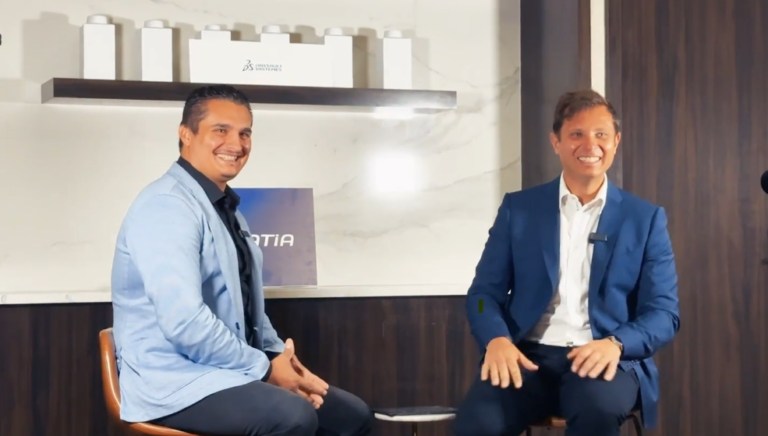
In automotive engineering, design changes are inevitable. Styling evolves, surfaces are updated, components move, and technical requirements change throughout a vehicle program. But when every change forces multiple teams to rebuild their work manually, the cost can quickly become significant.
For Cornel Manole, CTO and co-founder of OCMEE Design, the answer lies in moving beyond conventional CAD. By using advanced parametric design techniques in CATIA and embedding engineering knowledge directly into models, engineers can create intelligent, reusable models that respond to changes, provide instant feedback and reduce repetitive work across multiple vehicle programs.
Cornel’s experience with this approach began in CATIA V5, where he developed the first generation of his models. These models are now being migrated to the 3DEXPERIENCE platform.
Build your model clever once, and CATIA can rebuild it faster than any engineer can do by hand.
From Automotive Engineering to Advanced Parametric Design
Cornel is an automotive engineer and design specialist based in California. Before co-founding OCMEE Design, he worked with several major automotive manufacturers, including Renault, Jaguar Land Rover, Aston Martin, Lotus, Rivian and Karma.
Early in his career, he began exploring CATIA beyond conventional modelling workflows. He became particularly interested in advanced parametric techniques and how engineering knowledge could be built into a model rather than applied manually every time a design changed.
That approach ultimately shaped his modelling methodology and became central to his work at OCMEE Design, a technical services company specializing in engineering and production CAD solutions.
The Challenge: When Every Design Change Creates More Work
Automotive development involves constant change. Styling, surfaces, packaging and technical requirements can all evolve during a program.
The problem is that a change made by one team can trigger significant rework elsewhere. Multiple teams may have to redo their work, sometimes from scratch and manually. This can create bottlenecks, dependencies and friction between teams.
Cornel has seen the impact firsthand. In one situation, around 800 hours of engineering work went to waste because teams were waiting for technical information from a sensor supplier.
Every change added 800 hours of manual rework. On a 50-program cycle over the next five years, that means 40,000 engineering hours that go to waste. And CATIA has the right tools to tackle this.
For Cornel, the opportunity is not simply to make individual modelling operations faster. It is to make the model itself more capable of managing change. It is to make the model itself more capable of managing change.
When a CAD Model Starts Thinking
This is where advanced parametric modelling becomes particularly powerful.
Cornel describes using CATIA to embed parameters, engineering rules, compliance checks, reactions and warning messages directly into models. Instead of representing geometry alone, the model can incorporate the engineering logic behind that geometry.
It stops being just normal CAD geometry and it starts thinking. It becomes an intelligent model that speaks back, that gives you instant feedback.
This changes the way engineers interact with their designs.
Rather than discovering later that a change has created a problem, engineers can receive feedback directly from the model. The model can indicate whether things are working and help the engineer understand how to change the design.
And because this knowledge is embedded in the model, it can be reused across different vehicle programs and platforms.
Cornel emphasizes that this is not simply about creating templates. His approach is based on a generic model with interconnected layers: feeder data that goes into the model, models containing the parameters and engineering logic, and a final output model that stores the resulting information and communicates with other users.
PDC Sensors: Turning Supplier Specifications into Design Intelligence
A practical example is the positioning of PDC parking sensors on a vehicle.
The task involves several teams. ADAS engineers are responsible for sensor functionality, styling teams manage the vehicle surface, engineering teams design the brackets that hold the sensors, electrical teams route the harnesses, and packaging teams check the surrounding components.
Traditionally, a small change in sensor position could mean waiting for feedback from the supplier before knowing whether the new position would work. Cornel describes situations where teams had to wait two or three weeks for that feedback.
His approach was to take the supplier’s technical specification and embed it in CATIA.
He generated graphical representations of the specification inside the model, including green, yellow and red zones. The position shown on the graph was linked to the actual sensor position on the vehicle fascia.
Move the sensor, and the model immediately indicates whether its new position falls within the required zone.
This gave the teams immediate information during design discussions instead of requiring them to wait for external confirmation. The approach also supported automatic regeneration of the surrounding brackets when the main A-surface or sensor points changed.
For Cornel, the benefit went beyond parametric efficiency. The approach also reduced friction between teams by giving stakeholders immediate feedback during their discussions and reducing work that might otherwise have to be repeated.
Parametric Design Beyond the Exterior: The Armrest Example
The same principles can be applied to vehicle interiors.
Consider a vehicle armrest. It can contain multiple layers and components: a leather or fabric surface, lamination, comfort foam, a plastic part that holds everything together, buttons, latches, pins and springs, as well as a plastic cover underneath.
With a correctly structured parametric model, the engineer can change the main input surface and allow the rest of the construction to regenerate and update.
Instead of rebuilding the model component by component, the relationships built into the model drive the update.
And once the methodology has been established, it can be reused for other vehicle programs.
From Reusable Models to Knowledge Activated Design
For Cornel, this is the fundamental shift engineers should consider.
If an engineer repeatedly finds themselves rebuilding the same parts manually, it may be time to look beyond conventional modelling techniques and explore more advanced parametric approaches.
His philosophy can be summarized through a simple reinterpretation of CAD:
Instead of just doing normal CAD, Computer Aided Design, go into CAD, Knowledge Activated Design
The idea is to capture engineering knowledge inside the model so that it can continue to provide value long after the original modelling task is complete.
A well-designed intelligent model can preserve the relationships, parameters and rules that make future design changes faster and more controlled.
From CATIA V5 to 3DEXPERIENCE
Cornel’s experience also illustrates an evolution in the environment in which these models are used.
The first generation of his models was developed in CATIA V5. According to Cornel, those models are now being migrated to the 3DEXPERIENCE platform.
This distinction is important when looking at his approach. The interview focuses on his modelling methodology and experience with CATIA rather than on a specific CATIA application or module.
Cornel does not identify individual applications for each modelling operation in the interview. Instead, he describes the capabilities he uses at a functional level: parametric modelling, embedded engineering rules, compliance checks, reactions and warning messages.
The focus is therefore not on a particular application name, but on how he structures models so that engineering knowledge becomes part of the design itself.
Adding Creativity to Parametric Modelling
Advanced parametric modelling does not necessarily mean more rigid engineering.
In fact, Cornel sees an important creative dimension in the way he works with CATIA. The combination of an engineering mindset with more advanced modelling techniques allows him to explore new ways of creating robust models.
The goal is not simply to automate a fixed sequence of operations. It is to build models that can adapt when their inputs change.
This is particularly valuable when the same engineering concept needs to be applied to multiple vehicle platforms.
The Next Step: AI-Enhanced Parametric Engineering
Cornel also sees significant potential in the integration of AI into CATIA.
In the interview, he points to command intelligence, which can offer modelling options, and an AI companion that can help engineers answer questions and build parameters.
For example, an engineer working on an armrest could ask about the appropriate range for the foam thickness. According to Cornel, the AI companion could provide answers and help build parameters for the model.
For Cornel, this points toward a workflow where AI assistance and parametric modelling can work together: the engineer remains responsible for the design, while AI can help make information and modelling approaches more accessible.
Why Intelligent Models Matter for Automotive Engineering
The real value of this approach becomes clear when looking beyond a single component.
A change to a vehicle can affect many disciplines simultaneously. The faster teams can understand the consequences of that change, the less likely they are to waste work or create unnecessary dependencies.
By embedding engineering knowledge into reusable parametric models, Cornel’s approach with CATIA can help teams:
- Reduce repetitive modelling
- React faster to design changes
- Reuse engineering knowledge across programs
- Provide earlier feedback during design
- Reduce dependencies between teams
- Automate model regeneration
- Create more intelligent and adaptable CAD models
The objective is not simply to produce geometry faster. It is to create models that carry more of the engineering intelligence behind the geometry.
The Future of CAD Is Knowledge-Activated
For Cornel, the biggest opportunity is to change the way engineers think about CAD itself.
Instead of creating a model that represents the design at one particular moment, engineers can create an intelligent model that incorporates its parameters, relationships and engineering rules and can respond when the design changes.
That can turn engineering knowledge into something reusable and valuable across vehicle programs.
Build your model clever once, and CATIA can rebuild it faster than any engineer can do by hand.
The future of automotive engineering may therefore be less about modelling the same thing faster, and more about building models that already know how to change.
Conclusion
Advanced parametric modelling can transform the CAD model from a static representation into a reusable engineering asset. By embedding parameters, rules and engineering knowledge into CATIA models, engineers can respond to changes faster, reduce repetitive work and reuse their methodologies across vehicle programs.
Cornel’s experience, from developing his first models in CATIA V5 to their migration toward 3DEXPERIENCE, shows how this approach can evolve while keeping the same fundamental idea: turning CAD from Computer Aided Design into Knowledge Activated Design.
FAQ
Parametric design allows engineers to define relationships and parameters within a model so that changes to key inputs can update related geometry and components.
Knowledge Activated Design is Cornel Manole’s way of describing an approach to CAD in which engineering knowledge, parameters and rules are embedded into models so they can provide feedback, respond to changes and be reused.
Cornel explains that the first generation of his models was developed in CATIA V5 and is now being migrated to the 3DEXPERIENCEplatform.
By embedding parameters, relationships and engineering rules into a model, related geometry can regenerate when key inputs change, reducing the need to rebuild components manually.
Cornel mentions command intelligence and an AI companion as examples of AI capabilities he has seen in CATIA. He describes the AI companion as helping engineers find answers and build parameters for their models.

Chris Maeder is NAM BDH Industry Process Consultant Senior Specialist, within Digital Online Sales - Industry Process Consulting - AMERICAS organization