


Andrew Lai, Industry Process Consultant, Dassault Systèmes’
When I joined Dassault Systèmes as a Graduate Systems Engineer and Industry Process Consultant, I thought I understood engineering. My Master’s degree in Mechatronics had equipped me with a solid foundation in mechanical design, CAD, control systems, and implementation. Like many engineering graduates, I believed that if every component of a product was designed well, the overall system would naturally succeed.
It did not take long for me to realize that engineering in industry demands a much broader perspective.
Successful products aren’t made with just component engineering
Over the past year, my experience at Dassault Systèmes has fundamentally changed how I think about engineering. I have learned that successful products are not created simply through excellent component design. They are built by understanding requirements, designing robust system architectures, integrating multiple engineering disciplines, validating performance, and managing the complete product lifecycle. That shift from thinking about individual components to thinking about entire systems has been the defining lesson of my graduate journey.
My learning began with building a strong foundation in Model-Based Systems Engineering (MBSE). During my first few months, I focused on understanding systems engineering principles, learning SysML, becoming proficient with the CATIA Magic tool, and completing technical certifications. Rather than immediately working on customer engagements, the emphasis was on developing the knowledge and skills needed to understand systems engineering properly before applying them in practice.
The transition from theory to practice happened gradually. I worked alongside experienced consultants, met customers and industry partners, observed how MBSE is implemented in real engineering environments, and learned how organizations apply model-based approaches to solve complex engineering challenges. At the same time, I developed the confidence to train others and explain the value of systems engineering in practical business environments.
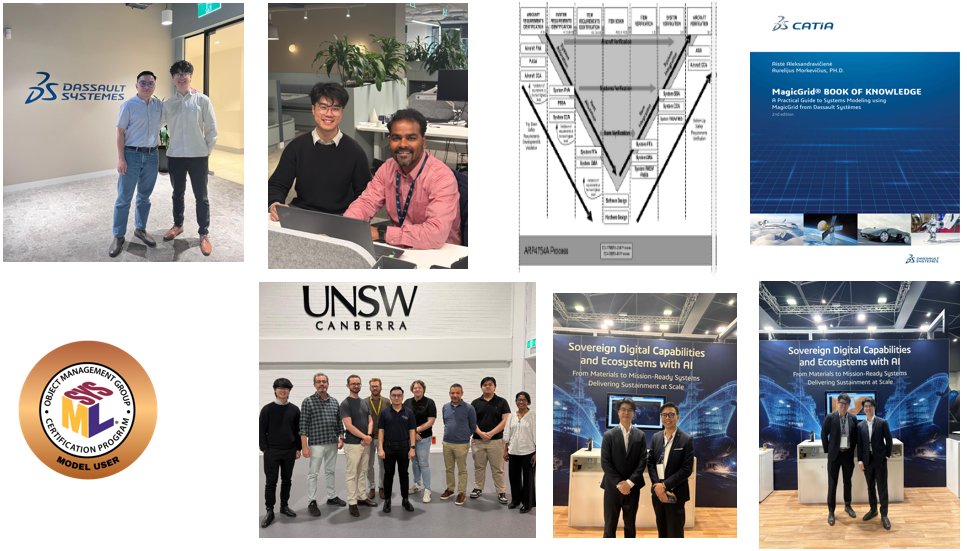
One of the most valuable aspects of being a graduate engineer at Dassault Systèmes was the structured support available from the beginning.
Every graduate is assigned both a manager and a buddy. Throughout my journey, I always had experienced people I could turn to whenever I had questions.
My manager guided my technical development while helping me understand the broader systems engineering discipline. My buddy supported me during my first few weeks, helping me navigate the organization, understand my responsibilities, and become familiar with the company’s digital platforms. Through that support, I learned how to use the 3DEXPERIENCE platform, navigate the 3D Compass, access training materials, and complete a range of industry-approved mandatory certifications through 3DEXPERIENCE University.
Having that structured support made the transition from university into industry much smoother than I expected.
Culture of continuous learning is crucial in engineering
Equally important was the emphasis on continuous learning. The graduate experience at Dassault Systèmes extends well beyond initial onboarding. It combines structured learning paths, technical certifications, guided tutorials, practical exercises, and formal assessments. Every certification builds on the previous one, ensuring that graduates develop both technical knowledge and practical capability before progressing to more advanced responsibilities
This approach reflects an important reality facing engineering organizations today. Future engineers need more than traditional engineering expertise. Why is this so? As modern systems become increasingly complex, so do the number of requirements, interfaces, and engineering challenges.
To address this, new digital engineering strategies are being adopted worldwide, led by organizations such as the US Department of Defense and the Australian Department of Defense. This creates a new paradigm where digital engineering, systems thinking, lifecycle management, and collaborative model-based development are essential part of managing complexity.
MBSE is not replacing engineering fundamentals; it is extending them by providing a framework that connects multiple engineering disciplines into a single, coherent model that speaks the same language.
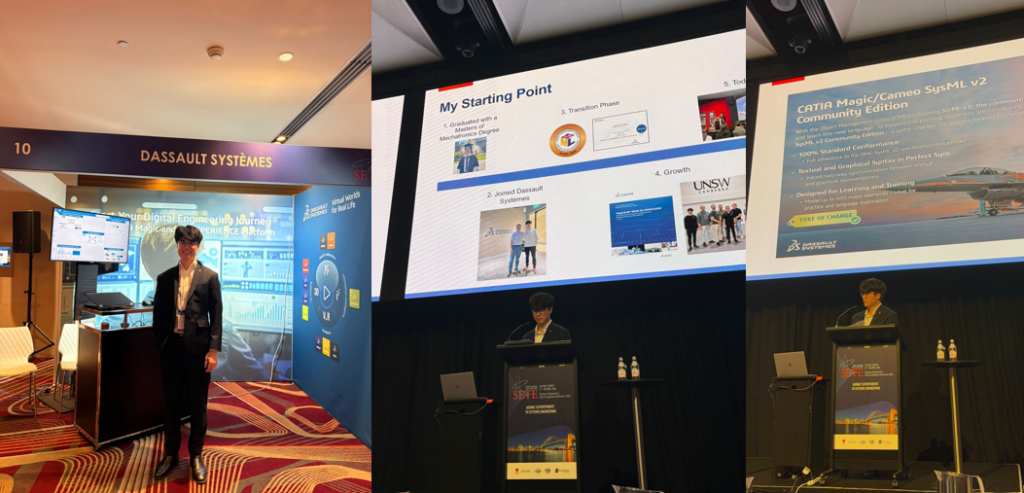
That broader perspective became particularly evident when I had the opportunity to present my own learning journey at the Systems Engineering Test and Evaluation Association (SETE) conference in Australia. It was my first major industry conference and an important milestone in my professional development. Speaking to an audience of experienced systems engineers about my transition from university into industry reinforced how much I had grown in less than a year.
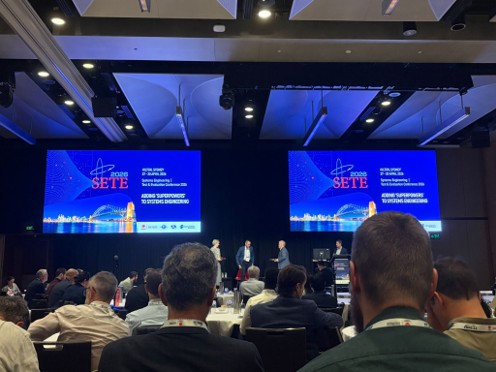
My presentation was not intended to demonstrate software features. Instead, it highlighted something more important: the development of engineering capability itself. The message was that Dassault Systèmes is not simply developing engineering technology – it is investing in the engineers who will use that technology in the future.
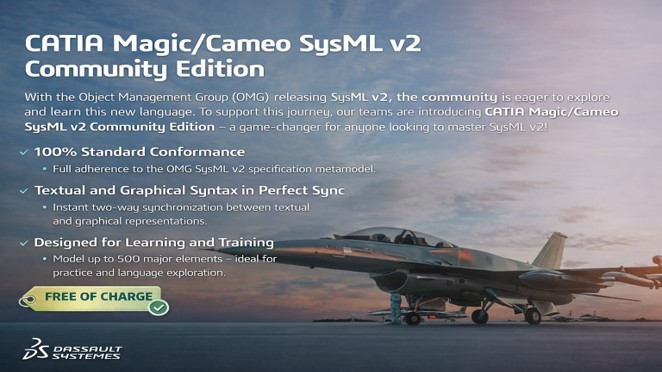
That philosophy extends beyond my own graduate journey. Through initiatives such as the CATIA Magic SysML v2 Community Edition, universities, educators, and researchers can explore modern systems engineering tools without commercial barriers. By making these technologies more accessible, the company is helping students and researchers develop practical MBSE skills long before they enter the workforce.
Looking back, I realize that the greatest value of the graduate program has not been learning a software platform. It has been learning how to think differently.
Why engineering capabilities cannot be developed in classrooms alone
Engineering today requires professionals who can combine technical expertise with systems thinking, digital engineering practices, collaboration across disciplines, and lifecycle management. Those capabilities cannot be developed through classroom education alone. They require structured mentoring, continuous learning, practical experience, and exposure to real-world engineering challenges.
My own journey demonstrates how those elements can come together. From completing certifications and learning SysML to working alongside experienced practitioners, engaging with customers, and eventually presenting at a premier systems engineering conference, every stage has built both technical competence and professional confidence.
As industries across aerospace, defense, infrastructure, healthcare, and manufacturing increasingly adopt model-based engineering approaches, the demand for engineers who understand both engineering fundamentals and MBSE will continue to grow.
Preparing that workforce requires more than technology. It requires investment in people, structured learning, mentorship, and opportunities to apply knowledge in real engineering environments.
That is the lesson I have taken from my first year at Dassault Systèmes. Building the workforce of the future means developing engineers who are equally capable of designing products and understanding systems – professionals who combine engineering excellence with Model-Based Systems Engineering to solve increasingly complex challenges.