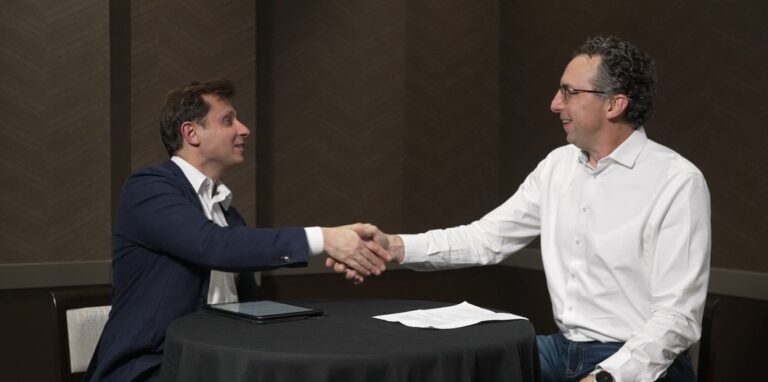
We sat down with Glenn Isbell, Vice President of Prototyping at Bell, to explore how CATIA and the 3DEXPERIENCE platform are helping Bell bridge the gap between product design and manufacturing, accelerating discovery, collaboration, and industrial excellence.
Where Ideas Take Flight: Prototyping the Future of Rotorcraft
In the world of advanced rotorcraft and vertical lift, speed and precision are everything. For Glenn Isbell, prototyping is literally where ideas take flight.
We do all kinds of rotorcraft, vertical lift, both helicopters, tail rotors, and different kinds of product developments[…]Most recently, we’re even helping to get into a little bit of space.
At Bell’s Manufacturing Technology Center, Glenn oversees what he calls the company’s “test kitchen”: a space where new ideas are transformed into tangible prototypes. This environment is designed to experiment, iterate, and learn fast, before transferring proven methods to full-scale production.
This philosophy of continuous discovery defines Bell’s approach to innovation, and CATIA provides the digital backbone that makes it possible.
Connecting Design and Manufacturing Through CATIA
Bell’s engineers rely heavily on CATIA and the 3DEXPERIENCE platform to integrate design, simulation, and manufacturing in a single, connected environment.
This digital ecosystem connects every stakeholder, from design engineers to manufacturing specialists, within one collaborative framework. At Bell, CATIA is not just a design tool; it’s a strategic enabler that links digital models to real-world processes, unlocking faster feedback loops and better-informed decisions.
The impact is tangible. For the first time, Bell can tie product design directly to manufacturing equipment, revealing the cost and process implications of every design decision.
If you add this process, it’s going to require a million dollars more of equipment […] So we now have those traits, which we haven’t had typically before. That’s been pretty useful.
By bridging design and production within the same digital thread, Bell ensures fewer surprises, faster iterations, and smarter investment decisions from day one.
From Vision to Reality: Real-World Data Integration
Bell’s transition to digital manufacturing goes beyond visualization: it’s about creating a single source of truth that connects design intent with shop-floor execution.
For years, Bell has been a pioneer in managing both its engineering bill of materials (EBOM) and manufacturing bill of materials (MBOM) within a unified environment.
This integrated structure means engineers and manufacturing teams no longer work in silos. They share the same digital model, the same data, and the same understanding accelerating communication and reducing rework.
That allows the manufacturing engineering and the design engineering to sync up […] We even have a BOM that’s the same structure between our engineering and manufacturing. So we don’t have to reorder all the parts so we can flow information faster.
Now, with fully 3D manufacturing BOMs, Bell is pushing the boundary even further, bringing spatial context, traceability, and interactivity into every aspect of product realization.
Empowering People Through Digital Collaboration
Technology is only as powerful as the people who use it. At Bell, CATIA and 3DEXPERIENCE have become catalysts for a cultural transformation, breaking down barriers between disciplines and fostering true digital collaboration.
This shared vision creates a culture of transparency, creativity, and accountability where ideas flow freely and decisions are made with confidence. As Bell continues to explore new frontiers in flight, this connected way of working ensures that innovation scales safely and efficiently from prototype to production.
Conclusion
From advanced rotorcraft to space-ready systems, Bell is redefining vertical flight through digital mastery and cross-functional collaboration. With CATIA and 3DEXPERIENCE, the company connects design, engineering, and manufacturing like never before, unlocking new levels of insight, agility, and performance.
FAQ
- How does Bell use CATIA and the 3DEXPERIENCE platform in rotorcraft design?
Bell leverages CATIA and the 3DEXPERIENCE platform to connect design, simulation, and manufacturing within a unified digital ecosystem. This integration enables engineers to collaborate efficiently, reduce rework, and accelerate innovation across all stages of rotorcraft development.
- What benefits does CATIA bring to Bell’s prototyping and manufacturing processes?
CATIA allows Bell to directly link digital design models to manufacturing equipment, providing clear insights into cost, process, and resource implications. This helps Bell’s teams make informed decisions, shorten development cycles, and ensure that prototypes transition smoothly into production.
- How does Bell connect engineering and manufacturing using CATIA?
Through a unified digital thread, Bell manages both its engineering bill of materials (EBOM) and manufacturing bill of materials (MBOM) in one environment. This shared structure eliminates silos, syncs data between teams, and enhances communication, resulting in faster and more accurate production workflows.
- In what ways has CATIA fostered collaboration and cultural transformation at Bell?
CATIA and the 3DEXPERIENCE platform have helped Bell build a culture of collaboration, transparency, and accountability. Engineers, designers, and manufacturing specialists work together in real time, ensuring that innovation scales efficiently from prototype to production.
- How is Bell shaping the future of rotorcraft innovation with CATIA?
By combining its legacy of aerospace excellence with CATIA’s digital capabilities, Bell is accelerating the future of vertical flight. The company continues to push boundaries in rotorcraft design, digital manufacturing, and even space exploration through connected, data-driven engineering.
Who is Joe Asmar?
Joe Asmar is the CATIA Mechanical Technical Consulting Team Manager for North America at Dassault Systèmes.
With deep expertise in core and multi-discipline mechanical applications, Joe leads his team in helping customers unlock the full potential of CATIA to drive innovation and efficiency.
Since joining Dassault Systèmes in 2008, Joe has partnered with industry leaders across North America to deliver transformative design and engineering solutions powered by CATIA 3DEXPERIENCE.

Joe Asmar is a CATIA Industry Process Consultant Senior Manager, within the NAM IC&S CATIA & 3DEXCITE organization.