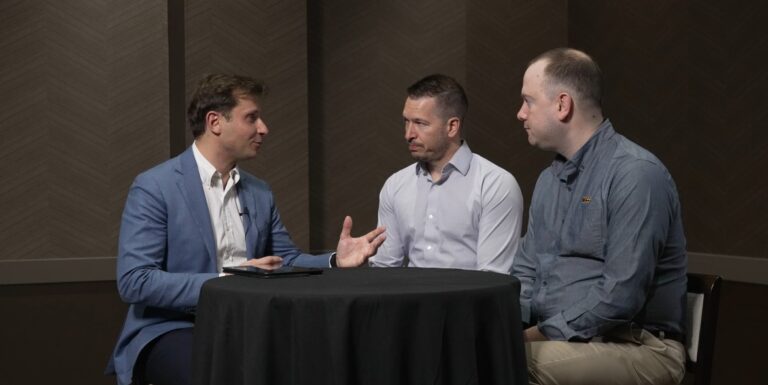
At Wichita State University, engineering students are pushed to master cutting-edge tools that bridge theory and practice. Nathan Shipley and Ryan Longwell, Associate Directors of the CAD CAM Department, guide students from novice to expert using CATIA and the 3DEXPERIENCE platform. In this interview, they share insights into how CATIA drives collaboration, enables advanced composite design, and prepares students for the real-world challenges of modern engineering.
Shaping Tomorrow’s Engineers: Challenges and Opportunities
At Wichita State University, students face the challenge of mastering complex CAD systems while working on high-stakes projects ranging from Department of Defense platforms to commercial products. Nathan Shipley, who leads the CAD CAM curriculum development, explains the process:
Depending on the topic, most of our students get about four weeks to the point where they’re not dangerous in the system […] At least get them in and have them start doing stuff. Obviously they’re working with mentors as well.
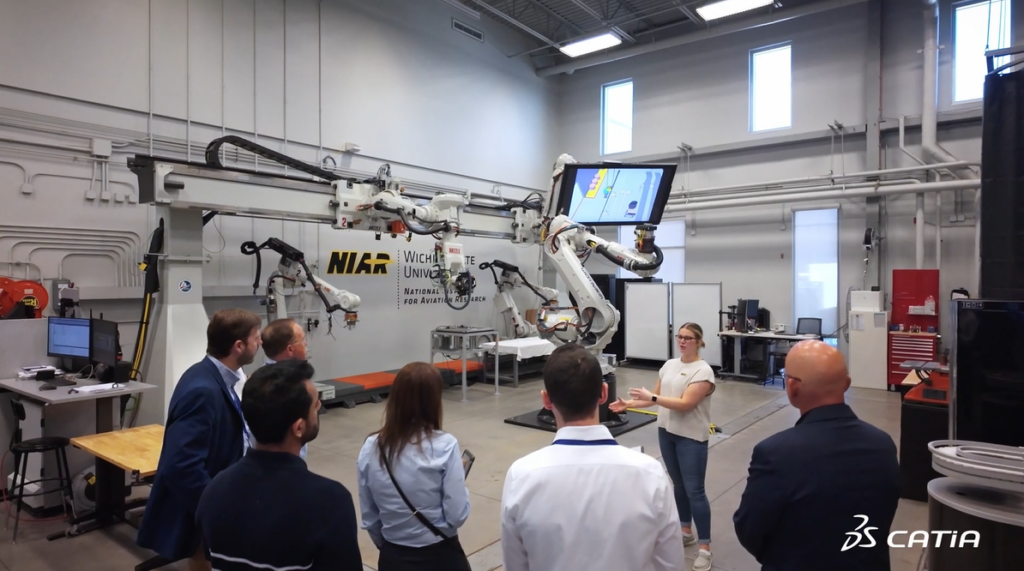
Ryan Longwell, who oversees students working on digital twins and reverse engineering, adds that the department’s approach emphasizes both skill acquisition and practical application. Their work ensures students not only understand CAD principles but also apply them to real-world engineering challenges.
Accelerating Design Innovation with CATIA
For Nathan and Ryan, CATIA and the 3DEXPERIENCE platform are more than software they are catalysts for learning and innovation. When handling projects with dozens of students simultaneously, traditional file-based workflows proved chaotic.
We’ve worked on projects with students where even we just had 15 students trying to work off of a file-based networks system, and it’s a nightmare in the making. And so now now some of our projects will have 80-90students all working in the same environment, on the same product […] frankly would be impossible if we weren’t able to do it in a PLM solution.
The platform allows students to work collaboratively, maintain version control, and access PLM-level tools that mirror real industry conditions. CATIA composites, in particular, offer unparalleled advantages in design flexibility and material simulation, giving students exposure to industry-standard methodologies.
Bringing Designs to Life: Real-World Accuracy and Collaboration
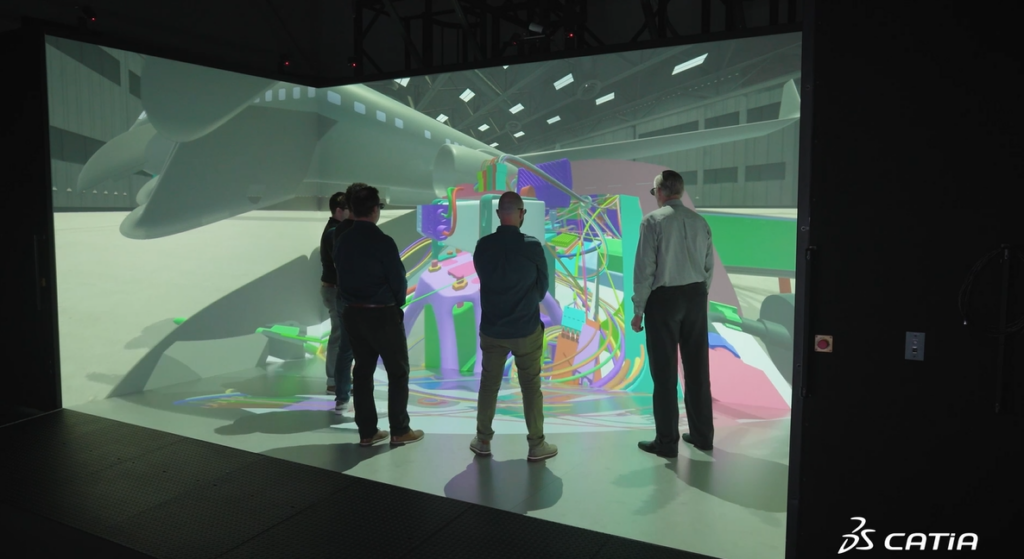
CATIA empowers students to translate complex engineering concepts into tangible, accurate digital models. Whether simulating composite materials or validating design stages, the platform handles real-world constraints seamlessly. Nathan highlights the advantage of working within a full PLM system:
Moving to a true PLM system like 3DEXPERIENCE is even more of an advantage from V5 and even Enovia.
This integration ensures that designs are not just theoretically sound but also practically viable, preparing students for the collaborative, data-driven environments of modern engineering.
Cultivating Passion and Teamwork in Engineering
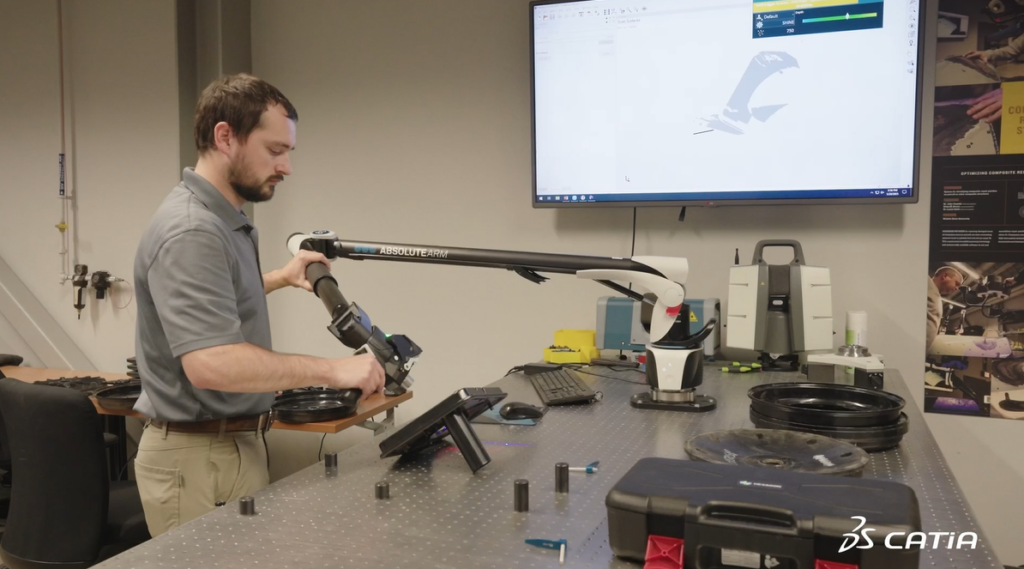
Beyond technical tools, Ryan emphasizes the human dimension of engineering education. Passion, mentorship, and teamwork are essential for mastering CATIA and thriving in digital design environments.
You don’t have to love it at first, but you need to develop a passion. The knowledge will come later, and if they have the passion, they’re going to develop it and be successful.
By fostering a culture where students learn from mentors, collaborate with peers, and take ownership of projects, Wichita State ensures that graduates are not just technically proficient but also adaptable, confident, and ready to innovate.
Conclusion
CATIA and the 3DEXPERIENCE platform empower Wichita State University students to bridge the gap between classroom learning and real-world engineering. From managing large-scale collaborative projects to exploring advanced composite materials, CATIA equips future engineers with the skills, tools, and mindset to succeed.
FAQ
- What is CATIA and how is it used in engineering education?
CATIA is a leading CAD and PLM platform used for 3D design, simulation, and collaboration. At Wichita State University, students use CATIA to learn advanced design techniques, including composites and digital twin modeling, preparing them for real-world engineering challenges.
- How long does it take for students to become proficient in CATIA?
According to Nathan Shipley, Associate Director of the CAD CAM Department, students typically need about four weeks to become competent enough to work safely in the system, with guidance from mentors. Full expertise develops over continued practice and exposure to complex projects.
- What are the benefits of using 3DEXPERIENCE for student collaboration?
The 3DEXPERIENCE platform allows multiple students to work simultaneously on the same product without version conflicts. Ryan Longwell explains that projects with 80–90 students collaborating in a shared PLM environment are manageable, something impossible with traditional file-based systems.
- Why is CATIA preferred for composite design in education?
CATIA composites offer advanced material simulation, flexibility, and real-world design accuracy. Nathan and Ryan highlight that it enables students to experiment safely with complex engineering materials while learning industry-standard workflows.
- What advice do experts give to first-time CATIA users?
Ryan Longwell recommends developing a passion for the tool even if it feels challenging at first:
You don’t have to love it at first, but you need to develop a passion. The knowledge will come later, and if they have the passion, they’re going to be successful.
Starting with curiosity and persistence ensures long-term success in mastering CATIA and 3DEXPERIENCE.
Who is Joe Asmar?
Joe Asmar is the CATIA Mechanical Technical Consulting Team Manager for North America at Dassault Systèmes.
With deep expertise in core and multi-discipline mechanical applications, Joe leads his team in helping customers unlock the full potential of CATIA to drive innovation and efficiency.
Since joining Dassault Systèmes in 2008, Joe has partnered with industry leaders across North America to deliver transformative design and engineering solutions powered by CATIA 3DEXPERIENCE.

Joe Asmar is a CATIA Industry Process Consultant Senior Manager, within the NAM IC&S CATIA & 3DEXCITE organization.