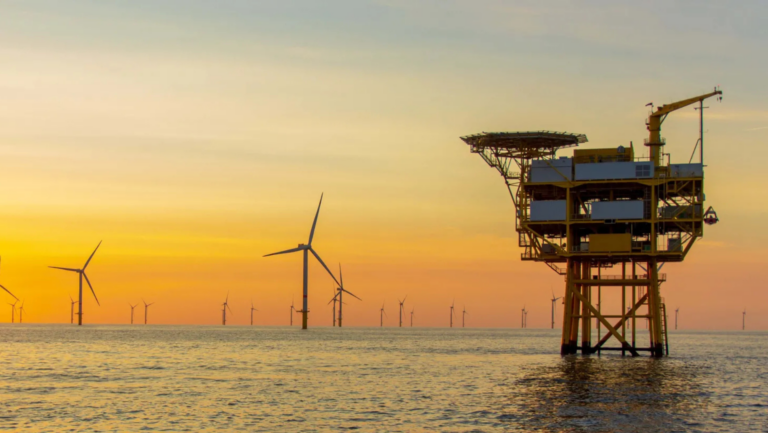

Every time a fuel pump is switched on or a light flickers to life, the transaction is made possible by an immense and largely invisible network – pipelines, refineries, terminals, and fabrication yards that together form India’s hydrocarbon infrastructure backbone. As the country’s energy consumption continues its steep upward curve, the organizations responsible for designing, building, and operating these facilities are under pressure to deliver projects of unprecedented scale, faster and more safely than ever before.
In this episode of 3DEXPERIENCE Innovation Matters, Dassault Systèmes India’s thought leadership podcast series, Tanuj Mittal, Senior Sales Director at Dassault Systèmes, is joined by Neerav Mehta, Joint General Manager of Digitalization at L&T Energy – Hydrocarbon, to explore how digital transformation is reshaping every stage of the hydrocarbon project lifecycle, from concept to commissioning and beyond.
“Technology is at the center of solving the complexity we face in hydrocarbon projects. But the success of the entire program ultimately depends on the behavior of the people”.
– Neerav Mehta
The Scale and Complexity of India’s Energy Ambition
India’s hydrocarbon sector is expanding on two fronts simultaneously. Domestic energy consumption is rising rapidly, requiring the construction of larger and more complex infrastructure than the country has previously undertaken. At the same time, India is actively positioning itself as an energy exporter – a goal that demands both accelerated project delivery and the highest standards of operational reliability.
These ambitions create an inherent tension: projects are growing in size and complexity at precisely the moment when owners and operators are demanding shorter timelines. Add to this the concurrent nature of modern engineering, procurement, and construction (EPC) delivery – where design, procurement, and site construction proceed in parallel across multiple geographies and dozens of stakeholder teams – and the challenge of seamless coordination becomes the defining problem of the industry.
The transition to greener fuels adds a further layer of complexity. India must innovate towards sustainable energy sources while simultaneously maintaining and expanding its existing hydrocarbon production capacity – a dual mandate that requires both operational excellence and strategic foresight.
Virtual Twins at the Core: L&T’s Digital Approach to EPC Delivery
Perspective from Neerav Mehta, Jt. General Manager – Digitalization, L&T Energy – Hydrocarbon
At L&T Energy – Hydrocarbon, the response to this complexity is anchored in a single principle: build and validate everything virtually before anything is touched in the physical world. Three-dimensional modelling is at the center of the entire engineering process – every component of a plant is modelled digitally, and construction and fabrication sequences are simulated in advance to identify clashes, optimize erection schemes, and eliminate costly on-site problem-solving.
This virtual-first approach extends beyond engineering. Operators are brought into the model during the design phase, allowing them to visualize how equipment will be maintained once the plant is live – ensuring, for example, that access routes for compressor servicing or filter removal are not obstructed by permanent structures. Problems that would previously only surface during commissioning are resolved months or years earlier, at a fraction of the cost.
“We virtually manage the entire process centrally on the 3D model, simulating scenarios so that when the plant starts, we end up with minimal disruption”.
–Neerav Mehta
From Data to Decision: The Three Levels of Digital Intelligence in EPC
Perspective from Tanuj Mittal, Senior Sales Director, Dassault Systèmes India
Managing a large-scale EPC project digitally is not a single problem, it is three sequential ones, each of which must be solved before the next becomes meaningful. The first is data collection: if progress, quality, and safety information from the field are still being captured manually, no amount of analytical sophistication at the center will produce reliable decisions. The second is collaboration: once data is flowing, the question is whether it reaches the right people, in the right context, fast enough to act on. The third is intelligence: whether the integrated dataset is being used effectively to describe the current state of a project as well as predict where it is heading.
Most organizations have made progress on the first level and are working on the second. The third – genuine predictive intelligence that draws on historical project data to forecast schedule slippage, cost overruns, and cascading bottlenecks before they materialize – is where the frontier currently sits. Reaching it requires a discipline of data governance that starts on the construction site and runs unbroken to the project management dashboard. The shift from reactive problem-solving to proactive risk management is a significant change in how organizations decide to use the information they are already collecting.
“The real question is not whether you have the data – it is whether your organization is willing to make decisions based on it, rather than intuition. Reviews should happen on live dashboards, not manually compiled presentations“.
– Tanuj Mittal
The People Imperative: Change Management as the Engine of Digital Adoption
Technology, however sophisticated, can only deliver on its promise if the people who use it are equipped, committed, and culturally aligned to the change it represents. In industries where the consequences of error are measured in cost overruns, safety incidents, and missed commissioning dates, that alignment is not a soft consideration, it is a hard project risk.
The transformation spans the full workforce hierarchy. At the field level, workers and supervisors must understand how to capture progress data digitally – through QR code scanning systems – and why data integrity matters for the safety and quality outcomes that affect them directly. At the management level, project reviews must migrate from manually compiled presentations to live dashboard-driven sessions where decisions are made based on real-time data, not intuition.
Looking ahead, the integration of robotics (particularly in fabrication and construction) and AI/ML-driven analytics into the project workflow will demand a further evolution in workforce capabilities. The most valuable engineers and project managers of the next decade will be those who combine deep domain expertise with the ability to implement machine learning in genuinely specialized, real-world contexts.
“Everybody should be trained for this kind of transformation. It is a very significant change management process, and there must be commitment from people throughout the organization for the program to succeed end-to-end“.
– Neerav Mehta
Smarter, Safer, and More Sustainable Hydrocarbon Infrastructure
India’s energy ambitions are achievable, but only through the disciplined application of digital technology across the full project lifecycle, and only when that technology is embraced by a workforce that understands its mechanics and its purpose.
The virtual twin is not merely a design tool. When it persists across every stage of an asset’s life – from first engineering models through construction, commissioning, operations, and eventual decommissioning – it becomes the single source of truth around which every team, every decision, and every stakeholder is organized. That continuity of digital intelligence, from concept to decommission, is both the ambition and the standard against which every EPC digitalization program should be measured.
“It is an entire plant lifecycle connected with a single digital twin. That is the goal,and that is what makes the difference between managing complexity and being managed by it“.
– Neerav Mehta
More Ways to Engage:
🎬 Watch on YouTube
🎧 Listen on Spotify
👥 Follow us on LinkedIn
📩 Get in Touch