
The pharmaceutical industry is under pressure to develop safe, effective drugs faster than ever before. Meeting market demands and regulatory requirements in a sped-up timeframe now requires a fundamental shift away from traditional, slower methods to approaches that enable rapid research, development and testing, all while maintaining the stringent requirements in a regulated industry. By integrating emerging technologies and applying an engineering mindset, pharmaceutical companies can transform their operations from isolated analytical exercises into optimized, highly efficient systems.
At the center of this transformation is a combination of new tech and more traditional collaboration. One international consortium, BioPhorum – of which Dassault Systemes is a member – is at the forefront of this new working model. The forum, which brings together technology companies and pharmaceutical partners, aims to bridge the gap that’s previously existed between these two spaces in order to power progress. By putting great technological minds and pharmaceutical experts in rooms together, empowering cooperation and knowledge sharing, they’re able to enhance innovative ideas that are changing industrial approaches for good.
The role of virtual twins in pharma
For years, virtual twins have been a key factor in the operational processes for hundreds of companies in dozens of industries. They’re a key component in automotive and aerospace design, factory operations and city planning, but they’re still a relatively new addition to the technology stack in healthcare and life sciences contexts. These tightly regulated industries have a slower trajectory to adopting new technologies, but there is growing interest to better understand and implement tools like AI, virtual twins and other emerging solutions in order to overcome challenges.
Drug discovery and development
Finding a viable drug candidate takes years of trial and error. Virtual twins fundamentally change this process. Researchers use virtual models to simulate how different compounds interact with biological targets, while predictive modeling allows scientists to identify the most promising candidates early in the development phase. By testing thousands of scenarios virtually, pharmaceutical companies reduce the time and resources spent on preclinical work.
Clinical trials
Clinical trials represent one of the most expensive and time-consuming phases of drug development. Virtual twins help organizations optimize trial designs to ensure better outcomes, from creating cohorts to monitoring patients. Researchers simulate patient populations to improve patient selection criteria, increasing the likelihood of a successful trial and ensuring populations that otherwise might not be able to participate, like minorities and low-income groups, are included. This data-driven approach makes clinical trials safer and more efficient.
Pharma manufacturing
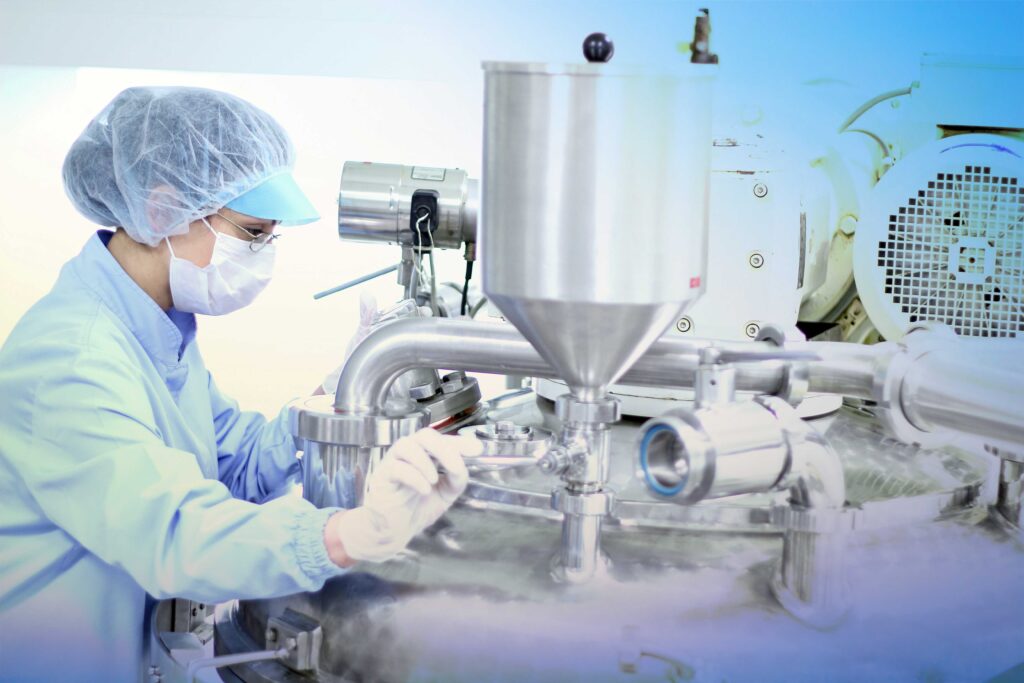
Manufacturing pharmaceutical products requires absolute precision. Even minor deviations can compromise product quality and patient safety. Tech transfer from labs to commercial production while maintaining regulatory compliance is critical in the industry. Virtual twins allow organizations to build a digital replica of their entire manufacturing floor, down to the tiniest detail.
Operators use these models for process optimization, predictive maintenance and real-time quality control. By simulating the manufacturing process, teams can identify bottlenecks and test new equipment configurations without disrupting actual production. This ensures high-quality output and minimizes costly downtime.
Proven collaborations: Dassault Systèmes and BioPhorum
Innovation rarely happens in isolation. It requires collaboration and open-mindedness. In the case of pharmaceutical breakthroughs, innovation begins to flow faster when engineering approaches and principles are applied.
Dassault Systèmes has been pioneering virtual twin technology, including its predecessors, 3D modeling, CAD and simulation software, for decades. The company is ripe with expertise in applying these novel solutions to nearly every industry, healthcare included.
Kim Wilson, a business value consultant in the Life Sciences & Healthcare industry team, is one such expert. She’s been teaming up with other industrial minds through BioPhorum for five years. Since 2021, she’s contributed to and led, with support and expertise from key collaborators – dozens of in-person events, podcasts, webinars and white papers, including seven publications in 2025 alone. As a leader in this initiative, she’s brought on board expert minds from BIOVIA and DELMIA, too, as well as her own life sciences and healthcare industry team colleagues, and she plans to bring representatives from CATIA and SIMULIA into the fold, too.
BioPhorum organizes its industrial research efforts through nearly a dozen different workstreams, including the IT & Digital Data group, which the Dassault Systèmes cohort originally belonged to. Recently though, Wilson has led the charge to support BioPhorum’s initiatives in another workstream focused on technology strategy.
Within this new working group, she’s able to hear directly from pharmaceutical companies and get a robust understanding of what pain points they experience in their manufacturing operations. With those insights, she and her colleagues can work with other experts at Dassault Systèmes to make sure that technological offerings meet the necessary constraints and criteria for success.
“You’re learning about real challenges the industry is facing, and working to come up with the best practices and standards that those companies want,” she said.
In those scenarios, she brings in years of expertise on the intersection of life sciences and healthcare, manufacturing and virtual twins.
Sometimes, though, the work goes beyond developing industry norms.
“We’re also working on documentation and guidance from regulatory bodies. For example, the FDA issues draft guidance and solicits industry feedback. In response, we collaborate with the working group to identify areas needing clarification, propose revisions to wording and definitions, and recommend additional elements to ensure the guidance is practical for industry. Then the compiled input is submitted back to the FDA,” Wilson explained.
In that sense, her contribution, and those of her colleagues at Dassault Systèmes and beyond, is going toward shaping the entire trajectory of the pharmaceutical industry. With in-depth knowledge of virtual twin applications in different areas of manufacturing, they’re able to bridge the gap between industrial and technological partners.
These collaborative efforts yield tangible outcomes, and they’re projected to generate even more. Through BioPhorum, Dassault Systèmes has contributed to three guidance recommendations for the FDA and the European Commission on topics ranging from AI usage in drug manufacturing and pharmaceutical regulation, as well as taxonomy, risk management and implementation. In the new BioPhorum working group that Dassault Systèmes recently joined, Wilson and her team are able to provide the technical expertise necessary to advance BioPhorum’s Digital Plant Maturity Model, an assessment tool that analyzes the technological capabilities of pharmaceutical manufacturing facilities.
Wilson’s assessment is that currently, most plants are still in an early phase of implementing technology into their operations. But with a robust technology stack that includes tools like plant process virtual twins and industrial AI, they can advance to a more connected or even predictive state of operational maturity. The model Wilson’s team is helping develop with BioPhorum will offer a more robust approach to plant maturity for full-scale implementation of AI-driven, autonomous and self-optimizing operations.
Future opportunities for innovation with virtual twins in pharma
The integration of virtual twins and artificial intelligence in pharma is still in its early stages, but the future holds immense potential for innovation. Already, virtual twins of entire organs exist, including those developed through the Living Heart project, and these models are used to understand how individuals will respond to specific drugs and therapies. As these tools become more widely adopted, their potential for industrial transformation becomes that much greater.
Consortiums like BioPhorum are instrumental in engineering these industrial changes and advances. By bringing together technology partners like Dassault Systèmes and others alongside pharmaceutical manufacturers, collaboration becomes an ever greater possibility. In the long run, working groups focused on topics like tech transfer and AI usage in pharmaceutical manufacturing benefit patients on a massive scale.
With the right tools, it’s possible to discover and develop safer drugs and bring them to market faster, operate more efficiently, and adapt quickly to shifting medical needs. To succeed, organizations can prioritize robust data governance, clear objectives, and structured lifecycle management, the tactics of which they can glean from cooperative efforts like those available through BioPhorum. By combining an engineering mindset with advanced digital tools, pharmaceutical companies can overcome the toughest challenges in drug development.
Read more:
 Shoshana Kranish
Shoshana is a Senior Communications Manager on the Corporate Publishing team here at Dassault Systèmes. With experience in journalism, marketing, and PR, her work has been published around the world and across the internet.