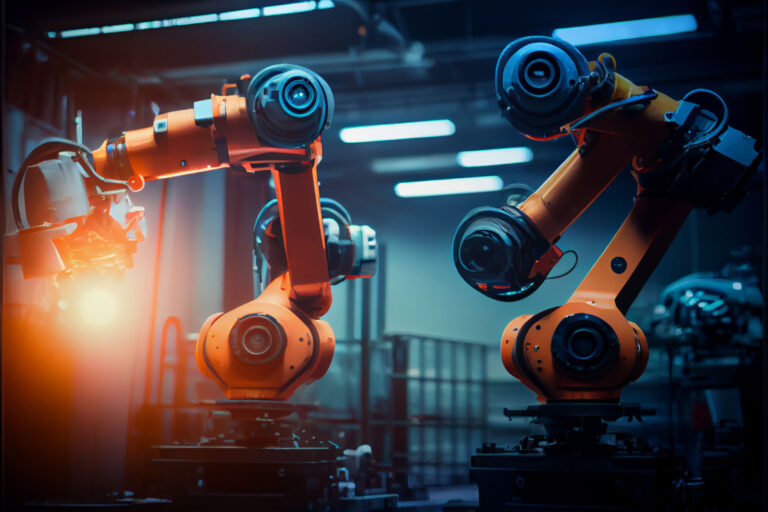

A recent report by Accenture claims that by 2040, the manufacturing industry will be dominated by “hyper-automated factories.” In this scenario, automation will be the baseline, robots will adapt without human intervention, and seamless coordination across supply chains and production networks will ensure every customer demand is received.
The concept of this super-automated manufacturing world, or Industry 5.0, where technology and humans work in harmony, raises many questions. What does it mean for job security? How will workflows be impacted? And what can my company do now to stay ahead?
First, it’s important to reflect on how we got here. Digital transformation does not happen overnight, and innovation is the result of facing new industry needs and expectations. Here is a short list of the challenges the manufacturing industry faced in 2025:
- Labor shortages
- Skills gaps
- Supply chain disruptions
- Rising raw material and energy costs
For the manufacturing industry to thrive, it’ll need to find new ways to adapt to these challenges. What has already emerged is an exciting new portal to innovation and possibilities—a concept known as generative experiences.
What are generative experiences? How do they fit into manufacturing?
A generative experience is a new experience created by combining artificial intelligence (AI) with data and information from past experiences.
In manufacturing, a generative experience is an incredibly powerful way for humans to work together with machines to transform entire production systems. By combining a human’s creativity and problem-solving skills with a machine’s capability to automate and process massive amounts of data, generative experiences can serve as a catalyst for achieving remarkable outcomes.
Utilizing virtual twin technology in manufacturing is one powerful way to create a generative experience. By leveraging these data and AI-driven digital models, which represent real-world manufacturing scenarios, users can reimagine how products are designed and used throughout their entire lifecycle. Rather than focusing on its physical parts, products or production systems are designed with the user outcome in mind and how it will be experienced as a whole.
Why is the manufacturing industry being transformed by generative experiences? 5 industry trends in 2025 and beyond
Several factors are contributing to a future where manufacturing will be built on generative experiences. They include the following manufacturing industry trends:
1. The rise of AI and machine learning
The manufacturing sector is embracing AI due to its numerous benefits, including predictive analytics that can forecast equipment failures and optimize entire supply chains. AI is here to stay and will play a key role in creating entirely new experiences within the manufacturing industry, not only by automating mundane tasks and freeing up space for innovation, but also by introducing advancements like smart manufacturing.
2. Virtual twin technology
The market for virtual twin technology, also known as digital twin technology, is expected to reach $259 billion by 2032. Virtual twins support every phase of the production lifecycle, allowing manufacturers to simulate and test any product before it’s built, focusing on how the product will be collectively experienced in the outside world rather than on its individual physical components.
“Our virtual twin experiences are catalysts for transformation,” said Sébastien Joly, sector strategy director for Manufacturing Industries at Dassault Systèmes. “By combining modeling, simulation, data science, and AI-generated content, they enable us to drive unprecedented advancements in design, engineering, manufacturing, and beyond. With virtual twins, we are redefining what’s possible, setting new standards for industry and shaping the future of technology.”
3. A new focus on sustainability and a circular economy
With increased pressure from U.S. and U.K. legislation, as well as from customers alike, manufacturers are seeking technology that can help them monitor their energy usage, reduce waste, and contribute to a circular economy. Virtual twins can help accelerate sustainability by rethinking every stage of the process from design to usage to end-of-life management. In fact, virtual twins have been used to develop some of the world’s most sustainable generative experiences, from electric vehicles to global wind power projects and solar airplanes.
4. Supply chains are disrupted
Since the COVID-19 pandemic, industry-wide supply chain issues, like shipping delays and rising input costs, have shown little sign of slowing down. To meet rising expectations in the face of these ongoing challenges, manufacturers are turning toward smart infrastructures and AI-driven technology to transform supply chains into a completely new experience where AI supports frontline workers by accelerating onboarding and providing real-time guidance.
5. The workforce is evolving
The manufacturing industry is experiencing a skills gap due to a growing global skills shortage. This means there is a significant difference in the skills needed to keep up with a quickly evolving industry and the skills workers currently possess, causing leaders to turn toward AI and other digital tools to supplement. One way this can be done is through “virtual companions” or digital assistants. Taking the form of a conversational chatbot, AI learns from you and teaches you, allowing companies to accelerate learning, reduce repetitive tasks and enhance greater autonomy. With these kinds of advancements, it’s clear we’re going to see a very new way of working within the manufacturing industry.
4 ways generative experiences will be the future of manufacturing
As the manufacturing industry continues to embrace generative experiences, it will evolve in critical ways that improve the experiences of manufacturers and customers alike.
1. Customization will become the norm
Generative experiences help shift the focus from one-size-fits-all products to personalized, customized solutions that cater to individual customer needs. One way to achieve this is through virtual twins, where manufacturers can use data-driven insights to form closer relationships with customers and utilize their connected ecosystem to create products and services that may even be the first of their kind.
2. Automated production systems like smart factories will become more common
With the ability to automate routine tasks and minimize errors, automation, when combined with AI, can significantly enhance the efficiency of manufacturers on the factory floor and transform the way people work. Manufacturers can even take automating isolated tasks a step further by connecting everything into what is known as a “smart factory.” These highly automated production systems rely on a combination of AI and analytics to maintain efficient production and set new standards for lead times, precision and sustainability.
3. Virtual twins will enable innovation
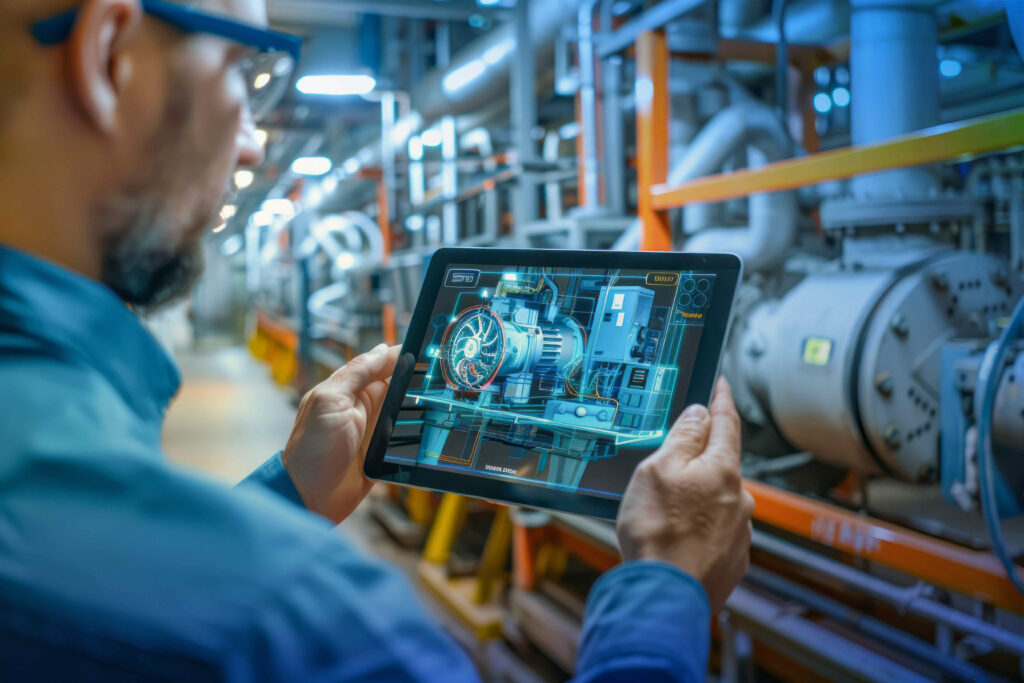
Virtual twins empower manufacturers to think outside the box and test their products in a risk-free environment before reaching the customer. Supporting every phase of the production lifecycle, generative experiences help manufacturers reimagine how goods are designed and produced, and facilitate the ability to create something completely new.
4. Sustainability will become an even greater priority
Customers no longer ask manufacturers to operate greener – they expect it – and generative experiences have the power to revolutionize sustainable manufacturing. By optimizing energy consumption, reducing excess inventory, and predicting resource needs, AI-driven technology can help discover new ways to minimize environmental impact without compromising operational efficiency.
Customers embracing the future of manufacturing
Manufacturers are already embracing the power of generative experiences to meet industry demands and expectations. Here are a few companies reaping the benefits.
Latecoere: quality inspection with augmented reality (AR)
In the aerospace industry, quality management is crucial, with safe flights dependent on the precise assembly of thousands of components.
To ensure perfect implementation, Latecoere is leveraging an augmented reality solution that provides digital instructions for inspections to shop floor operators. Thanks to AI algorithms and computer vision, the inspection process is performed automatically as the system analyzes each part in real time. Operators use tablets to create an immersive, generative experience, where each section of the fuselage is visualized, and the AR solution guides the user in ensuring all control points are scanned. Different colors are used to indicate whether a part is correctly positioned, misaligned or missing. Latecoere has seen a reduction in inspection time by 20 to 30% since implementing the AR solution, revolutionizing the way the aerospace industry performs quality management.
Saint-Louis Hospital: performing airflow simulations using virtual twins
Immunocompromised patients enter hospitals every day, putting them at risk of contracting viruses during their stay.
The team at Saint-Louis Hospital in Paris is particularly interested in preventing the respiratory transmission of viruses, which is why they approached Dassault Systèmes about using its virtual twin technology to conduct an airflow simulation study.
After discovering insufficient airflow in the hospital’s dialysis department, they created a full-scale virtual twin of the room. By simulating particle contamination and various scenarios and setups within the space to improve ventilation, they were able to identify the specific areas of the room that lacked airflow and could increase the risk of patients inhaling virus particles. Saint-Louis has since taken proactive measures to improve ventilation in the dialysis department, showcasing the power of a generative experience in a healthcare setting.
Spirit AeroSystems
Aerostructures manufacturer Spirit AeroSystems is utilizing augmented reality (AR) to manufacture aircraft parts with unparalleled precision. Digital overlays highlight exact drill holes, bracket placements and fastener locations to guide the assembler step-by-step, eliminating errors and improving efficiency. They’ve even started using AR for quality inspections, a task traditionally performed by eye, by employing a data-driven approach to detect any anomalies before their products reach customers. By combining AR with virtual twin technology, AI and automation, Spirit AeroSystems is laying the foundation for future innovation in the aerospace and defense industry.
Jamco uses virtual reality (VR) to create immersive customer experiences
World-leading supplier of aircraft interiors, Jamco, is often faced with innovative interior design requests from airlines. What was once a complex process, where designers and engineers used mismatched physical prototypes, leading to late-stage design changes, longer lead times, and repeat reviews, is now a seamless virtual experience. Using Dassault Systèmes’ Commercial Virtual Twin as a Service (VTaaS), Aerospace engineers and customers can explore full-scale aircraft cabins in a virtual space that feels as realistic as an aircraft. Using state-of-the-art virtual reality (VR), customers experience how a design is coming together and provide more detailed feedback. Now, making switches like a color scheme or adjusting a storage compartment can be done in seconds and viewed instantly, changing the way manufacturers and customers work together.
“Now, through the virtual twin, we’re able to engage customers in a more collaborative and immersive experience where they can truly understand how the product will look, feel and function before it’s built,” said Hiroshi Sakurai, deputy general manager of Jamco’s Technology and Innovation Center.
ASICS creates customizable sportswear
Japanese sportswear brand ASICS is on a mission to create footwear that meets the unique feet of every customer and is using Dassault Systèmes’ 3DEXPERIENCE platform on the cloud to develop and manage the entire process.
Recently, customers had the unique opportunity to get their feet 3D scanned by ASICS. Data from the scan was used to automatically generate three different sock options in different fits that customers could choose from, as well as two alternatives with different levels of cushioning. These kinds of personalized experiences add a new dimension to simply trying on physical products, helping customers make more informed decisions about the products they purchase and showcasing the shift in how products are built and experienced by customers.
More frequently asked questions about the future of manufacturing
Many of the manufacturing industry trends we see today are expected to continue in 2030. Continued digital transformation will be a key enabler of supply chain resilience, sustainability practices, and economic growth, and India is expected to become a major manufacturing hub that contributes significantly to the global economy.
An experience is the way you encounter different scenarios and gather information, either by observation or participation.
A generative experience, on the other hand, is a completely new experience created by digital solutions that combine the power of AI and other historical data from past experiences. Generative experiences are based on scientifically valid knowledge to inform the exploration of possibilities and what-if scenarios.
At Dassault Systèmes, we think of an experience as the core of experimentation. For years, our clients have utilized our solutions to replicate real-life scenarios virtually, redefining the way you design, engineer, produce, and operate products. Today, we are taking this a step further by providing our clients with the solutions required to go beyond building products to building experiences. With our AI-powered, generative solutions, industry professionals are empowered to create and operate entirely new experiences that propel the industry in a positive direction.
Looking toward the future of generative manufacturing
Despite its challenges, the future of manufacturing looks bright and human expertise continues to remain central for innovation. Thanks to generative experiences, humans can collaborate effectively with machines to achieve powerful outcomes. By allowing AI to collect historical data and automate routine tasks, as well as fuel digital technologies like virtual twins, manufacturing now has the capacity to create meaningful connections with customers, develop long-term sustainability strategies, and explore new possibilities.