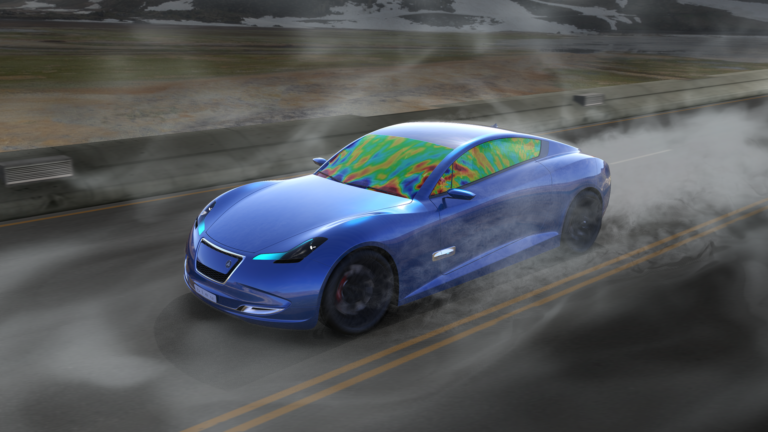
Automotive engineers face a fundamental challenge: creating vehicles that are lighter for better efficiency while also being quieter and more comfortable for a superior passenger experience. These design goals often conflict. Reducing vehicle weight is essential for improving fuel economy in combustion engines and extending the range of electric vehicles (EVs). However, the methods for enhancing comfort and reducing noise, such as adding sound-dampening materials, typically increase a vehicle’s mass. This creates a tricky balancing act for original equipment manufacturers (OEMs).
The Limitations of Physical Prototyping
Traditionally, automotive design verification has depended on physical prototypes. This method is expensive, time-consuming and often inefficient. Building multiple prototypes for various assessments, including destructive crash tests and extensive road tests, requires significant investment. Shipping these prototypes securely to specialized facilities around the world adds another layer of complexity and cost.
Physical testing can identify problems, but it often falls short in explaining their root causes. For instance, if a prototype registers unacceptable cabin noise levels, extensive additional testing is needed to pinpoint the exact source and path of the sound. Resolving these issues late in the development cycle can lead to costly delays and substantial weight additions, compromising the initial design goals. The shift to EVs complicates matters further. The absence of a loud internal combustion engine makes other noises, like those from electric motors or the road, more noticeable to passengers.
The Power of Simulation in Modern Vehicle Design
Simulation offers a more effective path forward. By creating a Virtual Twin of a vehicle, engineers can conduct comprehensive performance assessments at any stage of the design process. This digital approach eliminates the need for costly physical prototypes in the early phases, allowing for rapid iteration and optimization.
With simulation, designers can analyze performance and comfort with a level of detail that physical measurements cannot provide. For example, it’s possible to visualize the full three-dimensional distribution of noise and vibrations to accurately identify sources and propagation paths. This enables targeted solutions that resolve issues with minimal added weight. Problems identified early in the design phase are simpler and less expensive to fix, preventing late-stage changes that can derail project timelines and budgets.
SIMULIA Solutions on the 3DEXPERIENCE Platform
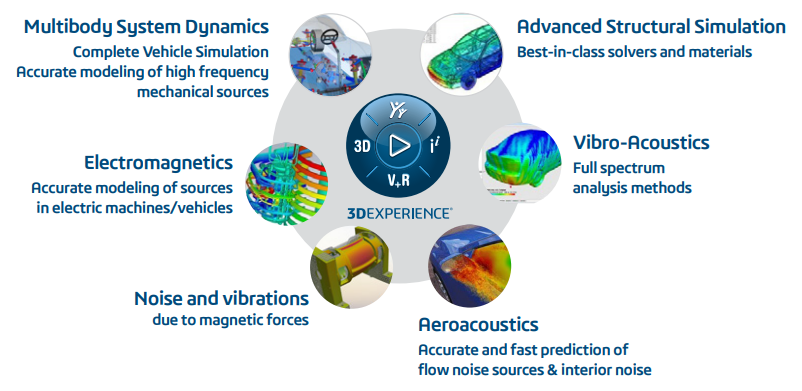
Dassault Systèmes’ SIMULIA portfolio is a critical asset for vehicle manufacturers confronting the real-world trade-offs between lightweight design and superior passenger comfort. Its advanced simulation technology offers capabilities that traditional physical testing cannot—allowing OEMs to assess, predict and refine every aspect of vehicle performance from the earliest design phase. Powered by the 3DEXPERIENCE platform, SIMULIA goes beyond simple virtual testing by enabling collaborative, data-driven engineering that connects teams and disciplines throughout the product lifecycle. This unified approach not only accelerates decision-making but also ensures precise computational insights for every tradeoff. SIMULIA streamlines the design process, reduces reliance on costly prototypes and helps manufacturers reach aggressive efficiency, acoustics and comfort targets without guesswork.
Tools such as PowerFLOW, Wave6, Abaqus, Simpack, CST and Manatee enable engineering teams to predict how a vehicle will perform in real-world conditions for NVH and passenger comfort. They can analyze everything from wind noise and powertrain vibration to ride comfort and thermal comfort. This allows for the optimization of tradeoffs between competing design factors. The Virtual Twin can even be unified with driving simulators, letting engineers experience the vehicle’s handling and acoustics firsthand, long before a physical prototype exists.
By predicting the customer experience from the start, OEMs can design with greater confidence. Simulation complements physical testing by ensuring vehicles are already highly optimized before they reach the test track. This accelerates development and helps deliver vehicles that meet the high standards of today’s consumers.
Today’s leading automotive teams are accelerating innovation through MODSIM—modeling and simulation working together on a unified platform. MODSIM connects design, engineering and simulation into a single process, breaking down silos that slow progress and drive up costs. This approach lets engineers test concepts, validate tradeoffs and optimize critical factors such as vehicle weight, acoustics and durability in a truly unified workflow. By adopting MODSIM with SIMULIA on the 3DEXPERIENCE platform, teams make smarter choices earlier and deliver optimized vehicles faster and more efficiently than ever before.
Explore how SIMULIA solutions and MODSIM adoption can fundamentally improve your next vehicle design. Learn more in the white paper.

Interested in the latest in simulation? Looking for advice and best practices? Want to discuss simulation with fellow users and Dassault Systèmes experts? The SIMULIA Community is the place to find the latest resources for SIMULIA software and to collaborate with other users. The key that unlocks the door of innovative thinking and knowledge building, the SIMULIA Community provides you with the tools you need to expand your knowledge, whenever and wherever.

Katie is the Editor of the SIMULIA blog, an expert in engineering and scientific communication, and a strategic digital marketer. Katie has a BA in English and Writing from the University of Rhode Island and a MS in Technical Communication from Northeastern University. She is also a proud SIMULIA advocate, passionate about democratizing simulation for all audiences. Katie is a native Rhode Islander who lives just outside of her favorite city, Providence. She is a true New Englander and loves sharing all the cool things NE has to offer. She enjoys a variety of hobbies including history, astronomy, science/technology, science fiction, true crime, fashion and anything associated with nature and the outdoors. She is also mom to a 6-year old budding engineer and two crazy rescue pups.