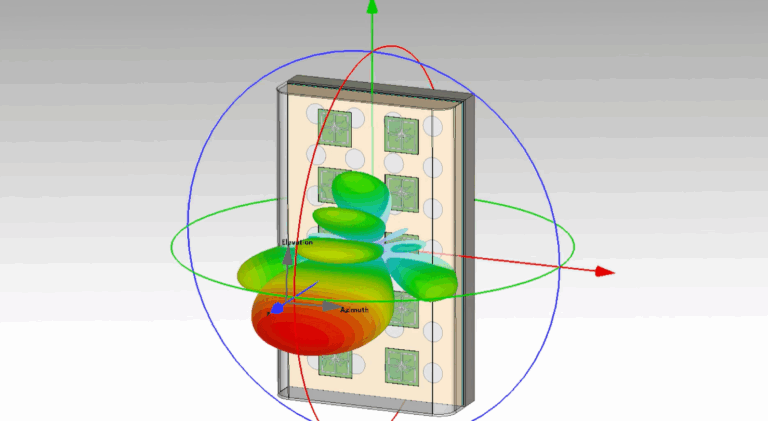
Challenge
As antenna designs become increasingly complex to support 5G and future connectivity standards, Ericsson faced challenges in managing and accessing vast amounts of simulation data. Traditional methods made it difficult for developers to find the right data at the right time, causing delays, inefficiencies, and limited collaboration across teams. In addition, storing electromagnetic simulation results long-term was costly and risked the loss of valuable intellectual property, slowing the pace of innovation.
Solution
Ericsson adopted Dassault Systèmes’ 3DEXPERIENCE platform, including SIMULIA CST Studio Suite, a software package developed specifically for designing, analyzing and optimizing electromagnetic (EM) components and systems. The team leveraged CST Studio Suite’s Domain Decomposition Method (DDM) solver for especially large and complex antenna systems and by storing simulation results into a centralized antenna component library, Ericsson created a collaborative database accessible to all stakeholders.
Results
- Increased efficiency of large, complex antenna structure simulations with shorter lead times
- Improved collaboration enabled real-time decision-making, trust between teams and early issue resolution
- End-to-end design flow in a centralized database enabled developers to visualize electromagnetic waves, manage data traceability and component ownership
—
Driven by widespread 4G adoption and rapid advancements in 5G capacity, mobile data traffic is set to explode. With 6G on the horizon, there are no signs of it slowing down anytime soon.
To stay ahead in this highly competitive industry, mobile network operators are looking for ways to enhance their network performance while reducing their energy consumption. This is where advanced passive antennas play a crucial role.
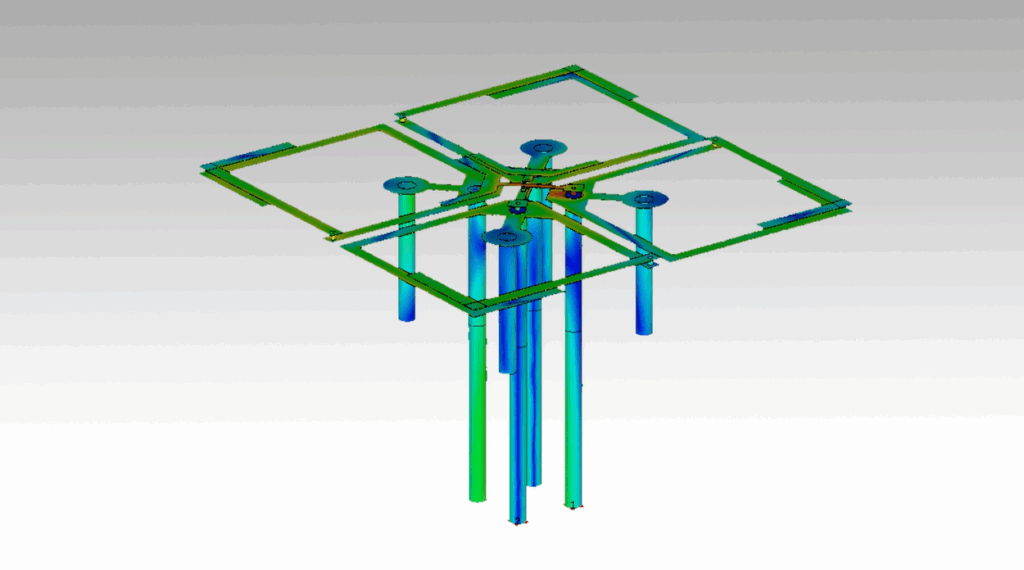
“Advanced passive antennas are essential constituents of mobile networks that enable wireless connectivity,” said Rahul Sequeira, who works at Ericsson. “They play a critical role in ensuring people stay connected – anytime, anywhere – with the best bandwidth and performance.”
Developing advanced passive antennas is a complex process, particularly when considering that they emit electromagnetic waves invisible to the naked eye. “While some electromagnetic waves are visible – like light – the ones used in our antenna systems are not,” Sequeira said.
It’s for this reason that Ericsson relies on simulation – it helps the company’s engineers to visualize electromagnetic waves, measure their effects and design antennas that perform to the highest standards. However, simulating large and complex antenna systems and their associated electromagnetic waves can be incredibly challenging, particularly when using conventional solvers that require substantial computational resources and processing power, generating overwhelming amounts of data. Ericsson was grappling with this problem.
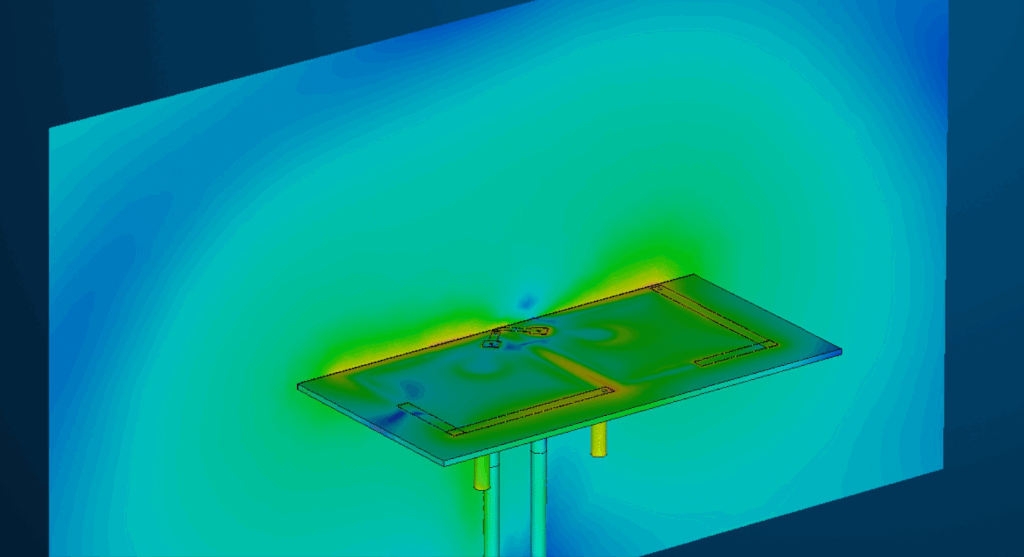
“We weren’t able to simulate our full antenna systems efficiently,” Sequeira said. “At the same time, our simulation data was stored in a decentralized way. It was very difficult for our developers to find the right data in the right place at the right time. This increased our lead times and sometimes inhibited collaboration. Simulation results are expensive to generate and challenging to store over the long term. Without modern storage solutions, we could lose valuable intellectual property.”
That’s why the company decided to implement Dassault Systèmes’ 3DEXPERIENCE platform, alongside SIMULIA’s CST Studio Suite, a software package developed specifically for designing, analyzing and optimizing electromagnetic (EM) components and systems.
Using CST Studio Suite, Ericsson’s engineers can create detailed simulations at a system level. “CST Studio Suite is an excellent electromagnetic simulation tool that has supported the development of very high-quality, robust antenna systems,” Sequeira said. “It allows us to simulate every scale of our antennas – from individual components to the antenna system in its entirety.”
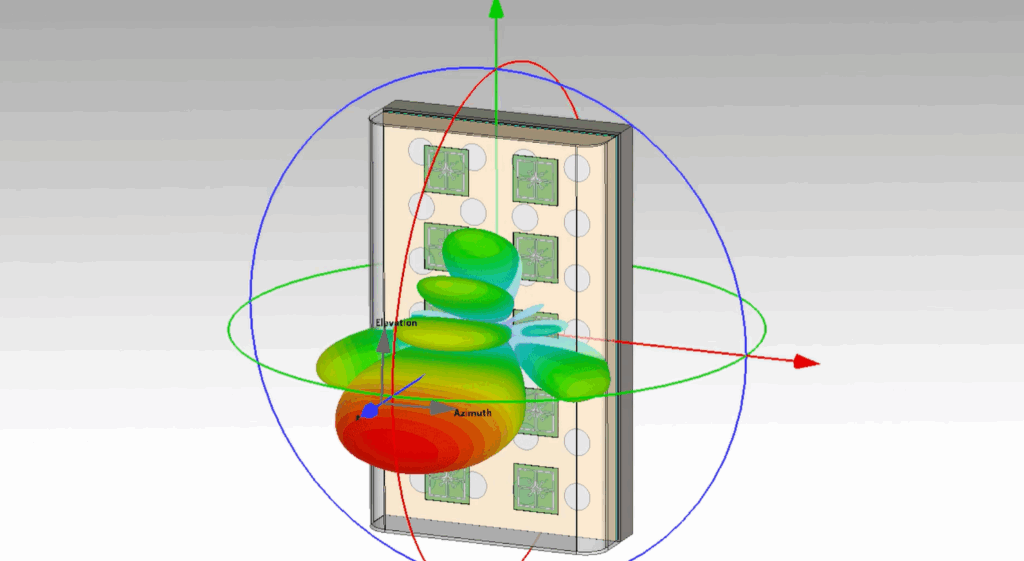
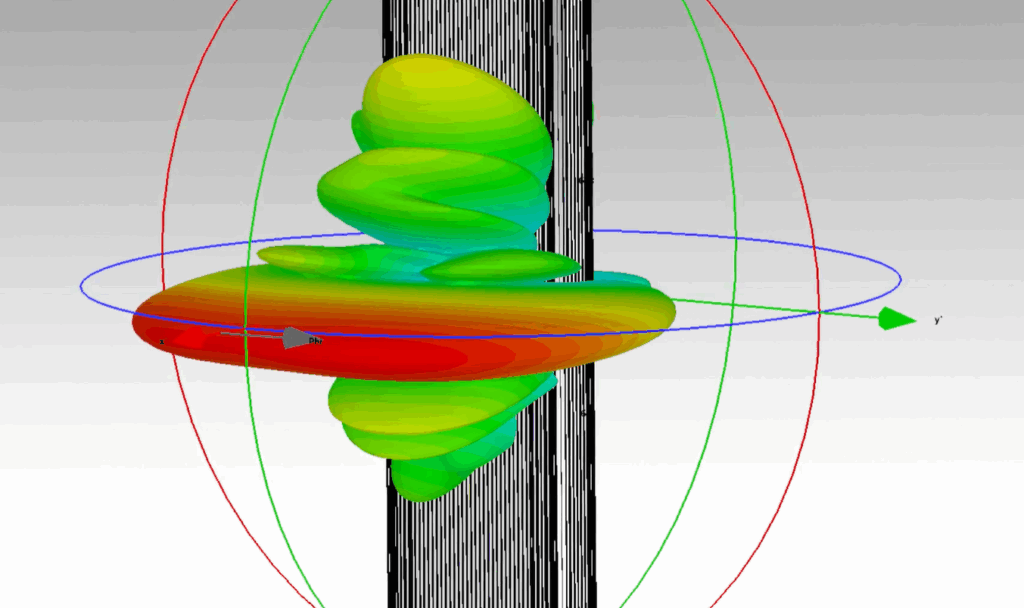
CST’s Domain Decomposition Method (DDM) solver has been transformative for especially large and complex structures. DDM speeds up simulations by dividing a structure into smaller subdomains that can be solved independently and in parallel.
“The DDM solver has been very beneficial for us,” Sequeira said. “Now, we can run simulations within acceptable lead times, which is critical as our deliverables get shorter and shorter.”
The 3DEXPERIENCE platform has also helped Ericsson tackle its data management problem, facilitating the creation of a centralized simulation database and Antenna Component Library.
“Simulation results are published directly into the platform, ensuring seamless access for developers, designers and decision-makers throughout the organization,” Sequeira said. “This creates an end-to-end workflow from designing the components right through to the antenna system.”
The Antenna Component Library is accessible to all stakeholders – not just simulation experts. “It democratizes simulation data,” Sequeira said. “It’s accessible to everyone who needs it to make decisions, so when results are published and issues arise, they are addressed immediately rather than in scheduled meetings. This helps us reduce lead times and deliver on schedule.”
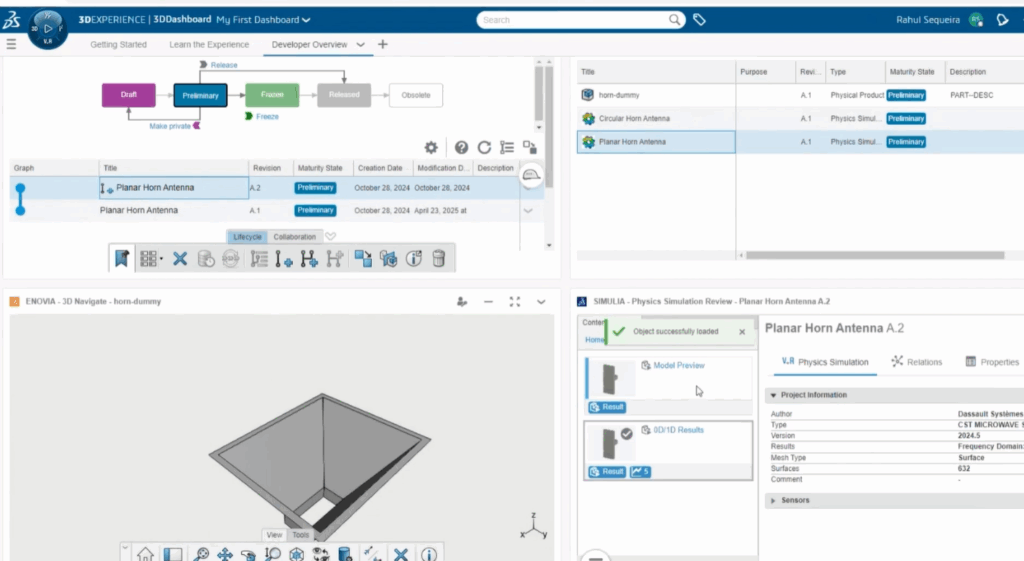
One of the biggest benefits of the new system is improved collaboration. “Developers can now easily access, trace and trust the data they’re working with,” Sequeira said. “There’s also high traceability – we know who developed what, when and how. That improves communication and accountability across teams.”
Sequeira believes that Ericsson’s investment in simulation and centralized data will help it to meet the challenges of tomorrow. “The platform supports our artificial intelligence and machine learning initiatives by giving us structured, traceable data that can be leveraged for predictive analytics and optimization,” Sequeira said. “It’s a future-ready approach that supports intelligent design and faster innovation.”
This will be key as customer expectations continue to rise and antenna designs grow more complex. “With every iteration of our products, customers and consumers expect faster, better telecommunications solutions,” Sequeira said. “The 3DEXPERIENCE platform, along with its simulation capabilities, is essential to help us meet those growing expectations efficiently. They allow us to design, collaborate and deliver the high-quality antenna systems our customers rely on.”

Interested in the latest in simulation? Looking for advice and best practices? Want to discuss simulation with fellow users and Dassault Systèmes experts? The SIMULIA Community is the place to find the latest resources for SIMULIA software and to collaborate with other users. The key that unlocks the door of innovative thinking and knowledge building, the SIMULIA Community provides you with the tools you need to expand your knowledge, whenever and wherever.

Katie is the Editor of the SIMULIA blog, an expert in engineering and scientific communication, and a strategic digital marketer. Katie has a BA in English and Writing from the University of Rhode Island and a MS in Technical Communication from Northeastern University. She is also a proud SIMULIA advocate, passionate about democratizing simulation for all audiences. Katie is a native Rhode Islander who lives just outside of her favorite city, Providence. She is a true New Englander and loves sharing all the cool things NE has to offer. She enjoys a variety of hobbies including history, astronomy, science/technology, science fiction, true crime, fashion and anything associated with nature and the outdoors. She is also mom to a 6-year old budding engineer and two crazy rescue pups.