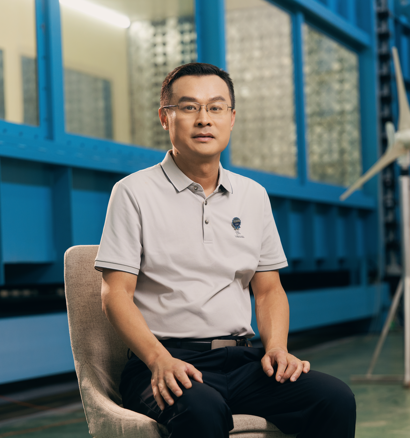
As simulation technology continues to drive industrial transformation, the Dassault Systèmes SIMULIA Champion program remains committed to bringing together the world’s top simulation experts to explore technological boundaries and shape the future of design. In the vast domains of heavy equipment and green energy engineering, these highly skilled simulation specialists often serve as “silent guardians.”
Introduction
On the football pitch, goalkeepers are rarely the center of attention. While strikers aggressively push the attack, the keeper stands watch at the goal line—a quiet, enduring anchor holding the final line of defense. When dealing with steel structures weighing thousands of tons, the mission of a structural simulation engineer is not to sculpt dazzling exterior contours. Rather, it is to use algorithms as precise as a surgeon’s scalpel to trim away excess material down to the millimeter, granting these immense steel leviathans the gift of agility while operating well within the safety margin.

From heavy-truck testing grounds enduring minus thirty degrees Celsius over two decades ago, to the colossal deep-sea offshore wind turbines towering above the ocean today, Long Kai’s twenty-plus years of exploration alongside SIMULIA illustrate how an engineer uses robust algorithms and tools to infuse cold steel frameworks with a profound commitment to safety, efficiency, and a sustainable human future.
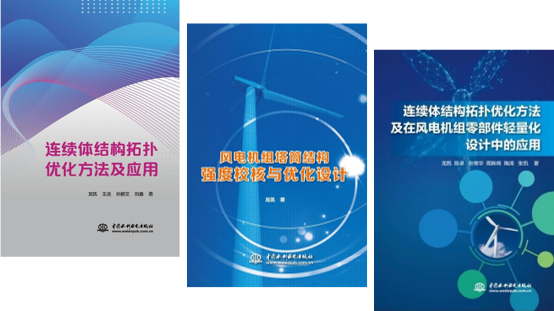
Ice Fields and Ruts: Awakening the Essence of Engineering
To truly understand Long Kai’s dedication to “lightweighting” and “structural optimization,” one must look back to the northern frontier of China in 2002.
At that time, Long, who was pursuing his Ph.D. at the Beijing Institute of Technology, took on a daunting project. The primary heavy-truck model used for domestic mining transport experienced frequent, severe fractures of the chassis frame during operation, placing the manufacturer under immense pressure from liability claims.
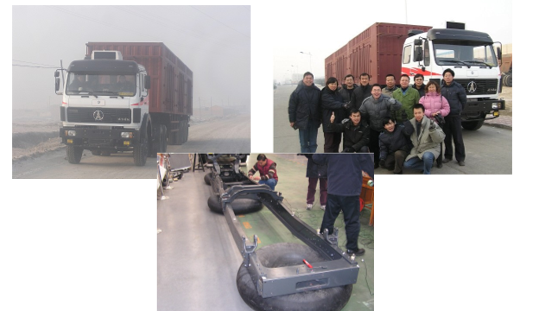
“At that time, the automotive company had not yet established a comprehensive independent R&D system, and the truck blueprints were mostly imported from Germany,” Long recalls. The original German design standards were engineered for a rated payload of 15 tons. However, facing the industrial realities of the time—where maximizing profit on weight-based toll roads and rugged mining areas was paramount—these vehicles were widely modified to be taller and wider. “The actual load they bore far exceeded the initial design limits, so naturally, the steel frame could no longer withstand the immense stress.”
To uncover the root cause, a young Long Kai bundled up in a thick winter coat and immersed himself in the frontline testing grounds. He climbed up into the towering driver’s cab to chat with veteran truck drivers.
In their plainest jargon, the drivers told him: “Other brand trucks have ‘more muscle’ and can carry more.” This purely intuitive observation resonated deeply within Long’s understanding of mechanics. Through meticulous measurement and comparison, he discovered a significant difference in wheelbase design between the two brands: a shorter wheelbase inherently provided the chassis with greater bending stiffness and a higher load-bearing capacity.
To validate the performance of the improved chassis frame, Long actively participated in field tests amid the ice and snow in Baotou. It was the most biting winter in Inner Mongolia, with temperatures often plunging below 30 degrees Celsius. Enduring nearly freezing winds, the team meticulously conducted chassis modal testing and monitored outdoor driving data.
This project not only resolved the manufacturer’s immediate crisis but also directly spurred the establishment of the automaker’s independent R&D department. For Long Kai, his perseverance in that blizzard-swept testing ground was a baptism for his professional career. It imparted a profound realization: structural finite element analysis is not merely a static, colorful stress-contour map on a computer screen. Behind every load path lies the rise or fall of an enterprise, and, more importantly, the safety and well-being of the tough, resilient individuals sitting in those driver’s seats, earning their livelihood.
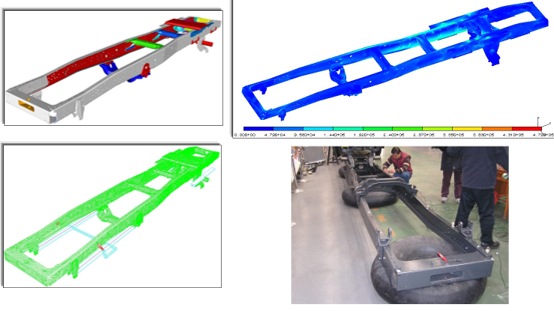
Pursuing Knowledge through Practice: Shaping the Frames and Tailoring the Fabric
As China’s industrial sector transitioned toward high-precision and cutting-edge technologies, Long Kai’s research focus evolved from truck chassis to a deeper, more specialized field: structural optimization, specifically Topology Optimization. On this path, he discovered the essential tool that would accompany him throughout his entire academic career.
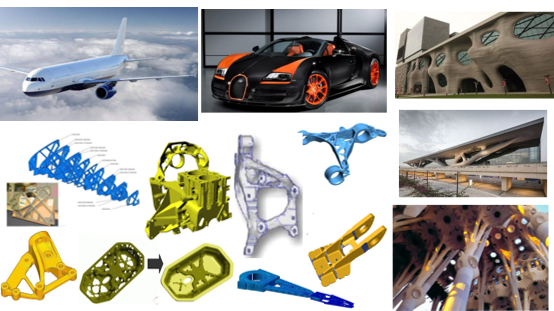
In the academic realm, the definition of topology optimization is rigorous and precise: within a given design space, and based on specific loads and boundary conditions, an algorithm removes or adds material to reconstruct the structure’s load path, ensuring that its mechanical performance achieves a global optimum.
To help non-professionals appreciate the elegance of this discipline, Long offers two vivid metaphors.
“You can think of topology optimization as a rigorous ‘body sculptor,'” Long explains slowly. “If a person weighing 100 kilograms is out of shape, their athletic mobility will inevitably be limited. However, if through scientific training, they shed excess fat and develop their core, load-bearing muscle groups, that same 100-kilogram body not only becomes more proportionate but also sees an exponential leap in strength.”
In structural design, traditional “reinforcement” often amounts to the superficial stacking of material. Topology optimization, conversely, relies on precise computation to strip away redundant material that does not contribute to load-bearing, dedicating structural steel solely to the core “muscles and skeleton.”
His second metaphor is a “material tailor.” “It is like receiving a bolt of fine brocade. To ensure elegance and fit, you use industrial software as ‘intelligent scissors’ to precisely trim away excess fabric, ultimately crafting a seamless, beautifully tailored garment.”
Transitioning from “stacking” to “tailoring,” this mechanical aesthetic of extreme restraint and elegant simplification is subtly reshaping the physical forms of modern heavy equipment.
10,000-Ton Leviathans and the Silent “Guardians”
Entering the 2020s, China’s wind power industry experienced historic, explosive growth. Consequently, Long Kai and his algorithms were met with behemoths far larger than any they had tackled before.
By the end of 2024, the “MingyangTiancheng,” a deep-sea floating wind power platform with a rated capacity of 16.6 megawatts, had been connected to the grid in Yangjiang, Guangdong. In addition, the 2025 Beijing Wind Energy Exhibition prominently featured a 50-megawatt ultra-large floating wind turbine. In just over a decade, individual turbine capacity has multiplied tens of times.
“Today’s wind turbines have leaped from a tare weight of hundreds of tons to thousands of tons, and are even approaching the 10,000-ton mark. Aside from aircraft carriers, they are nearly the most massive rotating mechanical structures built by humanity,” Long remarks with awe.
As these colossal creations venture into the turbulent, unpredictable deep-sea environments, their towering masts must withstand the extreme, multi-physics forces of wind, waves, and ocean currents. In this technological “no man’s land” completely devoid of precedent, how do we ensure these giants do not succumb to fatigue fractures over a 25-year lifecycle?
“Throughout the entire R&D system, the structural simulation engineer plays the role of the ‘football goalkeeper,'” Long explains, utilizing a relatable image. “The keeper rarely enjoys the dazzling highlights of a forward, but they are the final, fail-safe line of defense. Our calling is to ensure that, no matter the extreme conditions, the wind turbine steadfastly preserves the lifeline of safety.”
Backed by advanced simulation and optimization tools, Long’s team has assisted wind equipment manufacturers in radically reducing material redundancy while ensuring the fatigue rigidity of critical components such as nacelle bedplates and bearing housings. Out in these ocean waters, every ton of structural load shed translates to a significant optimization in the draft depth of the deep-sea floating platform and a steep drop in engineering difficulty. Every silent calculation the “goalkeeper” performs on the screen solidifies the foundation of a green-energy empire upon the vast oceans.
Two Decades of Tool Companionship: Clear Insights Across the “No Man’s Land”
As one of the earliest scholars in China to introduce commercial structural topology optimization software into engineering practice, Long Kai has maintained a steadfast partnership with Dassault Systèmes spanning over twenty years. He is, quite naturally, the quintessential Dassault Systèmes SIMULIA Champion
“It was in 2003. By a stroke of luck, I attended a three-day training session on structural optimization taught by a German engineer. During those three days, I was exposed to commercial topology optimization software—Tosca—for the very first time.” Recalling this experience, Long’s memory of the awe he felt during his technical awakening remains vivid.
At that time, TOSCA was owned by the German company FE-DESIGN. Its highly intuitive interface allowed the young Long Kai to quickly master the language of structural “dissection.” Later, amid the wave of industrial software consolidation, Dassault Systèmes acquired FE-DESIGN and deeply integrated Tosca into the SIMULIA product family. Accompanying this history of technological evolution, Long formed an enduring bond with Dassault Systèmes. In the many years that followed, SIMULIA repeatedly proved to be his premier tool for validating cutting-edge algorithms and breaking through complex engineering puzzles.
Looking back on this twenty-plus-year “companionship” with his tools, Long Kai, as a SIMULIA Champion, demonstrates the clear-headed pragmatism unique to a scholar deeply rooted in practical engineering.
Having personally witnessed the software’s development and evolution, he discusses its future with profound insight. He knows that with the influx of cutting-edge technologies like AI, industrial software will inevitably become more powerful and accessible. Yet, in Long’s eyes, technology is never merely a one-way street of empowerment; rather, it is a mutual convergence between the human engineer and the tool.
“My personal realization is that whether engineering software can truly make an impact in the field ultimately depends on engineers proactively embracing the concept of structural topology optimization,” Long states earnestly during the interview. “Only when engineers consciously apply these tools can they genuinely achieve the goal of solving problems.”
This intrinsic “consciousness,” grounded in an engineer’s foundational understanding, has long become second nature in certain industries. Long astutely points out that, driven by the specific demands of their fields, sectors such as aerospace and automotive have adopted topology optimization much earlier and more extensively.
“For instance, the aerospace industry pursues weight reduction to the absolute extreme. Sometimes, saving just a single gram on a satellite can help reduce the mass of the launch vehicle by an entire ton,” Long explains.
Today, the wind power industry’s own “moment of extreme success” has quietly arrived. Confronted by steel behemoths weighing tens of thousands of tons, their sheer scale imposes stringent demands for weight reduction and raises challenges related to structural redundancy. “The wind power sector is currently facing this very reality,” Long says with conviction. Looking ahead, he holds a pragmatic yet profound expectation: in the near future, topology optimization technology will undoubtedly play an irreplaceable, heavyweight role as wind power advances further into the deep-sea “no man’s land.”
Conclusion
The profundity of engineering is often concealed within the most austere, rational lines and meshes.
In Long Kai’s recounting, there are no glamorous spotlights. Instead, there are the ruts left by northern snowstorms, the earnest conversations of frontline workers, the silent orbits of satellites, and the meticulous unraveling of complexities in the world of algorithms. Yet, when the story of this SIMULIA Champion and the software that has been his companion for 20 years intersects with a 50-megawatt wind turbine rotating over the vast ocean, the true essence of a hardcore engineer comes vividly to life.
No matter how powerful the algorithm, it requires the willing heart of an engineer to embrace it. Guided by the precision of computing power and honed by years of experience, they leverage Dassault Systèmes’ exceptional simulation tools to actively break free from traditional constraints. Bit by bit, they trim away the heavy steel redundancy, allowing the wind’s kinetic energy to flow gracefully. The massive towers stand in silence, but within the bright lights continually delivered through the urbanity of millions of households, the engineers have left their most profound, enduring gaze.

Interested in the latest in simulation? Looking for advice and best practices? Want to discuss simulation with fellow users and Dassault Systèmes experts? The SIMULIA Community is the place to find the latest resources for SIMULIA software and to collaborate with other users. The key that unlocks the door of innovative thinking and knowledge building, the SIMULIA Community provides you with the tools you need to expand your knowledge, whenever and wherever.

Katie is the Editor of the SIMULIA blog, an expert in engineering and scientific communication, and a strategic digital marketer. Katie has a BA in English and Writing from the University of Rhode Island and a MS in Technical Communication from Northeastern University. She is also a proud SIMULIA advocate, passionate about democratizing simulation for all audiences. Katie is a native Rhode Islander who lives just outside of her favorite city, Providence. She is a true New Englander and loves sharing all the cool things NE has to offer. She enjoys a variety of hobbies including history, astronomy, science/technology, science fiction, true crime, fashion and anything associated with nature and the outdoors. She is also mom to a 6-year old budding engineer and two crazy rescue pups.