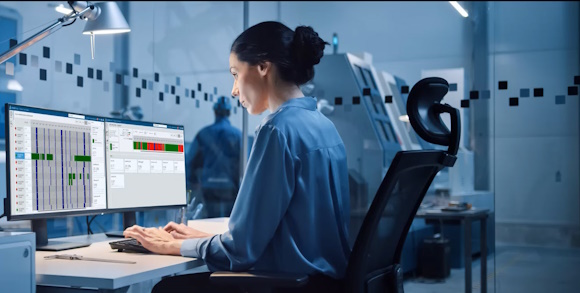
Your plant manager in Monterrey gets the call on a Thursday afternoon. Corporate wants the new product line running in 90 days, and your existing Manufacturing Execution System (MES) can’t handle the routing changes without a development sprint. IT estimates six weeks of custom coding, two weeks of regression testing and another week of User Acceptance Testing (UAT). That’s nine weeks just to change how parts flow through three workstations. Meanwhile, the competitor down the road reconfigured the same kind of change in an afternoon. Your production schedule doesn’t have nine weeks to spare.
This scenario plays out across manufacturing operations on an ongoing basis. The root cause isn’t bad software or unskilled IT teams. It’s a design philosophy that traded long-term flexibility for short-term exactness. Heavy customization felt right at implementation because it matched processes perfectly on day one. But every line of custom code added to a manufacturing platform creates a future obstacle, one that shows up the next time the business needs to change. Five years later, that “perfect fit” has become a straitjacket.
What Is the Hidden Cost of Custom Code in Manufacturing Software?
The distinction between configurability and customization sounds technical, but the consequences are entirely operational. Customization means altering the source code or core architecture of a software platform to match specific requirements. Configuration means adjusting settings, parameters, templates and workflows within a platform’s built-in framework, without touching the underlying code.
That difference determines how fast you can respond to a new customer spec, how smoothly you’ll absorb the vendor’s next software update and whether your IT staff spend their time on production improvements or on maintaining brittle workarounds. Manufacturing Operations Management (MOM) platforms that prioritize configurability deliver a process change in hours. Heavily customized MES installations take weeks or months to achieve the same result at your facility.
The Gartner Supply Chain Technology User Wants and Needs survey found that only 14% of manufacturers prefer to develop fully custom solutions. The overwhelming majority choose commercial platforms and for good reason. But even commercial MES platforms run into trouble when teams over-customize them. Gartner’s research notes that fit-for-purpose MES software typically covers only 70% to 90% of a manufacturer’s requirements. The gap in your platform gets filled either with low-code configuration or with expensive custom code, and your choice shapes every upgrade, expansion and system rollout for years to come.
Choosing customization to fill the gap effectively forks the vendor’s product into a private branch. Every vendor update has to be reconciled against those modifications. Miss a version and the gap compounds. Miss two and the platform is no longer supported, isolated from security patches, new features and performance improvements that the rest of the market is absorbing.
What 3 Industry Pressures Are Driving the Shift to Configurable MES Platforms?
Three forces are compressing the window manufacturers have to adapt their operations, and all three reward configurability over customization.
- Accelerating demand for operational agility. Deloitte’s 2026 Manufacturing Industry Outlook reports that 80% of manufacturers plan to allocate at least 20% of their improvement budgets to smart manufacturing initiatives, covering automation hardware, data analytics, sensors and cloud computing. These investments demand MES and MOM platforms that can absorb new data streams and integrate new equipment without custom development cycles. If your platform can’t keep pace with capital investments, the technology bottleneck shifts from the shop floor to the software layer.
- Growing complexity of multi-site operations. The global MOM software market reached $13.7 billion in 2025 and is projected to grow to $26.9 billion by 2034, according to IMARC Group. Much of that growth comes from manufacturers expanding into new geographies and production models. Every new plant that runs on a heavily customized MES becomes an island, with its own code base, its own maintenance requirements and its own upgrade timeline. Configurable platforms use global process templates that standardize operations across sites while allowing local adjustments through parameters, not programming.
- The upgrade trap. Grand View Research projects the MOM software market at a 19.1% CAGR through 2033, with the services segment growing fastest because manufacturers need help managing the complexity their own customizations have created. When a vendor releases a new version that includes AI-driven analytics or improved OEE dashboards, manufacturers running customized installations either skip the upgrade or budget for expensive regression testing. Configurable platforms protect the upgrade path by keeping process logic separate from the core software architecture.
How Does Low-Code MES & MOM Configurability Work on the Shop Floor?
Understanding the concept is straightforward. Making it work on the shop floor requires specific architectural choices. DELMIA Apriso approaches configurability through several mechanisms that keep process definitions separate from the platform’s core code.
Global Process Manager lets manufacturing teams build, version and propagate process templates across every plant in the network. When a process improvement works at one site, the template gets updated centrally and pushed to other locations. Each site can configure local parameters (language, regulatory requirements, shift structures) without modifying the template itself. That’s configuration. If each site required a developer to fork the code and build a custom version, that’s customization and it doesn’t scale.
Process Builder, DELMIA’s low-code configuration app, provides a visual business logic designer and WYSIWYG user interface editor. Production engineers can modify workflows, data collection screens, and business rules without writing code. The low-code approach means that process changes go through the people who understand the manufacturing process, not through an IT development queue. Changes deploy faster, and they don’t create technical debt that accumulates over release cycles.
These aren’t abstract capabilities. When a customer sends a revised specification that changes an inspection sequence, the change needs to reach the shop floor in days, not weeks. A configurable platform makes that routine. A customized one turns it into a project, complete with a scope document, developer allocation and a QA cycle before anything reaches the production line. The Gartner 2025 Market Guide for Manufacturing Execution Systems reinforces this direction, identifying low-code extensibility and open APIs as essential capabilities for scalable MES solutions.
Case Study: How Panasonic Connect Accelerated Multi-Plant Improvement with DELMIA Apriso
Panasonic Connect, a global high-tech manufacturer, needed to replace analog and fragmented data collection with a unified execution layer that could drive continuous improvement at network scale. The company faced the same problem heavy customization tends to create: every plant ran its own processes, its own tracking methods, and its own improvement cadence. Best practices stayed trapped at individual sites because nothing made it easy to compare operations, identify patterns, or roll a proven change out to every plant that needed it.
By deploying DELMIA Apriso as its MOM platform, Panasonic Connect unified production data across plants and gave manufacturing teams visibility into process similarities that had been invisible before. As a Panasonic Representative described the outcome: “We accelerated improvement cycles by identifying process similarities across plants.” That result didn’t come from writing custom code for each facility. It came from configuring a common platform where process templates, data definitions, and improvement logic could be shared, standardized, and refined across the network.
The pattern separates configurable platforms from customized ones. When process definitions live in templates rather than custom modules, improvements propagate. When data collection is standardized through configuration rather than hand-coded at each site, cross-plant comparisons become possible. When a change proven at one plant can be pushed to every other plant through parameter updates rather than development projects, improvement cycles compress. Configurability isn’t just about faster change at a single site. It’s about turning every site into a source of improvements that benefit the entire network.
Why Is Configurable Software Critical for Mid-Tier Manufacturers?
Configurability versus customization is sometimes framed as an enterprise-only conversation. It shouldn’t be. Mid-size manufacturers running 50 to 500 employees face the same pressures: adding product lines, responding to customer-specific quality requirements, and managing tighter delivery windows. Their IT teams are smaller, which makes every hour of custom development more expensive relative to output.
Think of it the same way growing companies approach accounting software. A business that outgrows spreadsheets doesn’t build custom financial software from scratch. It moves to a platform that’s configurable enough to match its processes. Manufacturing operations management works the same way. DELMIAWorks provides MES and ERP capabilities for mid-market manufacturers using that same principle: configurability rather than customization, so the platform grows with the business instead of locking it into a fixed architecture.
Why Configurable MOM Platforms Deliver Long-Term Operational Agility
The manufacturers gaining ground right now aren’t the ones with the most custom code running on their shop floors. They’re the ones whose systems can absorb a process change, a new product introduction, or a regulatory update without triggering a development project.
Configurability protects the upgrade path. It compresses change-to-production timelines. It lets process engineers own the system instead of waiting for IT to build it. And it scales, from a single plant to a global network, without turning every new site into a standalone implementation. MES gives you control of what happens on the line. A configurable MOM platform gives you command of how fast the entire operation can adapt. That’s the competitive difference.
DELMIA, from Dassault Systèmes, enables manufacturers to keep factory operations running smoothly. Powered by the 3DEXPERIENCE platform, our Manufacturing Operations Management (MOM) and Manufacturing Execution Systems (MES) solutions establish a unified digital environment that provides real-time visibility and AI-enhanced control. By connecting the virtual and real worlds, we enable you to streamline complex processes, minimize waste and guarantee quality. Harnessing data-driven insights and intelligent automation allows for optimized production, enhanced adaptability to disruptions and the delivery of sustainable, customer-focused manufacturing performance at scale.

Louis Columbus is currently serving as a member of the DELMIA Marketing team, where he assists with DELMIAWorks and robotics solutions. Previous positions include product management at Ingram Cloud, product marketing at iBASEt, Plex Systems, senior analyst at AMR Research (now Gartner), marketing and business development at Cincom Systems, Ingram Micro, a SaaS start-up and at hardware companies. Professional experience includes marketing, product management, sales and industry analyst roles in the enterprise software and IT industries. Columbus' academic background includes an MBA from Pepperdine University and completion of the Strategic Marketing Management and Digital Marketing Programs at the Stanford University Graduate School of Business. He teaches MBA courses in international business, global competitive strategies, international market research, and capstone courses in strategic planning and market research. Columbus has taught at California State University, Fullerton: University of California, Irvine; Marymount University, and Webster University.