Manufacturing teams are being asked to do more with less: shorten programming cycles, respond faster to design changes and improve machining quality without adding unnecessary complexity. For many organizations, that is driving a shift from traditional CATIA V5-based machining workflows to DELMIA Machining on the 3DEXPERIENCE platform, where design and manufacturing can operate in a more connected digital environment.
The move is not just about replacing one CAM setup with another. It is about modernizing how machining data is created, reused, validated and managed across the product lifecycle so teams work faster and with greater control.
How Does DELMIA Machining Replace Disconnected CAM Workflows with Digital Continuity?
CATIA V5 remains a proven environment for product design, but many legacy machining workflows still depend on file-based handoffs, manual updates and fragmented communication between engineering and manufacturing. As products become more complex and timelines become tighter, those disconnected processes make it harder to maintain revision control, preserve intent and scale best practices across teams.
DELMIA Machining on the 3DEXPERIENCE platform addresses that challenge by bringing machining, simulation and collaboration into a shared environment. Instead of treating CNC programming as a downstream task isolated from design change, manufacturers can create a more continuous path from CAD to CAM. This offers better visibility into updates, stronger process governanceand easier reuse of proven machining knowledge.
What Are the Business and ROI Benefits of Upgrading to DELMIA Machining?
DELMIA Machining is built to support modern NC programming with integrated 3D modeling, toolpath generation, simulation and process validation inside the 3DEXPERIENCE platform. That gives manufacturers a more scalable approach to machining than standalone or heavily manual workflows, especially when multiple stakeholders need to collaborate around changing product data.
The business value is clear. Dassault Systèmes says DELMIA Machining can reduce programming cycles for modified versions of existing parts by up to 80%, reduce the impact of design changes by up to 90% through automatic geometry modification detection and improve machining efficiency by 30 to 40%. It reports up to a 30% increase in part quality through more integrated simulation and validation earlier in the process.
How Does DELMIA Machining Accelerate NC Programming and Knowledge Reuse for CAM Teams?
For CAM programmers, the biggest improvement is often time. Rather than rebuilding context for every update, teams can work in a more structured environment where machining data, tool definitions and process knowledge are easier to manage and reuse.
This reuse is one of the strongest arguments for migration. DELMIA 3DEXPERIENCE Machining includes capabilities such as machining cell templates and feature-based reuse. They allow manufacturers to apply existing machining logic to similar geometry instead of starting from scratch every time. That helps standardize programming practices, accelerate repeat work and reduce dependency on individual tribal knowledge.
How Does the 3DEXPERIENCE Platform Streamline Engineering Change Management in CAM?
Engineering changes are one of the biggest sources of friction in manufacturing. In disconnected systems, even small design updates can trigger delays, rework and uncertainty around whether the latest geometry made its way into the machining process.
This is where 3DEXPERIENCE changes the conversation. With DELMIA Machining on the platform, manufacturers can align design and machining in a more controlled environment. This helps teams adapt faster when revisions happen and reducing the operational cost of change. For organizations trying to improve digital continuity, that shift can be just as important as gains in raw programming speed.
What Real-World Outcomes Are Companies Seeing After Moving to DELMIA Machining?
The broader DELMIA ecosystem shows why this platform model is gaining traction. Dassault Systèmes highlights companies such as Xos using DELMIA and the 3DEXPERIENCE platform to manage product development processes in a more connected way, with cloud-based collaboration improving interoperability across teams and partners. In high-precision manufacturing, CARBOMILL has also been featured for using CATIA in ways that support manufacturability and better milling outcomes, underscoring the value of tighter alignment between design decisions and machining execution.
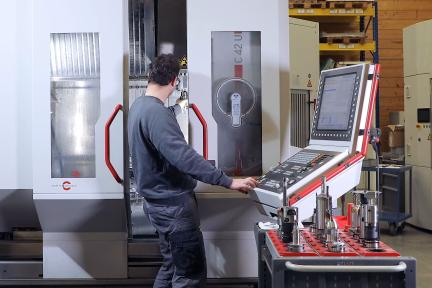
These examples matter because they reflect a larger industry pattern. Manufacturers are looking beyond isolated programming tools. They look toward integrated environments that connect engineering, manufacturing and change processes effectively across the business.
Why Is Upgrading from CATIA V5 to 3DEXPERIENCE Machining Critical Today?
Moving from CATIA V5-based machining workflows to DELMIA Machining on 3DEXPERIENCE is about preparing for a more connected manufacturing model. As teams face growing pressure to improve responsiveness, standardize processes and scale expertise across locations, the ability to manage machining as part of a broader digital platform becomes increasingly valuable.
For manufacturers already invested in CATIA for CAD on the 3DEXPERIENCE platform, DELMIA Machining offers a practical next step. Keep the strength of the design foundation while upgrading how part machining is programmed, simulated and managed. The result is a more modern CAM environment built for reuse, collaboration and continuous improvement across the lifecycle.
Frequently Asked Questions: CATIA V5 Machining vs. DELMIA Machining on 3DEXPERIENCE
CATIA V5 machining is a desktop-based CAM solution focused primarily on toolpath generation. DELMIA Machining on 3DEXPERIENCE is a platform-based CAM environment. It integrates programming, simulation, collaboration and lifecycle management in a single connected environment. DELMIA on 3DEXPERIENCE also supports better reuse of machining programs, automatic detection of design changes and stronger governance across teams.
Yes. Dassault Systèmes provides migration capabilities to transfer CATIA V5 Machining data to DELMIA 3DEXPERIENCE. This includes Product, Process, Resource (PPR) structure migration. Training modules teach the differences between CATIA V5 and DELMIA 3DEXPERIENCE Machining structures and how to migrate existing machining programs.
DELMIA Machining can reduce programming cycles for modified versions of existing parts up to 80% through automation and reuse capabilities. Part machining efficiency improves by 30–40%, reducing design change impact by up to 90% through automatic geometry modification detection.
Manufacturers migrate to gain digital continuity, stronger collaboration, better change management and centralized data governance. 3DEXPERIENCE is designed for broader enterprise collaboration with real-time workflow management. CATIA V5 remains a robust desktop solution for individual or small-team users with highly customized workflows. The platform also supports configuration control, issue management and engineering change processes tied directly to manufacturing data.
DELMIA Machining supports a wide range of operations. This includes: 2- to 5-axis milling, milling with robots, drilling and riveting, adaptive concentric milling, up to 5-axis simultaneous mill-turn, multi-spindle and multi-turret production turning (including SWISS machines), wire EDM, laser cutting, water jet cutting and feature recognition for automatic machinable feature identification. It also incorporates a direct connection to cutting tool libraries.
DELMIA Machining is an advanced, CATIA/SOLIDWORKS-native CAM solution designed for complex multi-axis machining in aerospace & defense, automotive, industrial technology, combining AI-assisted programming with full process control to reduce NC programming time while maintaining production-grade reliability.

DELMIA Industry Process Consultant Manager