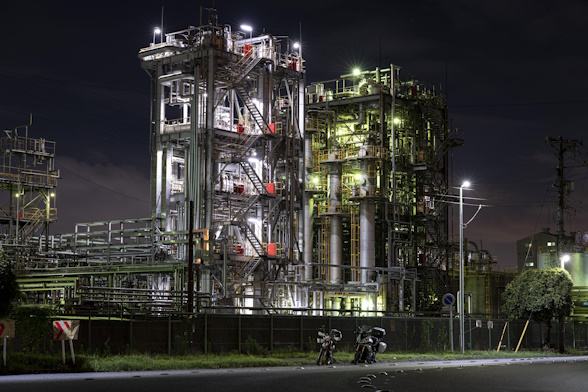
Imagine a regenerative factory — a living system where technology, nature and people co-engineer prosperity for generations to come. A green factory of the future that mirrors the intelligence of natural ecosystems, replicating their efficiency, adaptability and circular flow of resources. A factory that pioneers new operational models, enabling it to run like an ecosystem.
Envision a factory that transcends traditional architecture — a green factory of the future, which is no longer confined to bricks and mortar, but built from biological foundations. A factory that mimics biological models and processes, where synthetic biology and biomimicry serve as its building blocks. A factory that operates sustainably by using nature as both mentor and model, striving not just for net-zero emissions, but for a regenerative state where industrial activity and business operations actively contribute to restoring the climate, environment and ecological balance.
Does this regenerative, closed-loop, self-sustainable green factory of the future sound too visionary and aspirational? How long will it take for factories to evolve beyond sustaining operations to achieving regeneration—creating systems that restore, renew, and enrich the world around them?
In this article, I will address the first of my 3-part series as I explore the green factory of the future. Here I will introduce the five foundational pillars of a closed-loop, self-sustainable system: Automate, Optimize, Innovate, Integrate and Decarbonize. I will then deep-dive into the first pillar, Automate.
The Green Factory of the Future
While industries are in a race to deploy and integrate Artificial Intelligence (AI) across every aspect of business, the manufacturing industry is on the hunt for a radical redesign and reconsideration of the factory as it is. This fundamental shift is long-awaited and needed. Manufacturing is currently being shaken by a bold novel concept of a modern intelligent reformation of all aspects of the production flow, value chain and factory essence, organization and structure. These innovative ideas shape the notion of the green factory of the future. The green factory of the future is based on the idea of achieving a closed-loop self-sustainable regenerative factory via the reduction of energy usage, smart waste management, circular design, innovations around new sustainable materials, decarbonization practices powered by zero-emission advancements and renewable energy sources, full automation and intelligent digitalization through integration of real-time data-driven solutions.
The innovation across every aspect of the production flow focuses on optimizing the entire process and manufacturing chain through intelligent automation, AI and advanced robotics. The optimization and redesign of operations focus on improved safety, increased productivity and greater system and production accuracy. The aim is to transform the manufacturing industry towards a circular economy, zero waste, and zero emuission. The principles around which the concept of the green factory of the future is developed, are defined by the 4 R’s—Reduce, Reuse, Recycle, and Restart.

The operational optimization of all workflows, procedures, and processes relies on real-time data analytics to minimize water usage, energy consumption and waste production. The adoption of the latest technologies for sustainable resource management aids factories in embracing more and more sustainable materials. Based on the principles of circular economy, a strong trend towards extended product lifecycles is emerging. The advancement towards the green factory of the future is powered by continuous, steady innovation, supported by the development of integrated, flexible production systems, closed-loop systems, systems targeted at near-zero emissions, and the intensified use of pioneering low-carbon materials.
Given the four key areas of sustainability—economic, environmental, social, and cultural—the green factory of the future can be built around them as a holistic framework to achieve balance among these interrelated domains. The integration of a holistic approach, grounded in the four pillars of sustainability, can contribute to a greener, more robust, and brighter future and help address some of the complex challenges that impede the realization of a more sustainable world.
The 5 pillars of a closed-loop, self-sustainable green factory of the future are:
- Automate – by leveraging AI and advanced robotics to boost productivity and efficiency;
- Optimize – by limiting resource consumption and by minimizing energy use and waste;
- Innovate – by developing new sustainable materials and new production methods;
- Integrate – by connecting and automating digital systems aiming for data-driven smart operations;
- Decarbonize – by focusing on the reduction of emissions through circular principles, renewable sources and renewable energy.
Automate
The first closed-loop pillar, Automation, enables manufacturers to rethink and re-evaluate factory operations by leveraging the latest emerging technologies. AI, robotics, and smart sensors unleash the power of innovation for cleaner production, greater precision, improved safety and efficiency, optimized supply chains and minimized resource consumption and waste. The road to green manufacturing and sustainable manufacturing is now more attainable than ever with the deployment of innovative solutions.
The green factory of the future fosters the latest emerging technologies and groundbreaking innovations to embrace a holistic approach to sustainable, environmentally friendly development and transformation, benefiting not only the environment but also manufacturing competitiveness, success, and profitability. The future green factory has key characteristics – it is interconnected, sustainable, efficient, modular, agile and relies on a high level of flexibility and adaptability in operations and processes. The convergence of the latest technological developments –from IT elements (such as artificial intelligence in manufacturing, augmented reality, virtual reality, 5G, cloud computing, edge computing, etc.) to new OT devices (such as additive manufacturing, advanced industrial robots, cobots, computer vision, haptic feedback, autonomous transportation, etc.), are allowing a streamlined intelligent factory automation to take place. The strategic advantage of Industry 4.0 is to push the industrial landscape toward full automation and digitization by smartly linking the physical aspects of manufacturing, supply chain, and engineering with the intangible business aspects – processes, systems, operations and data. This unprecedented revolutionary alteration of manufacturing and factories is rooted in the strategic implementation of the most trending technologies. Artificial intelligence, robotics and smart connectivity are ushering in overall optimization and improvement across all manufacturing processes and factory design.
AI is being implemented in the green factory of the future to empower real-time predictive and preventive maintenance of systems and processes by constantly analyzing data from smart sensors. Automation and robotics are being integrated to ensure smooth, streamlined handling of production tasks and to monitor and optimize production accuracy, reliability, and uniformity on the go. This potent blend of innovative technologies, along with the deployment of modern solutions for manufacturing and supply chain, is transforming the industry on the path to the future – striving to achieve more efficient production for the economy and to lower the emissions footprint.
AI has unparalleled advantages when deployed in the green factory of the future, as when combined with robotics and smart sensors, it is able to analyze big amounts of data from the sensors in real-time. This enables the prediction of equipment issues and failures, the identification of potential bottlenecks and delays, the planning of supply, inventory, and resource distribution and the optimization of production schedules, worker schedules, etc. In a smart factory, AI simplifies and streamlines distributed decision-making based on data analytics and predictions, and also empowers and enables more adaptable, compliant, flexible, and adjustable manufacturing based on real-time production needs and market demand.
As discussed in my previous articles, robotics in manufacturing and supply chain chain are deployed to improve safety, optimize accuracy and reliability, and to handle dangerous, hazardous and repetitive tasks, or critical tasks requiring a greater level of precision than when performed by humans. Additionally, to improve sustainability in manufacturing, robotics can be engineered to be more power-efficient, eco-friendly, low-carbon, energy-saving, and fuel-efficient. This adaptability in industrial robotics design correlates with the growing need to transform manufacturing into a more environmentally responsible, energy-efficient and low-emission sector.
The smart sensors in the green factory of the future are of a great benefit, as they are able to constantly collect, analyze and deliver real-time data on the state of processes and operations, and on the immediate operational status, availability, uptime, current condition of production machines, along with their valuable performance metrics. These sensors, powered by IoT and IIoT, help eliminate the risk of failures and identify and reduce system interruptions, downtime and idle time. Moreover, smart sensors enable predictive maintenance when combined with AI and robotics. By analyzing and interpreting sensor data in real time, actionable recommendations can be generated to identify, detect and diagnose equipment issues and potential machinery repair needs, which, if left unresolved, could lead to wasted time, resources, and even the loss of capital.
When leveraged in the green factory of the future, automation can truly unleash the full potential of AI, robotics, smart sensors, and other emerging technologies, such as digital twins, 3D printing, augmented reality, virtual reality, extended reality, 5G, cloud computing and blockchain.
Automation in a smart factory integrates all components, elements and aspects of the production system; thus, it encompasses the entire manufacturing environment. Such automation is extremely useful, as it leverages AI analytics and collected sensor data to control automated equipment, machinery, and robotics (robotic process automation) in the factory, thereby improving effectiveness, productivity, and adaptability in manufacturing.
Tomorrow’s Factory: Envisioning the Future of Manufacturing
When the five pillars of a closed-loop self-sustainable green factory – Automate, Optimize, Innovate, Integrate, and Decarbonize – are applied to the concept of the factory of the future and are integrated accordingly in the planning, construction, design and organization of a plant, the result is a highly operative, robust, agile and regenerative manufacturing ecosystem. The focus of such a future-ready ecosystem is on supporting both the industry and nature.
After successfully implementing the five pillars of the green factory of the future, a higher index of environmental sustainability in industrial operations can be achieved by integrating other innovative developments based on emerging technologies. DELMIA’s solutions for manufacturing sustainability offer groundbreaking innovations with virtual twin technology and can transform and modernize industrial operations and factory organization. DELMIA’s solutions not only streamline and facilitate manufacturing processes, but also enable the connection of real and virtual value networks within the industry.
DELMIA, a Dassault Systèmes brand, connects the virtual and real worlds to drive innovation and sustainability. Powered by the 3DEXPERIENCE platform, our end-to-end solutions integrate virtual twins, industrial AI and augmented reality to optimize manufacturing, supply chains and workforces. We empower businesses to reduce waste and achieve sustainable, customer-focused operations, building a more resilient future.
About the author
https://elitsakrumova.com/blog
https://www.linkedin.com/in/elitsa-krumova
https://x.com/Eli_Krumova
https://www.youtube.com/c/EliKrumova
https://www.instagram.com/elitsa_krumova
https://www.facebook.com/ElitsaKrumovaEK
https://www.threads.net/@elitsa_krumova

Elitsa Krumova, Global Thought Leader and B2B Tech Influencer in Emerging and Future Technologies | Independent at elitsakrumova.com