
Debdeep Banerjee, Delmia Industry Process Consultant, Dassault Systèmes
The mining industry is entering a period of unprecedented transformation. As global demand becomes more volatile, sustainability expectations intensify, and operational complexity increases, mining companies are being forced to rethink how they plan and execute across the entire value chain. Traditional approaches — characterized by siloed systems and fragmented decision-making — are no longer sufficient to navigate this evolving landscape.
A new paradigm is emerging, one that emphasizes integration, visibility, and intelligent decision-making across the entire pit-to-port journey. This shift is not simply about adopting new technologies; it is about fundamentally rethinking how mining operations are planned, executed, and optimized.
Convergence of Challenges Reshaping Mining
Mining companies today are operating in an environment defined by complexity and uncertainty. Several macro forces are converging simultaneously. Consumer demand is becoming increasingly volatile, influenced not only by market dynamics but also by geopolitical shifts. At the same time, the global push toward electrification — particularly through electric vehicles and renewable energy — has significantly increased demand for raw materials.
Overlaying these trends is the growing mandate for sustainability. Mining companies are under pressure to reduce their carbon footprint while maintaining profitability, requiring a delicate balance between environmental responsibility and operational efficiency. Additionally, workforce challenges persist, as companies struggle to attract and retain talent in an increasingly digital and technology-driven environment.
Compounding these issues is the rapid rise of automation and digitalization. Autonomous trucks, drill rigs, and IoT-enabled systems generate vast amounts of data, creating both opportunities and challenges. Without the right frameworks in place, this data can overwhelm rather than inform decision-making.
Together, these factors create a highly dynamic operating environment where agility is essential.
The Hidden Cost of Fragmentation
Despite the increasing complexity of mining operations, many organizations continue to rely on fragmented planning processes. A lack of integration between mining, logistics, marketing, and port operations remains a significant barrier to optimal performance.
In many cases, different functions operate independently, each optimizing for its own objectives. While this may yield local efficiencies, it often leads to suboptimal outcomes at the system level. For example, a production plan that maximizes output at the mine may not align with transportation capacity or port constraints, resulting in bottlenecks, delays, and increased costs.
Another persistent issue is the reliance on spreadsheet-based planning. While spreadsheets may be sufficient for smaller operations, they quickly become inadequate as complexity grows. They lack the scalability, transparency, and real-time capabilities required for modern mining operations.
Furthermore, many organizations struggle with inconsistent planning granularity across time horizons. Strategic, tactical, and operational plans are often disconnected, leading to misalignment and inefficiencies. This disconnect is further exacerbated by limited visibility into financial impacts, such as penalties, demurrage costs, and price fluctuations.
The result is a reactive planning environment, where decisions are made in response to issues rather than in anticipation of them.
Redefining Success in Mining Operations

To address these challenges, mining companies must redefine their objectives in a more holistic and integrated manner. In the modern business goals framework, success is no longer defined solely by production volume; it is measured by the ability to optimize the entire value chain.
Key priorities include maximizing incremental margin through effective blending and resource utilization, ensuring on-time and on-spec delivery to minimize penalties and demurrage, and maximizing throughput by fully utilizing assets across mine, rail, and port operations. Equally important is adherence to long-term plans, which ensures consistency and supports long-term profitability.
Central to achieving these goals is visibility.
Decision-makers must be able to understand the consequences of their actions in real time, with clear insight into how decisions impact key performance indicators.
This requires a shift toward KPI-driven planning supported by transparency and data integration.
Administrative efficiency also plays a critical role. By reducing the time spent on manual data handling and planning activities, organizations can focus on value-added decision-making. Centralized planning systems and scenario analysis capabilities enable planners to evaluate multiple options, compare outcomes, and select the most optimal path forward.
The Five Pillars of Mining Transformation

A structured approach to transformation is essential for navigating this complexity. Dassault Systèmes mining transformation framework identifies five key pillars: model and simulate, plan and optimize, perform and analyse, collaborate, and innovate.
These pillars form a continuous cycle of improvement. Modelling and simulation help organizations to create virtual representations of their operations, enabling them to test scenarios and understand system behaviour before making decisions. Planning and optimization ensure that supply and demand are balanced within operational constraints, while execution and analysis provide feedback on performance.
Collaboration is critical to breaking down silos and ensuring alignment across stakeholders.
By providing a single source of truth, integrated systems enable different functions to work together more effectively. Finally, innovation drives continuous improvement, using insights from performance analysis to refine strategies and enhance operations.
This integrated approach ensures that planning and execution are not isolated activities but part of a cohesive system.
Connecting the End-to-End Value Chain
The mining supply chain spans multiple interconnected stages, including mine planning, processing and refining, transportation, port operations, and blending. Each stage presents its own set of challenges, but the true complexity lies in managing the interactions between them.
Decisions made at one stage often have cascading effects across the entire value chain. For example, the quality and quantity of material extracted at the pit directly impact processing efficiency, blending requirements, transportation logistics, and customer delivery.
Dassault Systèmes integrated business planning solution for mining aligns decisions across all planning horizons — from long-term strategic planning to short-term operational scheduling.
This ensures that all parts of the value chain are working toward common objectives, reducing inefficiencies and improving overall performance.
Bridging Strategy and Execution
One of the most significant advancements in modern mining operations is the ability to connect strategic planning with execution. Dassault Systèmes strategic sales and operations planning enables organizations to design optimal supply chains based on demand forecasts, while in-pit planning refines these strategies by incorporating operational constraints and blending requirements.
At the operational level, short interval control introduces real-time management of mining activities. This approach enables continuous monitoring and rapid adjustments, ensuring that operations remain aligned with plans even in the face of disruptions.
This shift from static planning to dynamic execution represents a fundamental change in how mining operations are managed. Decisions are no longer made in isolation but are continuously validated and adjusted based on real-time data.
Driving Operational Excellence from Pit to Port

Operational optimization is achieved through a combination of advanced planning and real-time execution capabilities. Dassault Systèmes extraction scheduling ensures that mining activities are aligned with targets and constraints, maximizing productivity and minimizing idle time. Haulage planning and material movement optimizes the use of fleets, ensuring efficient transportation of materials.
The order fulfillment processes align production with customer demand, ensuring that the right products are delivered at the right time and quality. The solution’s capacity and inventory planning further enhance efficiency by aligning operations with shipping requirements and maintaining optimal stock levels.
Dassault Systèmes scenario simulation plays a critical role in enabling proactive decision-making. By evaluating different capacity configurations and identifying potential bottlenecks, organizations can anticipate challenges and take corrective action before issues arise.
Extending Optimization Beyond the Mine
Optimization does not end at the mine. Processing, port operations, and transportation are equally critical components of the pit-to-port journey.
Dassault Systèmes plant process management ensures efficient operation of processing facilities, with optimized blending and minimal rehandling. At the same time, port operations planning focuses on maximizing berth utilization, reducing ship turnaround times, and improving coordination across stakeholders.
Rail asset management ensures reliable and cost-effective transportation, integrating maintenance planning with operational schedules. Together, these capabilities create a seamless flow of materials from extraction to delivery.
The key to success lies in integration. Each component of the value chain must be managed within the context of the entire system, ensuring alignment and efficiency.
Real-Time Visibility and the Rise of the Control Tower
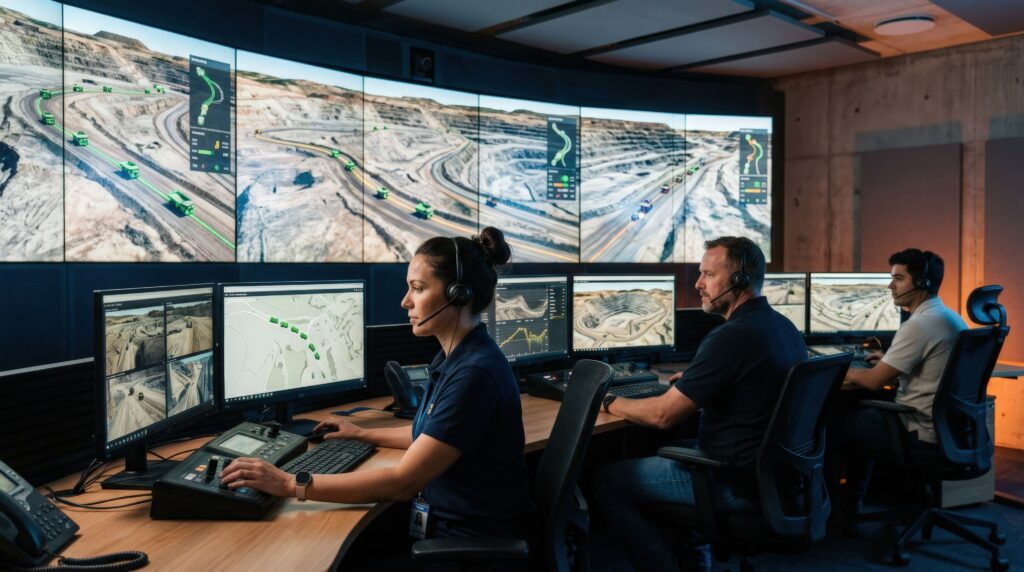
Real-time visibility is a cornerstone of modern mining operations. As demonstrated in the material movement tracking framework, technologies such as IoT sensors and GPS enable organizations to monitor operations continuously and accurately.
This visibility allows for immediate identification of deviations from plan, enabling rapid response to disruptions. It also enhances productivity by optimizing resource utilization and reducing delays.
The control tower concept builds on this foundation by providing a centralized view of operations. By integrating data from across the value chain, it enables organizations to track performance, analyse deviations, and identify root causes
This level of insight transforms decision-making, enabling organizations to move from reactive problem-solving to proactive optimization.
Embedding Sustainability into Operations
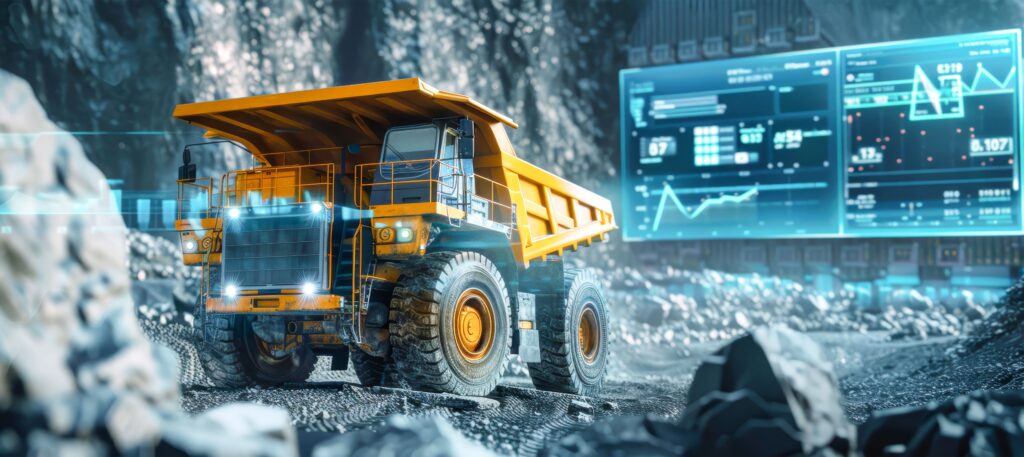
Sustainability is no longer a standalone initiative — it is becoming an integral part of operational planning. As highlighted in the sustainability framework, integrated systems enable organizations to track greenhouse gas emissions based on actual activities, linking environmental impact directly to operational decisions.
This approach allows mining companies to align sustainability goals with business objectives, ensuring that environmental performance is considered alongside financial and operational metrics.
Organizations that successfully integrate sustainability into their operations will be better positioned to meet regulatory requirements, enhance their reputation, and capture new market opportunities.
The Future of Mining: Integrated, Intelligent, and Agile
The mining industry is undergoing a fundamental transformation. The challenges of volatility, complexity, and sustainability require a new approach to planning and execution — one that is integrated, intelligent, and agile.
By adopting integrated planning systems, leveraging real-time data, and embracing advanced analytics, mining companies can unlock significant value across the pit-to-port journey. This includes improved margins, reduced costs, enhanced sustainability, and greater customer satisfaction.
The future of mining will not be defined solely by the resources extracted but by how effectively those resources are managed from pit to port. Organizations that embrace Dassault Systèmes integrated approach will be best positioned to thrive in an increasingly complex and competitive landscape.