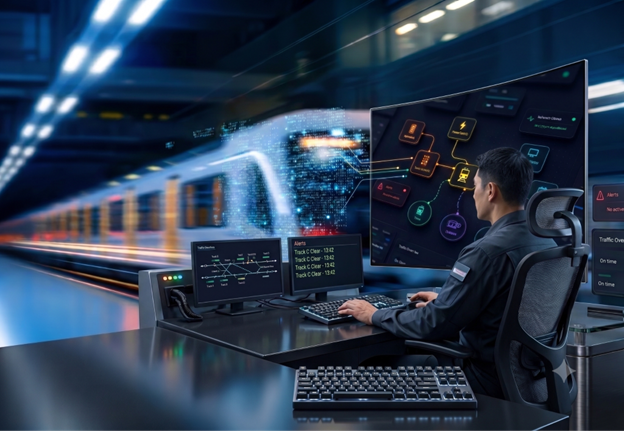

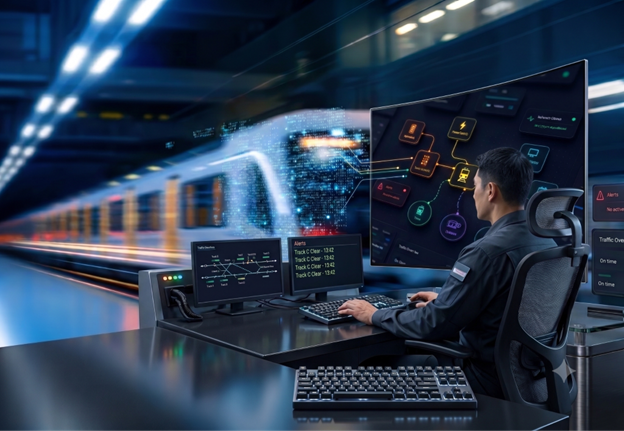
Manufacturing has spent decades refining how it plans complex operations. Faced with fluctuating demand, constrained resources, global supply chains and rising customer expectations, leading manufacturers have moved from isolated planning processes to Integrated Business Planning (IBP). IBP is a connected approach that aligns demand, supply, and financial objectives, and brings production, assets, workforce and logistics considerations into a single planning process.
The rail industry is now confronting many of the same challenges.
Growing passenger demand, increasing freight volumes, workforce shortages, infrastructure constraints and rising expectations for operational resilience are exposing the limitations of planning in organizational silos.
As networks become more interconnected and operating environments more dynamic, improving individual planning functions is no longer enough. Rail’s next transformation lies in connecting them into one integrated planning system.
Manufacturing and rail have a lot in common
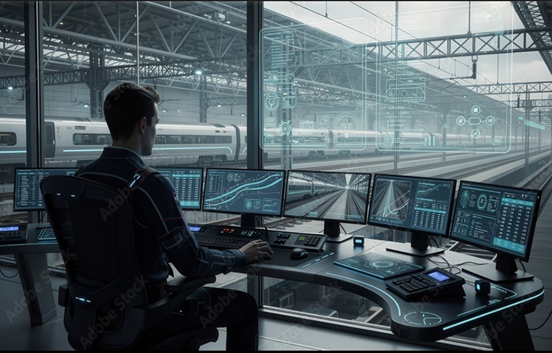
Although manufacturing and railway operations appear fundamentally different, they encounter very similar planning challenges.
Modern manufacturers know that a disruption in one part of the business rarely occurs in isolation. A shift in production schedules ripples through inventory, logistics, workforce deployment, energy use, supplier commitments and customer deliveries. This is why IBP is so widely adopted: it enables operational decision-making with visibility across the entire value chain.
Rail operators are no different.
A change to a service schedule affects crew availability, maintenance planning influences rolling stock allocations and network possessions impact service capacity. Meeting customer commitments depend on how effectively all of these functions synchronize.
The limitations of traditional planning
Many rail organizations have invested significantly in specialist planning systems covering individual functional areas such as service planning, fleet management, crew scheduling, maintenance, workforce planning and yard operations.
However, these systems have often evolved independently, each optimized for its own function rather than for the operation as a whole.
As a result, organizations continue to rely on spreadsheets, emails, meetings and manual coordination to bridge the gaps between planning functions. Experienced planners manage these complexities every day, but fragmented planning makes it increasingly difficult to respond quickly to changing operating conditions.
The consequence is reduced visibility across the organization, slower decision-making, avoidable operating costs, underutilized assets and unrealized capacity.
IBP offers a proven framework
Manufacturing addressed similar challenges by recognizing that demand planning, supply chain management and financial planning cannot operate as isolated disciplines.
IBP connects these functions through a continuous decision-making process, allowing organizations to evaluate the downstream impact of planning decisions.
The same principles can apply to rail operations.
Service planning, fleet management, crew scheduling, yard operations, maintenance planning and infrastructure management all influence one another. A disruption in one area inevitably impacts multiple systems throughout the organization.
Viewing these functions as components of a single planning process enables rail operators to make more informed decisions, improve resource utilization and respond more effectively to operational disruptions.
Moving from software systems to connected decisions
Digital transformation has helped many organizations upgrade individual planning applications, but the implementation of new software alone does not guarantee integrated operations.
The real opportunity lies in connecting planning decisions across functions.
The output of one planning activity should become the input to the next: service planning informs fleet planning, fleet planning supports crew allocation and maintenance requirements shape operational scheduling.
This creates a continuous planning loop spanning long-term strategy, operational scheduling and plan execution. The enterprise becomes a coordinated system of decisions instead of separate departments.
Visibility enables better operational decisions

One of the biggest obstacles rail operators face is the lack of a single operational view.
Critical operational information is often segmented across planning functions, making it difficult to assess overall plan quality and operational performance.
Questions such as whether sufficient rolling stock is available, whether crews can support additional services, or whether specific infrastructure constraints will create downstream bottlenecks, frequently require coordination across multiple departments to answer.
An integrated planning environment provides planners with visibility across demand, assets, workforce, infrastructure and operational constraints simultaneously.
This enables organizations to proactively evaluate multiple planning scenarios, understand trade-offs and resolve conflicts before they affect live operations.
With that visibility in place, planning intelligence can be used to drive better decisions, not just support them.
Industrial AI requires operational intelligence
Artificial intelligence is expected to play an increasingly important role in helping organizations make these decisions. However, industrial settings demand a specific set of AI capabilities.
This broader concept of Industrial AI requires AI to work alongside engineering rules, operational constraints, optimization algorithms, physics-based virtual twins and real-time data.
For rail operators, mathematical optimization is chief among these. Given the combinatorial, constraint-based nature of railway operations, it remains critical to advanced operational planning. Other AI techniques continue to evolve, and there is real potential for them to enhance rail operations further in the near future.
But whatever form that takes, it will require accurate, cohesive data at scale across the enterprise to be effective. This is only achieved through a connected, coordinated planning system, integrated across departments.
Building a connected railway
IBP has a proven track record of showing how connected decision-making improves responsiveness, resource utilization and operational performance across some of the world’s most complex manufacturing environments.
Rail operators now have an opportunity to apply these same principles across service planning, fleet management, crew scheduling, maintenance, network planning and yard operations.
The complexity of the rail industry will only increase in the coming years, as new networks are built and customer demands and expectations rise.
In responding to this challenge, we should avoid the trap of making individual planning functions more efficient in isolation. Rather, we should take a leaf out of the IBP playbook: stop operating as a set of disparate organizational functions and start operating as one connected system.
For more information
Discover how DELMIA helps rail operators connect planning across functions and time horizons: