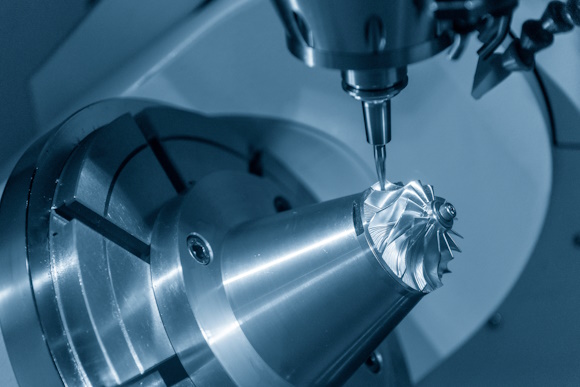

Aerospace machining leaves no room for guesswork. A single actuator destined for a commercial aircraft passes through dozens of precise operations, tight tolerances and rigorous quality checks before it ever takes flight. For Orizio Group, getting that process right means connecting design, engineering and the shop floor on one digital foundation. Miguel Laduron, Chief Information Officer of Orizio Group describes the group’s approach: a digitally-driven and human-centric approach.
What follows is a look at how Orizio Group is rethinking machining and manufacturing through that lens, from a single source of truth for data to a planned fully digital line for A350 actuator assembly.
Who Is Orizio Group?
Orizio Group brings together two complementary aerospace companies. Sabena Engineering focuses on maintenance, repair and overhaul (MRO) for civil and military aircraft. SABCA builds parts and components for aircraft and space launchers, including the Vega, Ariane 6 and a range of Airbus programs.
SABCA’s work spans metallic parts, composite parts and actuators that drive the moving surfaces on aircraft and launchers. Machining sits at the heart of this output. Whether the company is producing a metallic structural component or an electromechanical actuator for the A350, precision machining and assembly determine the final quality of every part that leaves the factory.
That breadth makes data management complex. Different materials, programs and customers all carry their own requirements, and keeping everything aligned demands a strong digital backbone.
How Does a Single Source of Truth Improve Machining Data?
The first benefit Laduron points to is a central repository. The 3DEXPERIENCE platform gives SABCA a protected environment for storing engineering and manufacturing data, including sensitive military project information.
Accessing the information is very easy. A very large amount of data is not anymore an issue, but also sharing that data with the entire company,” says Miguel Laduron, Chief Information Officer of Orizio Group.
For machining teams, this matters enormously. Engineers, manufacturing engineers and production staff all draw from the same dataset, whether they need the 3D model, the tooling specifications or the resources tied to a given operation. The group has also started using the platform for project management, creating a direct link between design work and the engineering project behind it. That connection gives leaders visibility into both the data itself and how engineering handles it on the way to a finished product.
How Does the Platform Connect Engineering and Manufacturing?
The biggest challenge SABCA faces, according to Laduron, is collaboration between engineering and manufacturing. Machining change management is where that challenge shows up most clearly.
When engineering modifies a design, manufacturing needs to know exactly what changed and where to focus. On disconnected systems, that’s slow and error-prone. On a shared platform, it becomes direct.
The collaboration between engineering and manufacturing through that platform is unique,” Laduron says. “It’s really one single data platform. Everybody is looking to one single information.”
That shared view runs all the way down to the job card and the work instructions a machinist follows at the workstation. When a change occurs, manufacturing engineers immediately see what needs adapting on the production side. Some changes can even propagate automatically, with human validation behind every step. The result is faster change management and fewer costly machining errors.
What Does End-to-End Integration Look Like?
SABCA hasn’t yet deployed the 3DEXPERIENCE platform inside the plant, but that’s the next milestone. The target is a first new line dedicated to a new electromechanical actuator for the A350, the Airbus aircraft Laduron calls “best of breed.”
The goal is true end-to-end integration. The plant connects to data that’s always current and can pinpoint exactly what changes, so teams focus only on what needs adapting. The flow also runs in reverse. The shop floor feeds information back to engineering and manufacturing engineering whenever an issue or event occurs during production.
For machining operations, this two-way digital thread closes the loop between what’s designed and what’s actually built. Problems surface faster, and the people closest to the work help shape the next iteration.
How Does the Virtual Twin Support Precision Machining?
Today, SABCA uses the virtual twin most heavily on the engineering side, but it’s already moving into quality control at the end of machining.
The company builds a virtual twin that carries every required dimension, tolerance and quotation in 3D. Inspection machines then measure finished parts directly against that 3D model.
We measure with our machine directly on the 3D model with all the tolerances and the quotations that are made in 3D,” Laduron explains.
This approach ties precision machining to digital measurement, removing ambiguity from final inspection. The next step is to extend the virtual twin up to the line itself, comparing what happens on the shop floor with what the digital model predicts. By aligning the two, SABCA aims to spot differences early and make both the process and the model more efficient over time.
What’s Next: A Fully Digital Line With DELMIA Apriso
Looking ahead, Orizio Group plans to implement DELMIA Apriso on the new A350 actuator line. The vision is a fully digital line that keeps people at the center.
“We want to have still human building those, assembling those parts, but with a digital tool that is interacting with them,” Laduron says. The aim is to support operators without pulling their attention away from the assembly work itself.
We want to have still human building those, assembling those parts, but with a digital tool that is interacting with them. The aim is to support operators without pulling their attention away from the assembly work itself,” Laduron says.
The group has already compared Apriso against alternative solutions. Dassault Systèmes currently ranks first in that evaluation, though Laduron notes the decision isn’t fully finalized. What stands out to him is the difference the solution could make once it’s running in their environment.
One requirement sits above the rest: ERP integration. SABCA needs a strong connection between DELMIA Apriso and its ERP system to see the exact cost of each assembly in production. Linking the manufacturing execution system with ERP gives the group a clear, real-time view of production economics alongside operational performance, which is critical for a high-stakes program like A350 actuator manufacturing.
Bringing Machining Into the Digital Age
Orizio Group’s journey shows what a connected approach to machining can deliver: one source of truth, tighter engineering-manufacturing collaboration, digital quality control and a roadmap toward fully integrated production. Each step reinforces the next, building toward a line where data flows from design to shop floor and back without friction.
The lesson for engineering leaders is clear. Real gains come from connecting people, processes and data on a common platform, then keeping humans firmly in control of the work. For SABCA, that philosophy points directly at the A350 actuator line, where precision machining, digital measurement and DELMIA Apriso are set to come together.
To see how DELMIA solutions can support your own machining and manufacturing operations, explore the 3DEXPERIENCE platform for aerospace and defense.
Key Takeaways
- Orizio Group is an aerospace group made up of two companies: Sabena Engineering, which handles maintenance, repair and overhaul for civil and military aircraft, and SABCA, which manufactures metallic parts, composite parts and actuators for aircraft and space launchers such as Vega and Ariane 6.
- The 3DEXPERIENCE platform gives SABCA a single source of truth for engineering and manufacturing data.
- Machining teams work from the same 3D models, tooling data and work instructions, which speeds up change management, improves engineering-manufacturing collaboration and reduces the risk of errors.
- SABCA plans to deploy DELMIA Apriso on a new fully digital line built for A350 actuator assembly. The solution will guide operators with digital tools while keeping people central to the assembly process, and its tight integration with SABCA’s ERP system will deliver clear visibility into the cost of each assembly in production.
- SABCA’s use of the virtual twin already extends beyond engineering into quality control at the end of machining. The virtual twin holds every required dimension, tolerance and quotation in 3D. Inspection machines measure finished parts directly against that model, and the company plans to extend the virtual twin to the production line itself to compare real-world results with digital predictions.
DELMIA, a Dassault Systèmes brand, connects the virtual and real worlds to drive innovation and sustainability. Powered by the 3DEXPERIENCE platform, our end-to-end solutions integrate virtual twins, industrial AI and augmented reality to optimize manufacturing, supply chains and workforces. We empower businesses to reduce waste and achieve sustainable, customer-focused operations, building a more resilient future.