
Walk through any pharmaceutical or biotech facility and you’ll see what looks like controlled chaos. Operators move materials through airlocks. Quality teams test incoming raw materials. Maintenance crews service equipment between runs. Behind every one of these moments sits a schedule, and behind every schedule sits a decision that affects product quality, regulatory compliance and patient safety.
Most people assume scheduling in a drug manufacturing plant comes down to two things: production and quality control. The reality runs much deeper. A single facility can rely on more than a dozen interconnected schedules, each one shaping how efficiently the others perform.
In this post, you’ll learn:
- The 15 distinct schedule types that drive pharmaceutical and biotech operations
- How these schedules interact and where silos create costly bottlenecks
- How advanced planning and scheduling brings every department into one synchronized model
Why Do cGMP Compliance and Long Lead Times Complicate Life Sciences Production Scheduling?
Drug manufacturing exists to serve a demanding world. Consumers, hospitals, pharmacies and doctors all depend on a steady supply of quality medicines and medical devices. That demand never stops, whether it’s daily medication, annual vaccines or immediate lifesaving treatments.
Meeting that demand means managing complexity at every level. Facilities run dozens of product lots at once, often across rooms designed for specific process steps. They juggle long lead times, complex product lifecycles and strict Current Good Manufacturing Practice (cGMP) requirements. When facilities overexpand or lack proper spacing, the challenge multiplies fast.
Here’s the key: a facility runs efficiently only when its schedules connect. When they don’t, delays and quality risks creep in. Let’s look at each schedule type and the role it plays.
Sales and Operations Planning (S&OP)
S&OP is where it all begins. Sales and manufacturing teams collaborate to align forecasted demand with production capacity. The goal is simple to state and hard to achieve: meet market needs while optimizing inventory and production schedules.
In pharma, this means accounting for long lead times and complex product lifecycles. A strong S&OP process keeps the entire operation pointed in the same direction.
Procurement Schedules
A procurement schedule maps the timeline and steps needed to acquire raw materials, packaging components and other supplies. It acts as a strategic roadmap, guiding everything from sourcing suppliers to receiving deliveries.
Get this right and production deadlines stay on track. Inventory levels hold steady within required parameters. Miss it, and the whole production chain feels the strain.
Personnel Schedules
A personnel schedule allocates tasks and work hours across the facility. It ensures proper coverage at every manufacturing stage, from mixing to filling to packaging, while meeting quality control and regulatory requirements.
These schedules account for shift patterns, specialized roles and the expertise each process step demands. Production demand, equipment availability, staff availability and training all shape how they come together.
Processing Schedules
Processing schedules organize and control the work of making drugs. They define the steps for blending, coating, filling and more. Think of them as the detailed instructions that turn raw materials into finished product, step by careful step.
Master Schedule
The master schedule sits at the top of the hierarchy. It’s a high-level production plan that outlines which products to manufacture, in what quantities and when, usually across several months to a year.
This is the roadmap for everything else. It factors in demand forecasts, available capacity and inventory levels to keep manufacturing efficient and deliveries on time. When regulatory agencies adjust production quotas or consumer needs shift, those changes flow into the master schedule to keep production on target. Every detailed schedule builds from this foundation.
Production Schedules
Production schedules grow directly out of the master schedule. They outline the steps and resources needed to produce a product within a specific window.
Their job is to keep manufacturing efficient, on time and within budget. Good production scheduling optimizes resources and meets production goals without waste.
Cleaning Schedules
Cleaning isn’t just about wiping down a piece of equipment between steps. In a large vaccine or gene therapy facility, it covers rooms, corridors, airlocks, cleanrooms and sterile processing areas, often on a daily basis.
A cleaning schedule defines when, how and who handles sanitation across equipment, processing areas, non-processing areas and the warehouse. It’s essential for product quality and contamination prevention. In a plant running 15 or more lots at once across different rooms, the scope becomes enormous.
Set-Up Schedules
Set-up schedules detail the timing and sequence needed to prepare a manufacturing line for a specific drug. That includes configuring equipment, loading raw materials, calibrating instruments and running quality checks.
These tasks keep the production schedule aligned with the master plan. Done well, they reduce downtime and keep compliant production runs moving.
Support Services Schedules
Support services run quietly in the background, but they’re the backbone of the operation. This group manages autoclaves, glasswashers and sterile ovens used to depyrogenate glassware. They prepare buffers and media for the processing teams.
Following the production schedule, they bring equipment from the warehouse into the core for processing. They deliver solutions directly to processing suites and maintain airlocks and hallways in compliance for material flow.
Maintenance Schedules
A maintenance schedule plans and executes preventive maintenance, typically by frequency: monthly, quarterly or yearly. The aim is to minimize downtime, optimize equipment performance and protect product quality by catching issues before they become failures.
Smart facilities take a risk-based approach. Critical equipment receives more frequent attention than less critical assets, all while meeting regulatory compliance standards.
Packaging Schedules
Packaging schedules cover the operations that prepare products for distribution, from production through to the end consumer. They form a vital link between manufacturing and delivery.
This stage sometimes includes specific milling or blending not done during initial production. Bulk product gets packaged per customer orders and prepared for shipping.
Lab Schedules
Every manufacturer needs a quality control lab to test raw materials, in-process samples and final products. The lab schedule keeps that testing on track.
It’s the manufacturer’s responsibility to prove quality and document impurity profiles for each lot produced. That demand for testing precision calls for scheduling excellence that works alongside production and the warehouse.
Validation Schedules
A validation schedule sets the timeline for when equipment, processes or systems undergo validation or revalidation. There are four distinct types: prospective, retrospective, concurrent and revalidation.
The smart move is to plan validation around maintenance and production downtime. That approach prevents scheduling conflicts and keeps the facility productive.
Release Schedules
Release scheduling often gets overlooked, yet it’s where products earn their final approval. The Quality Assurance team manages this schedule in real time, following production and shipping plans to release products for shipment.
Before release, all records and documents must be approved and closed, including any deviations or maintenance reports. Only then can a product move to its intended use.
Warehouse and Logistics Schedules
Logistics schedules handle the shipping and receiving of products and intermediates. They cover shipping timelines and product shipping regulations, both key parts of a supply chain built to deliver on time and in full.
This is the final link that gets quality medicines into the hands of the people who need them.
How DELMIA Ortems APS Software Natively Eliminates Pharmaceutical Operational Silos
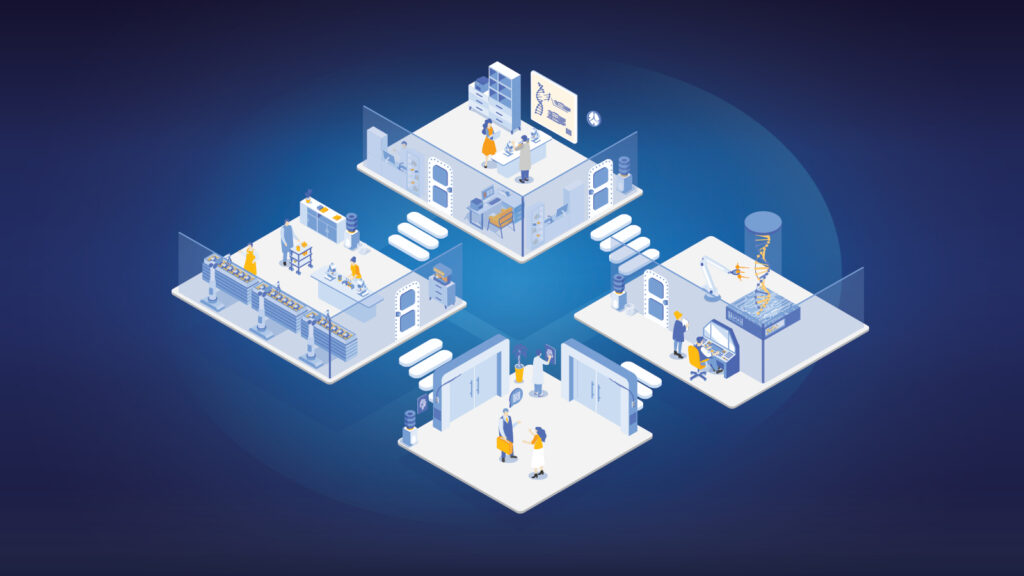
Notice a pattern across all 15 schedules? Each one depends on the others. A change in maintenance affects production. A shift in procurement affects packaging. When these operations live in silos, delays multiply and compliance risks grow.
DELMIA Ortem’s Advanced Planning and Scheduling addresses this directly. Built for the realities of pharmaceutical and biotech manufacturing, it tackles complex product mixes, small batch sizes, frequent new product introductions and strict regulatory compliance.
Using advanced algorithms and mathematical optimization, the platform unifies constraint-based data into a single executable digital model. Here’s how that plays out across departments:
- Maintenance: Predictive sequencing schedules tasks when they cause the least disruption, aligning maintenance with the availability of spare parts, tools and certified personnel.
- Shipping and logistics: End-to-end visibility tracks fleets, freight and personnel, while yard and dock scheduling prevents bottlenecks and reduces demurrage and fuel costs.
- Cleaning and asset preparation: Sanitation requirements like sterilization factor directly into routing constraints, with clean-in-place operations sequenced to cut setup downtime and chemical waste.
- S&OP: Long-term forecasts translate into concrete operational plans, with what-if simulations testing how strategies affect capacity, inventory and profitability before commitments are made.
- Valuation: Real-time financial tracking compares scheduling scenarios, while inventory optimization maximizes cash flow and reduces carrying costs.
By unifying these functions, DELMIA eliminates operational silos. A change in one area automatically updates and optimizes the schedules of all others.
In pharmaceutical, biotech and medical device manufacturing, silos don’t just cause delays. They threaten regulatory compliance, product efficacy and patient safety. Cross-departmental scheduling resolves the most severe bottlenecks unique to life sciences.
Maximizing Asset Utilization and Patient Safety Through Synchronized Digital Supply Chains
A well-scheduled facility runs better in every measurable way. When departments sync around a common master manufacturing schedule, goals get met, waste drops and customers receive products on time with enhanced quality.
So the next time you assess a facility, look past production and Quality Control. The schedules connecting maintenance, cleaning, validation, logistics and every other function determine whether you fulfill client needs on time. Connecting them is what separates an efficient operation from a struggling one.
Ready to see how advanced planning drives results? Download our e-book, Blueprint for Pharma: How Advanced Planning Drives Breakthrough Drugs, and discover what synchronized scheduling can do for your facility.
Powered by Dassault Systèmes’ 3DEXPERIENCE platform, DELMIA solutions address the most challenging situations manufacturers experience today. We connect the virtual and real worlds with immersive technology to empower our customers worldwide to collaborate, model, optimize, and execute manufacturing, logistics, and service across an efficient and connected supply chain.

WW DELMIA Industry Process Expert Senior Specialist