
Designing the electrical system for a machine or a production line is rarely a single, smooth task. The library lives in one place, the schematic in another, validation happens late and the 3D cabinet design often means re-entering data that already exists. Each handoff is a chance to lose time and introduce errors.
CATIA Electrical takes a different approach: one connected workflow, built on the 3DEXPERIENCE platform, where the same data flows from the first reference you pick all the way to the manufactured cabinet. To make it concrete, here is the journey using a real example: a bottle filling machine.
Start ready: the Electrical Content Portal
The slowest part of any new electrical project is usually setting up the library: finding the right manufacturer parts, drawing symbols and adding data. The Electrical Content Portal (ECP) removes that friction. It provides a large catalog of certified content ready to drop straight into your design, including over 1,700 manufacturers, hundreds of thousands of manufacturer parts and tens of thousands of symbols and footprints, along with electrical-oriented 3D models.
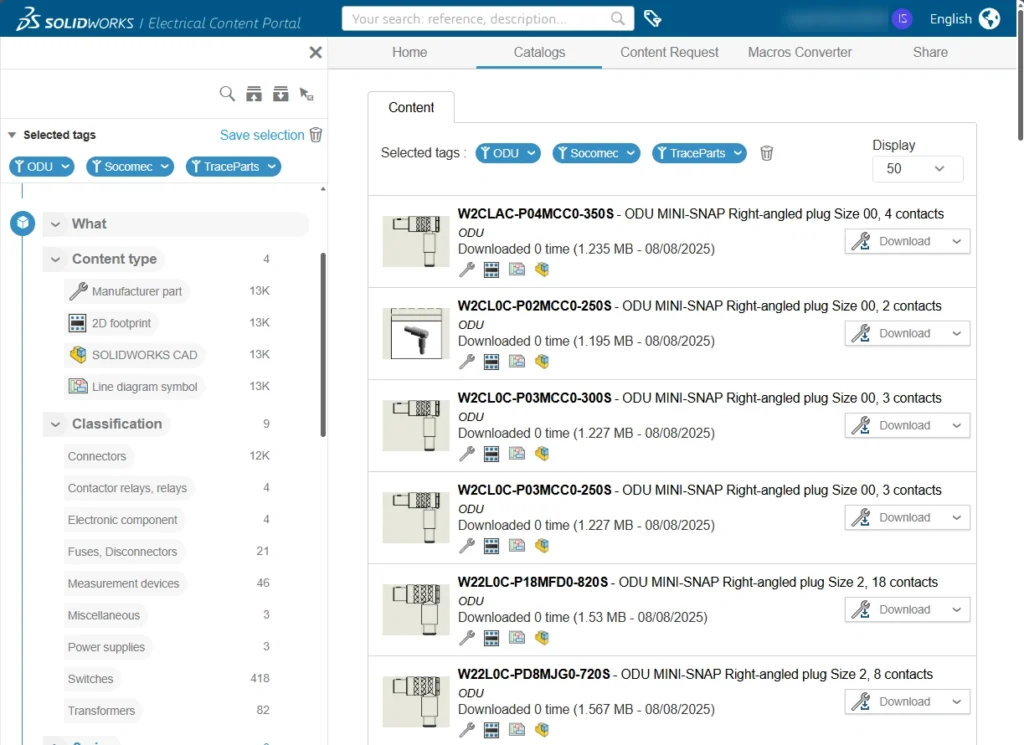
In practice, this means you start a project with a library that already contains almost everything you need, with both ANSI and IEC environments preconfigured. You are designing in minutes, not days.
Electrical Schematic Designer (ESX)
Design as a team, in real time
Electrical projects are team efforts. With a collaborative server on the local network and a shared database, an entire team can work on the same project at the same time. A change made by one designer is visible to the others, the data stays controlled inside the organization and a librarian can manage and update library content centrally within the 3DEXPERIENCE platform, while designers simply load the latest version when they need it.
The result is no more passing files around, no manual merges and no confusion about who has the latest version.
From architecture to detail in one project
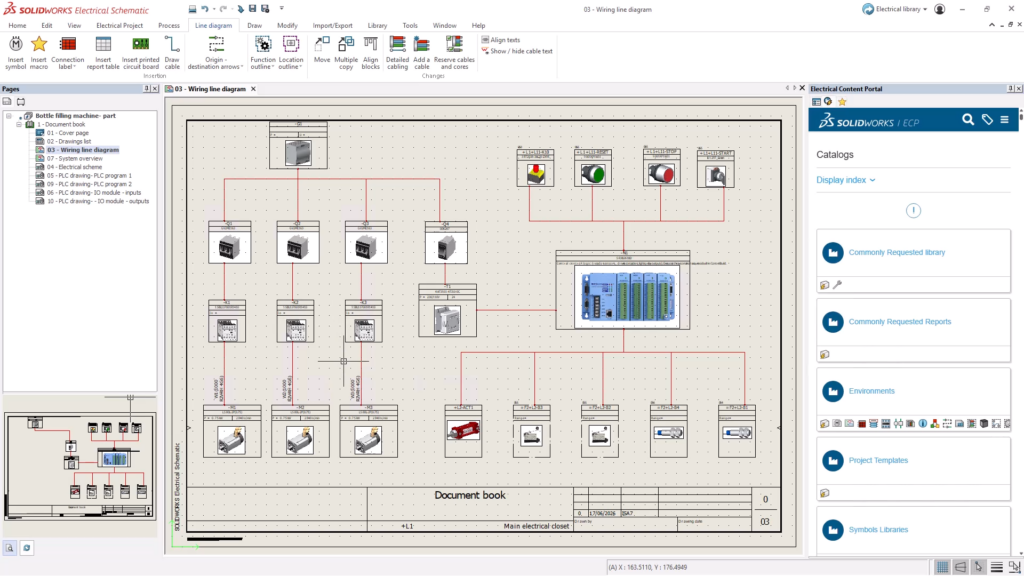
Good electrical design works at two levels: the big-picture system architecture and the detailed schematic. The line diagram lets you lay out the high-level architecture: equipment, locations and the main connections and then progressively add detail without redrawing. Because it is all the same project, you can drill from any piece of equipment straight into the full schematic behind it. Decision-makers see the architecture; designers work in the detail; everything stays in sync.
Built for electrical, not adapted from drafting
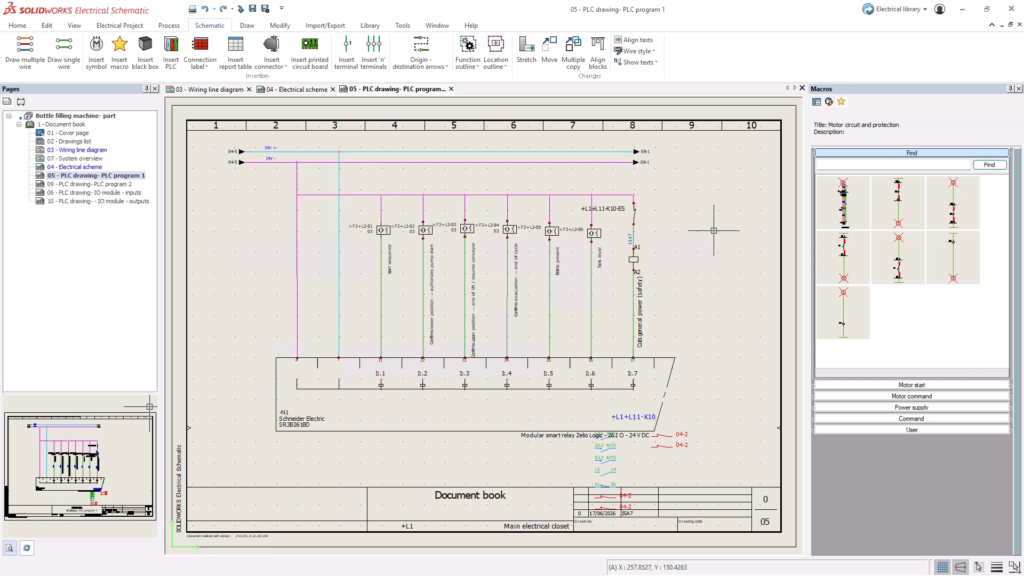
This is where electrical engineers spend most of their day, so the tools have to do real work. Complex circuits can be reused in seconds with macros instead of being redrawn. Terminal strips follow a clean, dedicated workflow. PLC drawings are generated from the manufacturer’s catalog rather than drawn by hand: you pick the reference, configure the inputs and outputs and the drawing appears.
Every command understands electrical intent. The designer focuses on what the circuit should do and the software handles the execution. That is the difference between a purpose-built electrical tool and a generic CAD package.
Test before you build: simulation with ControlBuild
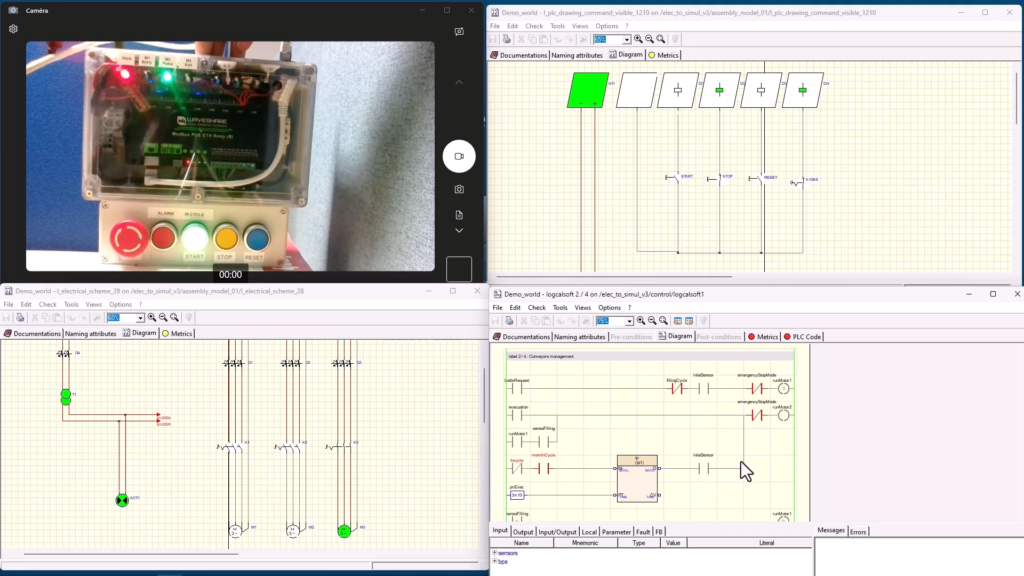
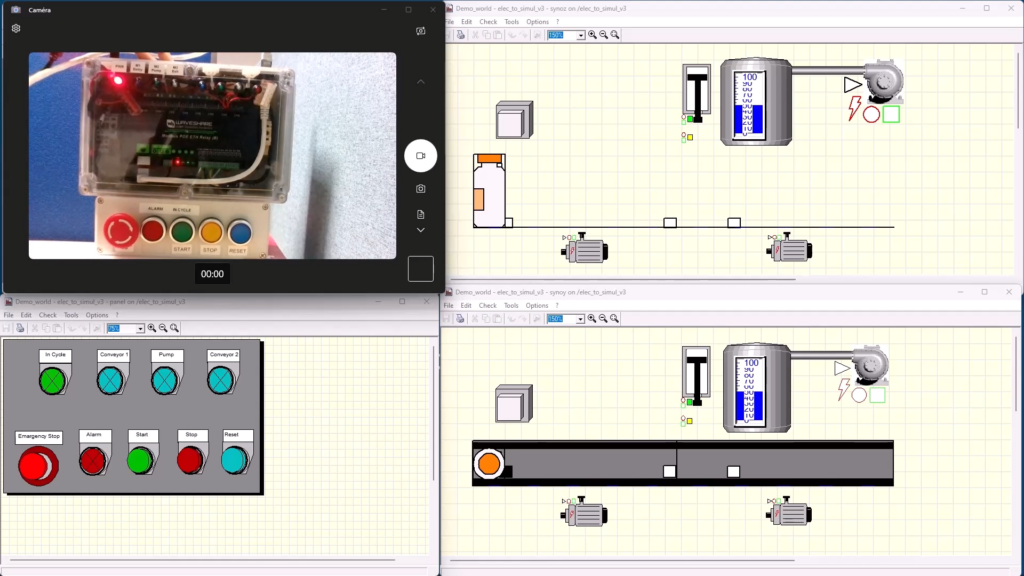
Traditionally, an electrical schematic gets validated late, during wiring or commissioning, which is the most expensive moment to find a mistake. By connecting the schematic to ControlBuild (CBG), CATIA Electrical supports a MODSIM approach, allowing engineers to simulate and validate the design while it is still being developed.
You can simulate electrical behavior, check for missing elements and detect errors. You can add a PLC program and test the control logic against the schematic. You can even perform virtual commissioning to validate how the machine behaves before any hardware exists, connecting real buttons and inputs through a hybrid setup to see the simulated machine respond to physical signals.
The payoff is significant: problems are found on screen during design instead of on the shop floor. That means fewer late changes in the cabinet, shorter commissioning and a higher-quality machine delivered to the customer.
Reports and the bridge to 3D
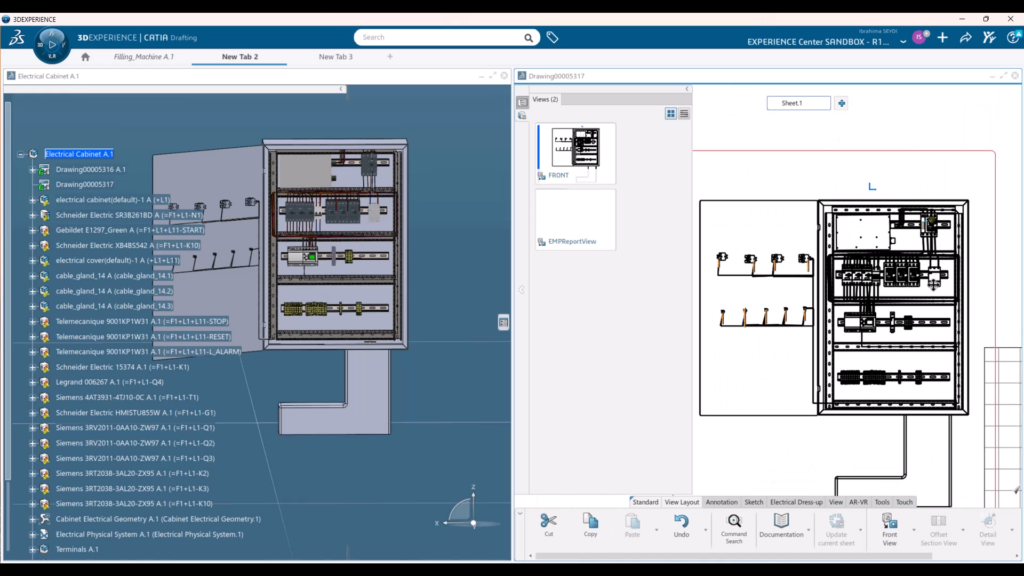
Once the schematic is complete, the documentation comes directly from it: bills of materials, wire lists, cable lists and terminal strip drawings, all generated automatically and kept consistent across the project. No double entry, no manual reconciliation.
From there, a single command generates the physical product structure and pushes it to the platform, where the Electrical 3D Designer (ELG) opens it directly. The 3D team places components in the cabinet, routes wires and cables and generates the cabinet layout. The reports update automatically with the real wire and cable lengths measured in 3D. The same data carries from 2D to 3D with zero re-entry and zero translation.
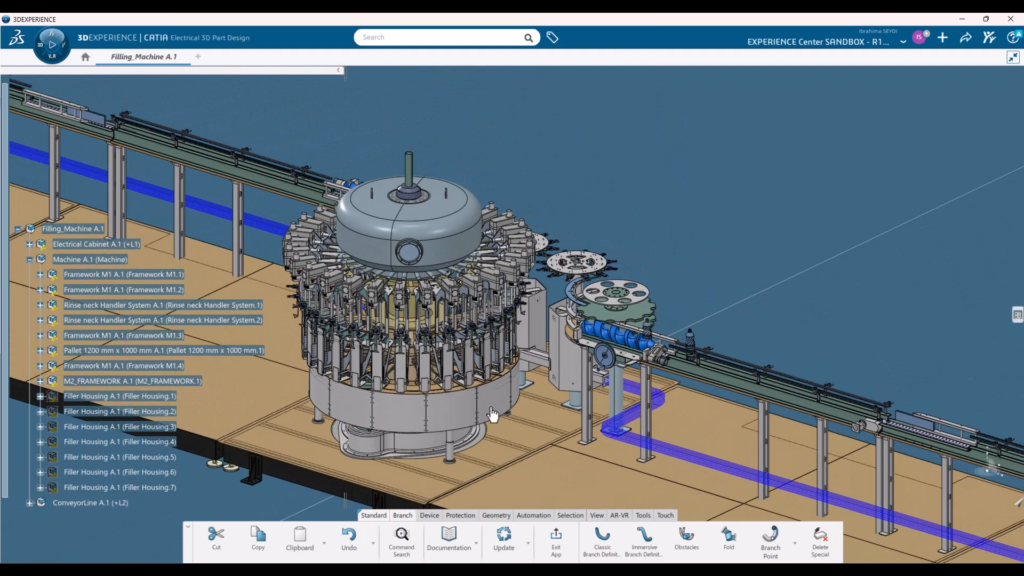
One connected electrical engineering workflow
That is the core idea behind CATIA Electrical for Electrical Control & Cabinet Design: library, schematic, simulation and 3D are not separate islands. They are one continuous process on a shared platform, where the work you do at each stage feeds the next. For electrical engineers and the teams around them, that means less rework, fewer surprises and more time spent on engineering instead of administration.
FAQ
CATIA Electrical is a comprehensive solution for electrical control and cabinet design. It enables engineers to create schematics, manage electrical libraries, validate designs through simulation and seamlessly connect 2D electrical design with 3D cabinet layout on the 3DEXPERIENCE platform.
The Electrical Content Portal provides certified libraries containing components from more than 1,700 manufacturers, along with symbols, footprints and electrical-oriented 3D models. Engineers can start designing immediately without spending time creating or maintaining component libraries.
Yes. CATIA Electrical supports collaborative engineering through a shared database and collaborative server, allowing multiple designers to work simultaneously on the same project while ensuring everyone accesses the latest data and library content.
By connecting electrical schematics with ControlBuild, engineers can simulate electrical behavior, validate PLC logic and perform virtual commissioning before physical hardware is built. This helps identify issues early, reducing costly changes during wiring and commissioning.
Once the schematic is complete, CATIA Electrical automatically transfers the product structure to the Electrical 3D Designer. Components, wires and cables are routed in the 3D cabinet without re-entering data, while documentation such as bills of materials and wire lengths is updated automatically, ensuring consistency throughout the project.
 Ibrahima Seydi
Ibrahima Seydi is an Industry Process Specialist specializing in electrical engineering solutions on the 3DEXPERIENCE platform. As technical sales, he collaborates with customers, partners and R&D teams to enhance electrical design workflows and shape the next generation of electrical engineering solutions. His expertise spans both 2D electrical schematic design and 3D electrical design, with a focus on improving engineering efficiency and digital continuity. He holds a master’s in Electrical Systems engineering from Université d’Artois and in his free time, he enjoys photography, fitness and video games.
 Imad Soultana
Imad Soultana is a Product Portfolio Manager who shapes the future of 2D electrical design tools. He defines product strategy and roadmap for Electrical Schematic and the Electrical Content Portal, turning customer needs and market trends into new functionalities, and he drives their go-to-market, release communications and cross-team partnerships. He holds a master’s degree in Electric Energy Systems from Université Le Havre Normandie, and his background in electrical design, R&D and embedded systems engineering gives him a practical understanding of the engineers he builds for. Outside of work, he is passionate about soccer, video games and car racing.