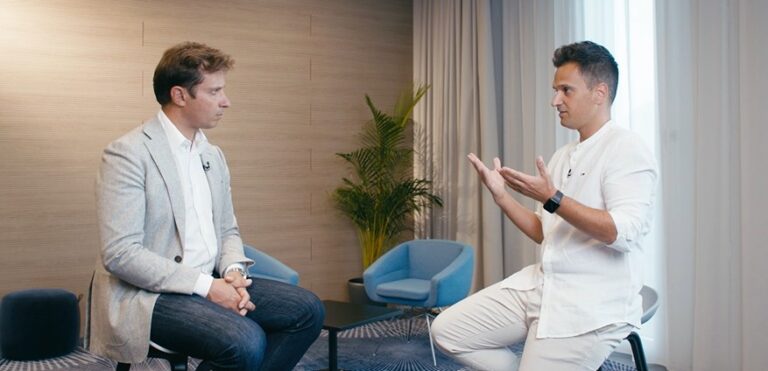
In hypercar design, creativity alone is not enough. Designers must translate bold ideas into high-performance vehicles where every curve serves a purpose. For Angel Guerra, a transportation designer with nearly two decades of experience, the challenge lies in turning intuition into reality, seamlessly and instantly.
Working with some of the most prestigious automotive brands in Europe, Guerra leverages CATIA and Dassault Systèmes solutions to bridge the gap between imagination, digital modeling and real-world performance.
Designing Hypercars: Where Performance Meets Precision
Based in Spain, Angel Guerra has built his career designing for industry leaders such as Bugatti, Rimac, Porsche and Mercedes. Today, his focus is firmly on sports cars and hypercars, where design complexity reaches its peak.
In this segment of the automotive industry, styling is no longer just about aesthetics. It must integrate multiple layers of constraints, from aerodynamics to ergonomics and engineering, into a single, cohesive digital model.
The biggest challenge is to try to integrate all the level of performance that a hypercar needs nowadays into the style.
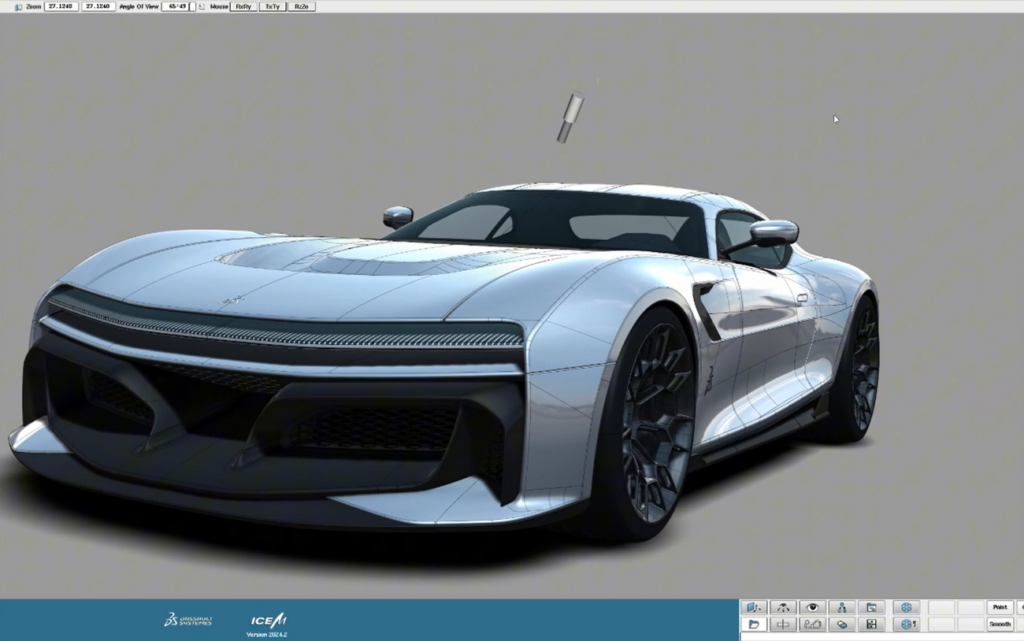
This complexity requires designers to constantly balance creativity with technical precision, ensuring that every design decision contributes to both performance and visual identity.
A Seamless Design Flow with CATIA and ICEM Surf
To meet these demands, Guerra relies on ICEM Surf, a long-standing industry reference for Class A surfacing, combined with CATIA Live Rendering to extend his design process into real-time visualization.
For him, speed and continuity are essential. The ability to move from modeling to realistic visualization without friction allows him to stay focused on creativity.
At the end of the day, my job is to break the barrier between my hands and the screen and what I have in my mind to transfer this as fast as possible and with intuition.
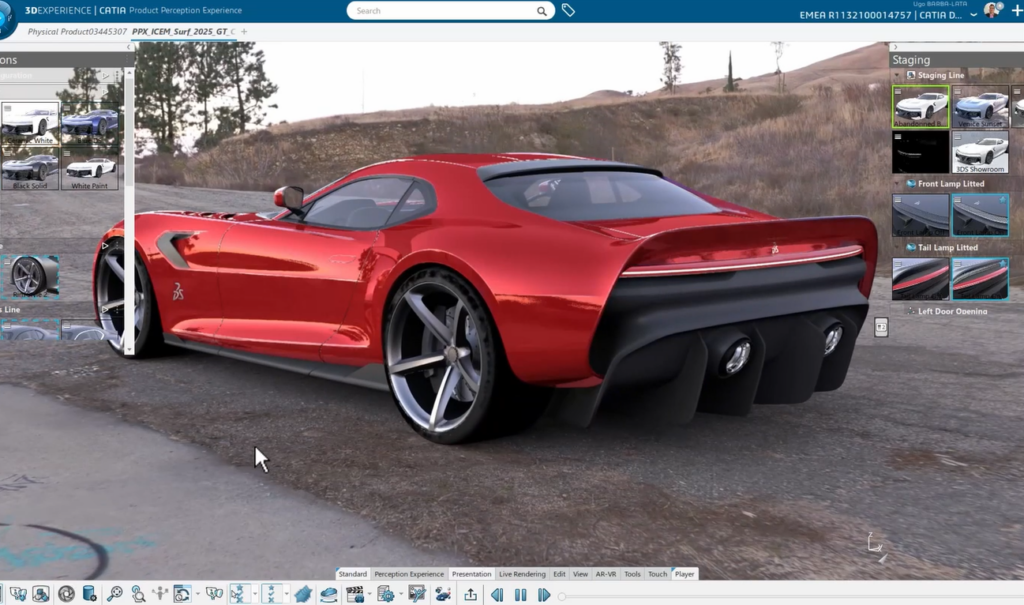
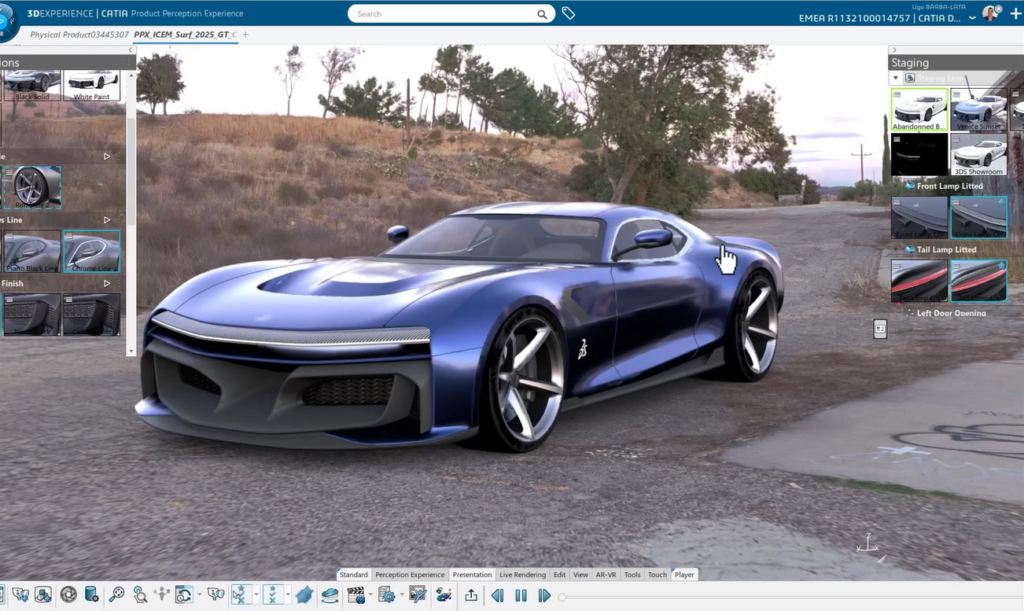
With CATIA Live Rendering, Guerra can instantly evaluate his designs in realistic conditions: testing reflections, lighting and environments without interrupting his workflow.
I can just drop my file into CATIA Live Rendering and check in real-time reflection, shadows, to change the environments and to see if my work that worked already in my software will work in real life.
This seamless integration eliminates traditional bottlenecks, enabling faster iterations and more confident design decisions.
From Screen to Reality: Experiencing Design at Full Scale with VR
Designing a hypercar goes beyond creating surfaces, it requires understanding how a design truly feels in three dimensions. While traditional screens offer precision, they can limit perception when evaluating proportions, depth and spatial relationships.
For Angel Guerra, virtual reality brings a critical dimension to the design process: a real-world, human-scale experience that allows immediate validation.
Everything is about experience and nowadays we are living crazy times in a good way. What is really interesting and amazing nowadays is when you add a VR set.
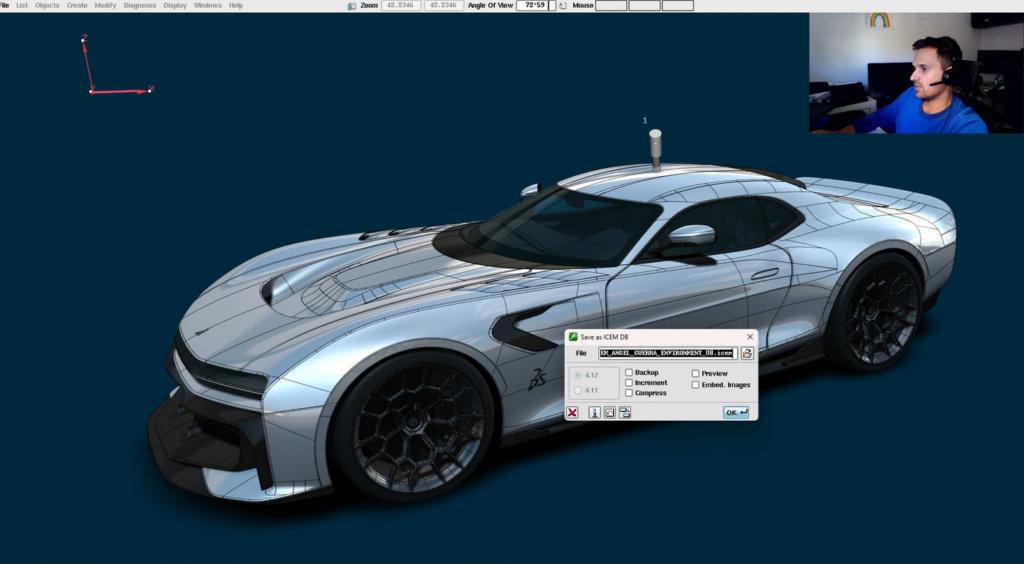
By stepping inside the vehicle in VR, designers can assess how forms interact, how surfaces flow together and how the car is perceived from the driver’s perspective. This immersive approach makes it possible to evaluate design intent instantly, something that is difficult to fully capture on a 2D screen.
As a result, VR becomes a powerful decision-making tool, enabling faster iterations, greater confidence and a deeper understanding of the design before any physical prototype is built.
Design Without Disruption: The Power of Intuitive Tools
For Angel, one of the most significant advantages of CATIA and Dassault Systèmes solutions is the ability to maintain a continuous creative flow.
Rather than slowing down the process, the tools become an extension of the designer’s thinking.
Sometimes you don’t even need to think what you are doing because you are so used to the tool that is a direct transfer. I don’t break the flow, you know. I need a flow like a model, okay I will try this and rendering in real time and this is really fast.
This intuitive interaction between designer and software allows ideas to evolve naturally, without technical interruptions.
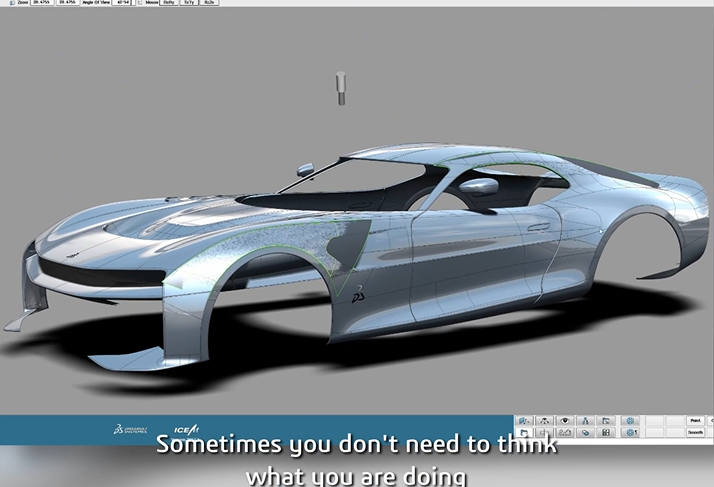
So I will say that the main advance for me is that I feel really comfortable working with this software.
Conclusion
Angel Guerra’s experience highlights a fundamental truth in modern automotive design: the right digital tools do more than support creativity: they enable it.
By combining ICEM Surf, CATIA Live Rendering and immersive virtual reality experiences, designers can move seamlessly from concept to validation, integrating performance, aesthetics and real-world constraints into a unified workflow.
In a field where precision and speed are critical, CATIA empowers designers to break barriers, between imagination and execution, between digital models and physical reality, ultimately shaping the future of hypercar design.
FAQ
- How does CATIA support hypercar design?
CATIA enables designers to integrate aerodynamics, ergonomics and engineering constraints into a single digital model, improving precision and efficiency.
- What is CATIA Live Rendering?
CATIA Live Rendering allows real-time visualization of 3D models with realistic lighting, reflections and environments, accelerating design validation.
- Why is ICEM Surf used in automotive design?
ICEM Surf is widely used for Class A surfacing, helping designers create high-quality, production-ready surfaces for vehicles.
- How does virtual reality improve design collaboration?
Virtual reality allows clients and teams to experience a vehicle design remotely, reducing the need for physical prototypes and enabling faster feedback.
- What are the challenges in hypercar design?
Designers must balance extreme performance requirements with aesthetics while integrating multiple engineering constraints into a single model.
Visit our CATIA Creative Design & Styling User Community to exchange with our experts!
Who is Nick McFerran?
A 30-year career in Automotive Design, equally split between Class A Surface modelling for prestigious OEM Design Studios, and working directly for the Software Solution providers as Technical Consultant supporting their customers, keeping them informed of the latest technology, and enabling them to get the best experience from their 3D solutions. Since January 2016 Nick has worked for DASSAULT SYSTEMES initially in the CATIA Design Centre of Excellence, and lately the Industry Process Success team. Specialising in Surface Refinement supporting solutions such as ICEM Surf and CATIA Icem Design Experience, also embracing new paradigms such as CATIA Visual Scripting and Immersive Virtual Reality. Nick enjoys revealing the latest potential of CATIA to all our valued users across all industries, helping them to realise the potential game-changing value enabled by the 3DEXPERIENCE.

Nick McFerran is a CATIA Design Industry Process Expert Senior Manager, within CATIA Design & Styling Organization.