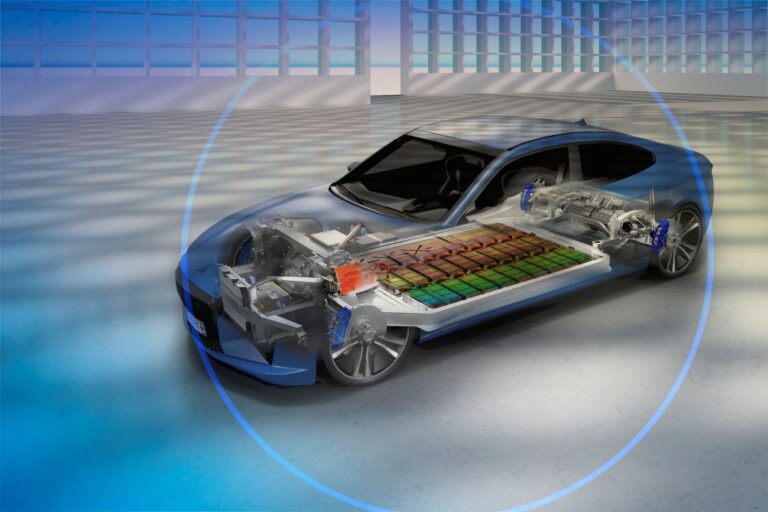
Imagine a world without batteries. We would be tangled in wires, with no portable devices or no electric cars. Thanks to Alessandro Volta’s inventions of the electric battery, we have come a long way. Born on February 18, 1745, Volta’s legacy is celebrated every year on National Battery Day.
Batteries are everywhere, from tiny cells in flashlights to massive packs in electric vehicles. They have evolved significantly, starting at the cell level with electrolytes and electrodes to battery packs with structural and thermal elements. The future of batteries is being shaped by virtual twins.
Virtual twin technology is transforming how batteries are designed, tested, and optimized. By simulating real-world environments, engineers are able to enhance battery performance, improve safety, and develop sustainable solutions. This blog will explore how batteries are improved for electric vehicles and other products through virtual twin simulation.
What are virtual twins?
Virtual twins are scientifically accurate digital replicas that start with a 3D model that captures the shape, dimension and properties of a product. Using simulation, virtual twins show a full lifecycle and evolution of a product or system, providing insights and predictions that help engineers to make better decisions in technology innovation.
This means companies can model, simulate, and optimize complex infrastructures in one environment. By virtually simulating designs, companies are reducing the risk of investment in batteries, enabling better decisions and minimizing costly mistakes. Virtual twins provide real-time insights into performance which helps to address challenges and improve reliability.
Virtual twins also play a critical role in ensuring there is always enough energy available when needed, while also improving reliability and keeping costs in check. They help companies take on challenges by providing a deeper understanding of how systems perform under a variety of conditions.
Batteries and virtual twins
Most batteries today are made with liquid electrolytes, which are a type of medium that contains ions and conducts electricity through movement. However, researchers are exploring different paths to improve battery safety and performance.
A few years ago, Vikram Deshpande, a professor of materials engineering at the University of Cambridge, who presented at the Dassault Systèmes Regional User Meeting in Manchester, explored replacing traditional liquid electrolytes with a solid, ceramic electrolyte. This would solve the problem of batteries short circuiting because of the lithium within them.
To solve this problem, the Deshpande turned to simulation. With SIMULIA’s 3D solvers, he was able to identify the issues affecting the batteries performance. By simulating solid electrolyte batteries, Deshpande and his team discovered key insights into the behavior of electrolytes. Simulation proved to be a critical tool, enabling them to identify the best solutions.
Deshpande said, “In batteries, the simulations have helped us not only in the design, but also in understanding how things work. That understanding is very useful when you’re trying to come up with new designs.”
The use of simulation has advanced Deshpande’s battery research. He believes simulation will continue to help researchers like him to develop solutions that benefit both the planet and its people.
Flint’s paper battery
While batteries are essential in everyday life, they are often toxic, expensive, and difficult to dispose of sustainably. Flint, a deep tech impact startup and 3DEXPERIENCE Lab member, took on the challenge of creating paper batteries that store energy using natural materials. The batteries use a type of engineered cellulose that has been reinforced with a hydrogel that functions as a separator and an electrolyte. The battery uses zinc and manganese to ensure safe and reliable performance.
As a water-based battery, it is fire safe and leak proof while also composting within six weeks with no harmful waste. To ensure safe and reliable performance, Flint used the 3DEXPERIENCE platform to help with the design, simulation and production.
- BIOVIA for materials and chemistry modeling,
- SIMULIA for performance and safety simulations,
- SOLIDWORKS for flexible battery design,
- ENOVIA for lifecycle and project management,
- DELMIA for scaling production lines efficiently.
Flint’s paper battery is a significant advancement in the battery industry, offering a safe and sustainable option. It allows for clean, accessible energy storage without harming the environment. This innovation not only reduces toxic waste but also offers a sustainable alternative to traditional batteries, making it a gamechanger for clean energy.
Electric vehicles and batteries
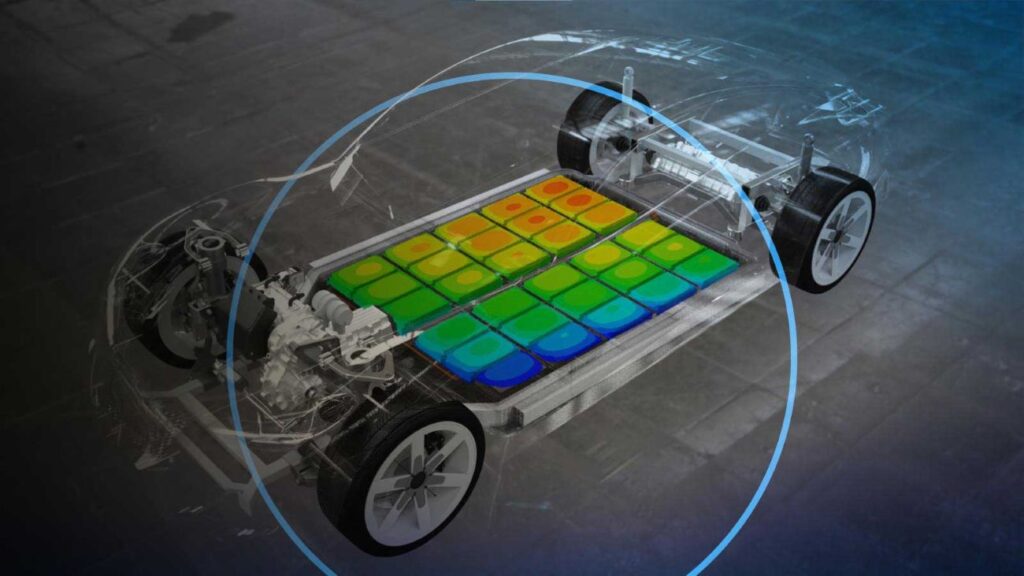
With the growing rate of electric vehicles being introduced, batteries have to be adapted and improved to ensure safety and performance. Batteries are the core component that powers an electric vehicle’s movement.
Batteries are typically located on a vehicle’s floor, so engineers must carefully consider the correct weight distribution to ensure the car is safe for all passengers. Not only does the battery power the car for driving, but it also provides electric power for auxiliary systems of the vehicle like HVAC. Virtual twins help catch potential failures before harming those who use the cars. Electric vehicle designers are responsible for balancing battery health and efficiently at a specific temperature range for the battery to best perform.
Dassault Systèmes provides technology that enables the design and development of batteries. This means starting at the molecular level to analyzing full vehicle performance. Through virtual twin technology, simulations can show engineers how heat moves through an electric vehicle and how the energy is used by its climate system.
Electric vehicles are now going to go beyond being passenger cars. Global mining companies are also transitioning to battery electric vehicles (BEVs) to replace traditional diesel-based cars. BEVs reduce noise pollution and emissions, but mining companies have to ensure they are optimizing charging strategies to make the switch successful. To accomplish this, virtual twin simulations help minors collect data quickly and efficiently, ensuring they meet reporting standards and ESG requirements.
Batteries in aircraft technology
Batteries are often overlooked until we need them, like when we open a box and realize we’re out of AAA batteries. But batteries are more than just helpful tools; they are essential for survival and safety.
Imagine saying that you flew on an electric aircraft with batteries in its wings. VÆRIDION, a Germany-based aircraft manufacturer, has the goal to transform regional air travel with battery-electric aircrafts. Defined by its innovative “battery wing integration,” the Microliner’s advanced battery packs are uniquely mounted into the wings to power its electric engines.
The company leverages the 3DEXPERIENCE platform to address challenges beyond the traditional scope of aeronautical engineering. This platform has significantly accelerated the pace at which engineers can bring the Microliner to the skies. By utilizing SIMULIA’s automated simulation capabilities, engineers reduce time-consuming manual tasks during the design phase.
The virtual twin capabilities enable the team to simulate and test various battery placements, optimizing both installation and maintainability. They can also troubleshoot design issues as they arise. For a project of this complexity, the power of the right tools in an accessible location cannot be overlooked.

Netherlands-based aerospace company, Elysian Aircraft, founded in 2023 after two years of research, is redefining air travel with a large-scale, zero-emission aircraft.The company envisions placing 50% of all scheduled flights worldwide with a zero-emission electric solution. The company is developing its flagship aircraft, the E9X, a 90-seat, battery-powered plane capable of flying over 800 kilometers on a single charge. To bring this vision to life, Elysian turned to the 3DEXPERIENCE platform on the cloud.
By leveraging virtual twin simulation, Elysian can optimize the design of its aircraft. The platform allows the company to simulate the performance of different materials and assess the impact of critical safety features, such as failure modes, to achieve the ideal battery composition.
To build the world’s first large-scale battery-electric aircraft, Elysian recognized the need for tools and partners that could match their ambitious pace. Dassault Systèmes provided the solution. The 3DEXPERIENCE platform enables virtual testing of battery performance under varying temperatures, charging cycles, and discharge rates, maximizing energy density, lifespan, and reliability. This innovative approach reduces material waste, shortens development timelines, and minimizes costs.
The future of batteries and virtual twin technology
As we continue to innovate, batteries and virtual twins will not only power our devices but also pave the way for a sustainable and connected future. With the help of virtual twin simulation, engineers can explore innovative ways to improve batteries safely and sustainably.
As technology continues to advance, the combination of batteries and virtual twins will drive innovation across industries, creating a cleaner, more efficient future.
Read more

Charlotte Philippy is a Corporate Communications intern at Dassault Systèmes and a Public Relations student. With a strong interest in media and digital communication, she enjoys creating content that connects ideas with audiences around the world.