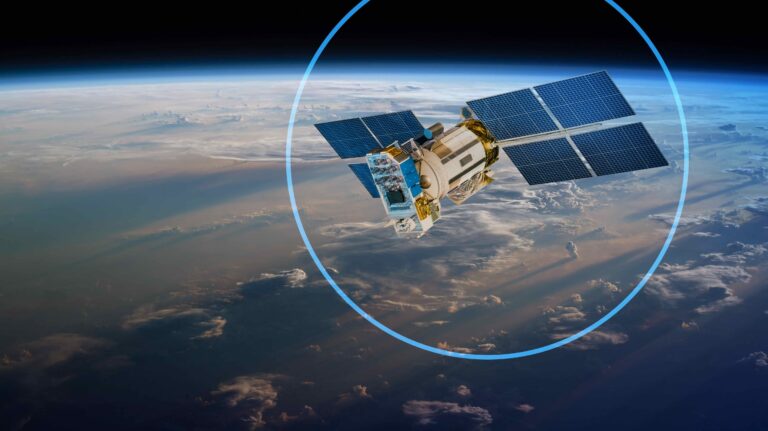
The race to revolutionize infrastructure has left Earth’s atmosphere. While terrestrial server farms existed long before generative AI became a household name, the current demand for processing power places them under intense scrutiny. The public is increasingly concerned about the environmental cost of the massive computing power required to run modern algorithms. Ensuring sustainability on Earth is possible but challenging, prompting innovators to look upward toward a different approach: space-based data centers.
This shift represents a new frontier for technology. The benefits of space-based data centers are scientifically sound. Solar energy can power them efficiently, the need for large amounts of water for cooling them is removed and the technology to make them possible is already proven. In the future, they’ll be able to lower the processing time for data and relaying it through lasers, instead of fiber optic cables.
Despite all the research and even some proofs of concept, questions remain about logistics and viability. What are the logistics of space-based data centers? How will engineers ensure reliability in such a harsh environment? Does the promise of sustainability hold up against the cost of launch?
What are space-based data centers?
On Earth, data centers are physical buildings filled with servers and other IT infrastructure that power everything digital, from cloud storage to cryptocurrency and AI. They are generally large and often detrimental to the environment. Because of concerns about their impact, especially given growing reliance on AI tools that require a lot of power, the new frontier lies in orbit. Above the atmosphere, managing heat and carbon dioxide emissions becomes more feasible.
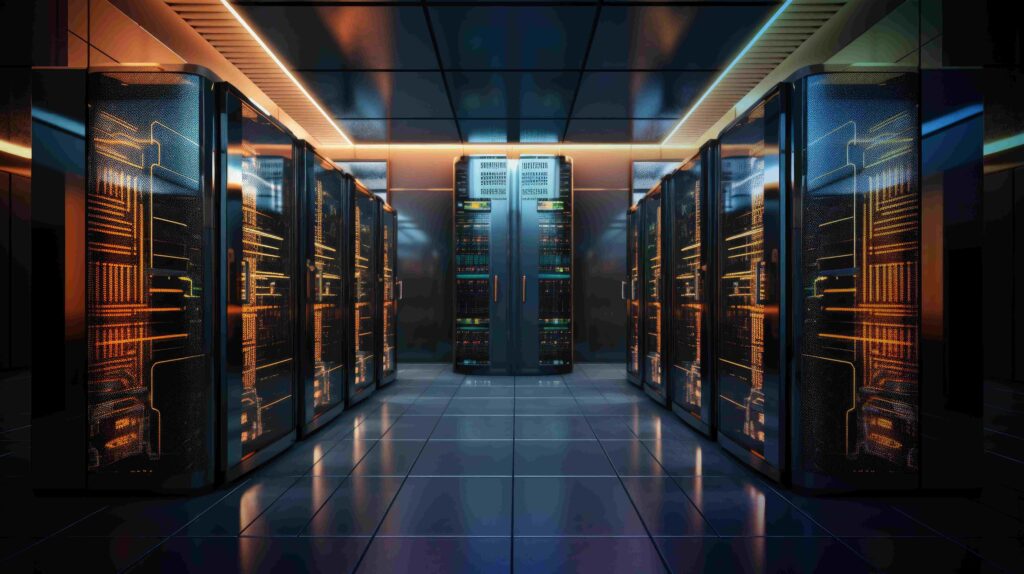
Space-based data centers are satellites or orbital stations equipped with servers to handle data storage and processing in the vacuum of space. Unlike Earth-based centers that require massive cooling systems and land, orbital centers use the cold environment of space for thermal management and solar arrays for renewable power. One initial difference between data centers on Earth and in outer space is their use case: for space-based data centers, the data processed on-board would be used for operations taking place in space, rather than being relayed back down to Earth.
Right now, space is crowded, but not yet with data centers. Chinese aerospace company Adaspace launched a 12-satellite cluster of data centers in the spring of 2025 and US space infrastructure startup Axiom Space sent up its first two orbital data centers just last month.
Soon, there may be many more. Elon Musk’s SpaceX submitted a request to the FCC in January 2026 for permission to launch a one million satellite constellation data center into orbit. Blue Origin, another major player in the US space market, has a more conservative approach, planning to send up 5,000 or so.
Crowding the sky: The visual reality of orbital infrastructure
The question of quantity becomes complicated when we consider the physical form of these satellite data centers.
“They don’t necessarily have to be the size of a warehouse or large factory. They can be based on a series of drones or a satellite constellation,” explained Jason Roberson, an industry aerospace and defense expert at Dassault Systèmes.
A data center the size of a toaster can easily travel as a payload on a rocket heading into space. This approach is currently the most feasible one and the units currently in orbit are all on the smaller side.
However, launching a data center similar in size to terrestrial versions is harder but not impossible. US-based startup Starcloud is gearing up to launch a 4 kilometer-long and wide orbital data center sometime in the next decade. For context, the International Space Station is only 100 meters long, and though it’s visible from Earth, it looks akin to a star passing across the sky. Starcloud’s proposed center dwarfs the world’s largest terrestrial one, the China Telecom Inner Mongolia Information Park, which takes up 10.7 million square feet. It’s difficult to conjure up exactly how the orbital data center would look, but to the naked eye, it will be hard to ignore.
The tech behind reliable and robust space infrastructure
For orbital data centers to succeed, engineers must develop supporting technologies ranging from sustainable re-entry rockets to robotics for in-flight repairs.
Fluid management and refueling
German startup deltaVision, currently in the 3DEXPERIENCE Lab, is developing fluid management systems to enable orbital refueling. While these products rarely make headlines, they are critical components for the future success of sustainable space infrastructure.
Autonomous robotics and maintenance
Space-based data centers will rely on autonomous systems for servicing. Sending a human crew to fix a satellite is prohibitively slow, expensive and environmentally costly. Autonomous systems, once fully trained, will also communicate with other spacecraft to manage space traffic. Just as drivers follow road rules, satellites and drones must navigate traffic safely through a combination of AI and robotics.
In-space servicing, manufacturing and assembly
In-space servicing, assembly and manufacturing (ISAM) technologies are becoming essential for the development and deployment of space-based data centers, as traditional Earth-based manufacturing and assembly processes face significant limitations in supporting large-scale, sustainable operations in space. By enabling the in-orbit assembly and maintenance of infrastructure, ISAM reduces the need for costly and complex pre-launch preparations. Furthermore, using cloud-based tools like the 3DEXPERIENCE platform allows engineers to create and test virtual prototypes with greater efficiency, ensuring that designs are optimized for the unique challenges of the space environment. This approach not only minimizes risk but also enhances scalability, making ISAM a critical supplementary technology for advancing the next generation of space data centers.
Are space-based data centers sustainable?
The primary argument for space-based data centers is their potential to reduce the environmental toll of terrestrial computing. Earth-based centers consume massive amounts of electricity and water while emitting heat and carbon dioxide. For their space-based counterparts to be sustainable, these impacts need to be reduced, if not entirely eradicated.
In space, the heat issue is lessened but not entirely solved. Without an atmosphere to dissipate heat, excess thermal energy can accumulate and potentially damage sensitive equipment. Technologies for managing this already exist, and more are being developed, from radiators to thermal cooling fluid that electronic equipment can be submerged in. By engineering full-scale solutions for every aspect of a data center’s emissions in space, these satellites will be inherently more sustainable from the get-go than those here on Earth.
Then there’s the case of operational emissions, including carbon dioxide and other gasses and heat from the launches necessary to get data centers into space. But looking at these only tells half the story. While some emissions are inevitable, they can be mitigated in two different ways.
First, product Lifecycle Management (PLM) tools, like those available through the 3DEXPERIENCE platform, provide a virtual space for engineers to test and optimize the end-to-end impact of components. AVIO Space uses these solutions to develop its sustainable space propulsion technologies, a crucial component for launching modular servers.
Second, reusable rocketry technologies, like those developed by SpaceX and Blue Origin, offer more sustainable routes for launching data centers into space than was previously possible with single-use rockets. While they’re still responsible for emissions through manufacturing, launches and reentry, they’re drastically more environmentally-friendly than starting from scratch every single time.
The combination of reusable rocketry and sustainable technology development through PLM and virtual modeling and prototyping lessen the environmental impact of space-based data centers, making them significantly more sustainable. Even if the space solution is not perfect, it is possible that in the long term, orbital centers will be more sustainable overall than their terrestrial counterparts.
A hybrid future: Integrating Earth and space solutions
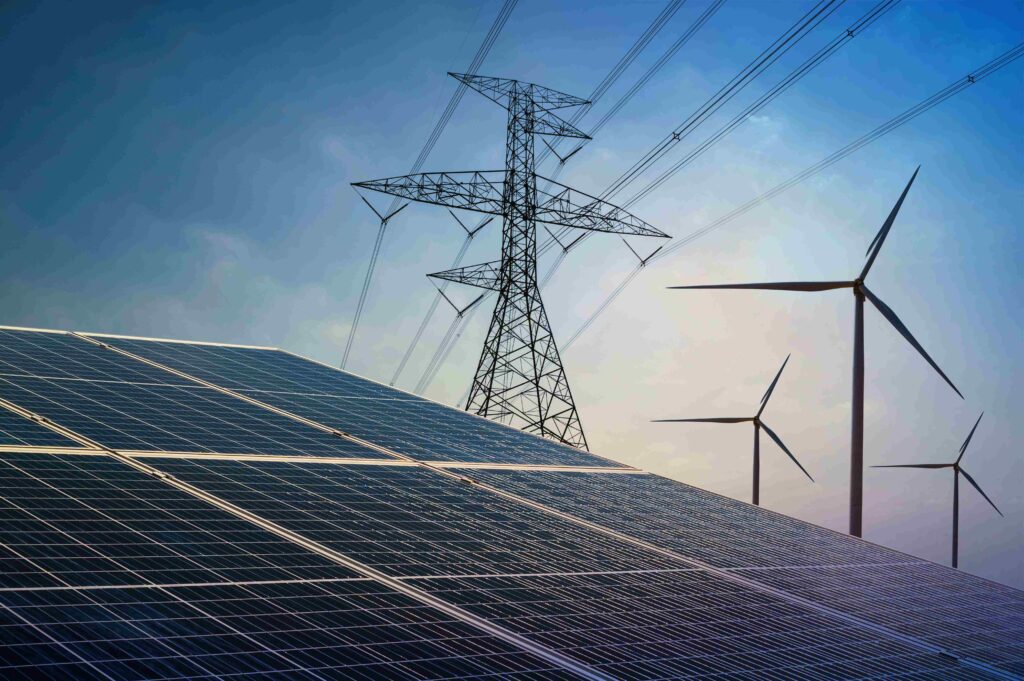
With all the advances being made to support space-based data centers, it’s possible they’ll become a significant component of enterprise data storage and processing in the years to come. But they might not replace data centers here on Earth.
“A space-based data center would need a backup,” Roberson said. “It might even be the backup,” since current technological innovations haven’t advanced enough to ensure security, latency and uptime above the clouds to the degree that we expect.
If Roberson’s vision holds true, we’re likely to see a balanced approach to data center infrastructure both on Earth and above the sky. Here on the Blue Planet, significant potential remains for making server centers greener. By using alternative energies like wind and hydrogen, and by relocating data centers to strategic locations, it’s possible to reduce the environmental impact of this kind of infrastructure.
Startup Vema’s plans for underground production of hydrogen could shift construction to areas like California, home to deep Earth iron deposits that make hydrogen extraction possible. By innovating around energy provisioning, the future for terrestrial servers can become cleaner. Nuclear energy, too, is an option; Microsoft in 2024 re-opened the nuclear power plant at Three Mile Island to provide electricity to their data centers.
Power sources are just one component of a clean data center plan. Constructing them in logical locations is also key. Currently, many sit in water-scarce areas, a fatal flaw considering data centers require massive amounts of water for air conditioning, necessary to cool off the heat-producing servers working 24/7 within them. The United States is home to a “wind belt” stretching from Texas to the Dakotas and Montana. Engineers from Cornell University posited that erecting data centers in areas with high concentrations of wind power could reduce carbon emissions and water requirements by around 80%.
Establishing a sustainable ecosystem
The future of data centers is not a binary choice between Earth and space. It is a complex ecosystem where orbital innovation contributes to future sustainability. Dassault Systèmes’ partnership with NVIDIA accelerates this motion. The two industrial giants are joining forces to use virtual twin technology and AI infrastructure for real-time, physics-informed simulations. These simulations help design and optimize data centers that are efficient, reliable and sustainable, both on Earth and in space.
 Shoshana Kranish
Shoshana is a Senior Communications Manager on the Corporate Publishing team here at Dassault Systèmes. With experience in journalism, marketing, and PR, her work has been published around the world and across the internet.