
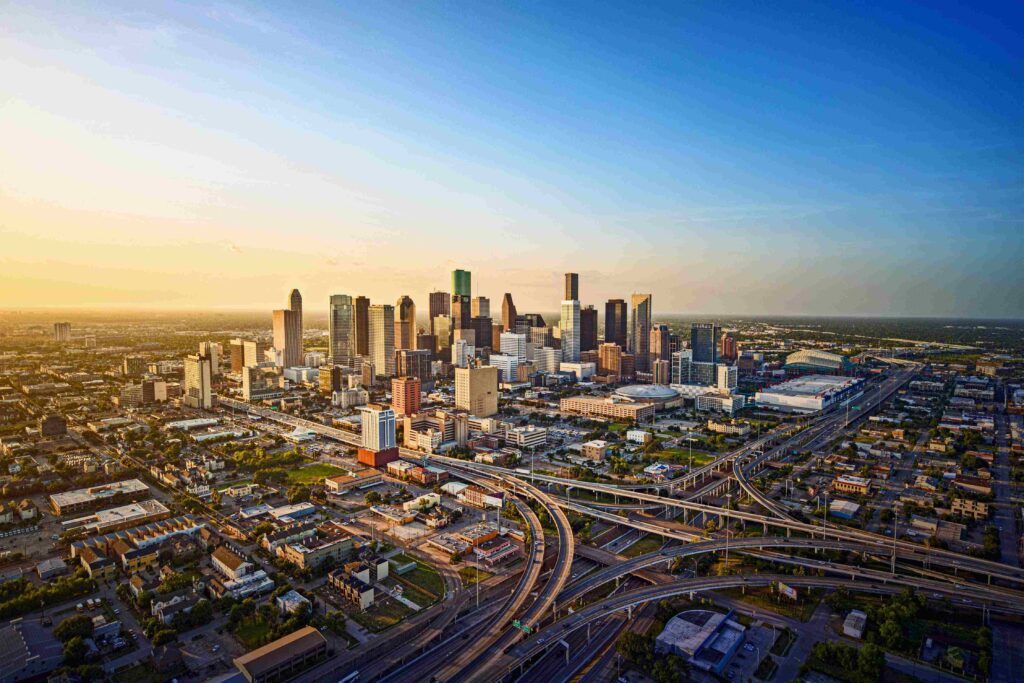
In the post-pandemic era, urban living is undergoing a transformation. Hybrid work models have largely replaced fully remote ones, yet thousands of office buildings around the world sit unused. Just like vacant houses are bad for neighborhoods, so too, are empty offices bad for cities. A space with high vacancy leads to a reduction in property value, which in turn leads to a reduction in the taxes that owners need to pay on it. For office towers that could generate millions for cities, the impact of empty spaces is massive.
But tenant-less office buildings represent much more than a tax vacuum:they hold a solution to solving global urban housing shortages. In the last few years, a new trend has taken hold in cities around the world, as office spaces are converted into apartment buildings, a phenomenon known as adaptive reuse.
This shift addresses two critical issues at once. It revitalizes quiet downtown areas and adds much-needed housing inventory to the market. Creating these vital living spaces requires complex engineering, bolstered by virtual modeling and building information management tools that can tackle the complicated nature of this kind of adaptive reuse project. The result? A unique living space that combines industrial aesthetics with modern comfort.
The scale of the vacancy problem
The numbers describing commercial vacancy are staggering. One global office space tracker found that in Europe in 2025, vacancy rates stood at 9%, up a single point from 2024. In the US, those rates were 20% for what the firm calls “non-prime” or lower-cost spaces, and 14% for “prime,” high-cost spaces. These figures represent not just empty desks, but entire floors and buildings sitting idle.
A 2023 analysis from Boston Consulting Group estimated that nearly 1 billion square feet of office space in the United States could be obsolete by the end of the decade. The future of these structures, built for a different era of work, is now at a crucial point, with only two options: adapt or decay.
Keeping these buildings empty drains city resources through reduced tax revenue and impacts local businesses that rely on foot traffic from office workers. In Boston, the projected decrease in tax revenue from empty office buildings was nearly $2 billion; in New York City, that figure is $7.6 billion. Cities depend on taxes from commercial real estate to fund all sorts of initiatives, from public transportation to sanitation to community-building, legal assistance, arts programs and more. Without this stream of revenue, the impact of dozens of empty office buildings ripples across urban locales without impunity.
Seeing these vacancies as an opportunity for transformation, though, changes the narrative entirely, from burden to potentially beneficial.
Turning desks Iinto dining rooms
The potential for office-to-home conversions is immense. Let’s consider Boston, where projects like this have been carried out successfully. ef In the capital of Massachusetts, the size of an average office building listing is between 12,000 and 29,000 square feet. If these buildings were converted into apartments, they could create between dozens of 1,000 square foot housing opportunities for hundreds of potential tenants.
Those numbers hold true across the United States. A 2023 study from the National Association of Realtors found that if just 20% of vacant office spaces in 22 major metropolitan areas in the US were converted into 1,000 square foot dwellings, over 43,000 housing units could be created. That might not sound like a lot in the grand scheme of things, but reducing housing shortages and building apartments that could house around 100,000 people would have a significant, positive economic impact on these cities.
It’s true that not every office building can make a good apartment complex. Requirements for each kind of space vary considerably, and the most important considerations for transforming offices to residential homes include grappling with layouts and natural lighting. On the other hand, it’s also true that architects, who value their own creative contributions highly, don’t necessarily want to be involved with these kinds of projects.
Despite these hurdles, developers are moving forward. In Boston, the rate at which offices were converted into residential spaces was up 160% year-over-year from 2024; Jacksonville, Florida and Omaha, Nebraska have also seen similar increases. Though the trend maybe taking shape slowly, it’s certainly on its way to becoming a major factor in urban construction projects in the years to come.
Engineering the adaptation from office to abode
Converting an office is far more intensive than a standard renovation.
Elie Beignon, an expert in the Cities & Public Services sector at Dassault Systèmes, broke the issues down into three main components: location, size and structural challenges.
“Is the location of the building favorable for conversion into a residential building? There are criteria to be met around access to public transportation, public services, etc.,” he said. “Can you overcome the challenge of optimal natural light? Can you meet regulations and requirements around evacuation and egress routes, noise insulation and HVAC?”
Different countries have different requirements for residential and commercial spaces, which means that mapping blueprints between one and the other is complex. Commercial buildings have different plumbing, electrical and HVAC requirements than residential ones. Offices typically have centralized bathrooms and kitchens, while apartments need these facilities distributed throughout every unit. The open floor plans and industrial lighting of an office do not immediately signal “home.”
All of the different teams involved in office-to-home conversions require creative solutions to handle these differences. Imagining offices as true dwellings gets a lot easier with visualization tools. While in the past, blue prints would be the tool of choice for planning space reconfiguration, the tech stack available for this kind of task has evolved considerably.
For construction teams, the benefits of today’s software options are robust. Architects and contractors can develop virtual twins not just of a particular space, but all the required components that make it up, like electrical wiring, plumbing, water lines and more. Building Information Management (BIM) tools, like those available through CATIA, can incorporate all these pieces of the puzzle and provide high levels of detail on fabrication, simulation and design processes that keep all members of the team informed.
There’s no shortage of technology available on the design side, either. Tools like HomeByMe allow users – whether individual or enterprise – to see past the drop ceilings and carpet tiles. The tool puts 3D design capabilities in the hands of users from interior decorators to contractors to the average person looking to spruce up a room or remodel a whole house. Whether starting from scratch or uploading a rendering of an existing space, users can visualize what repurposing an area will actually look like. By creating a virtual twin of a space, it’s possible to experiment with layout options before any construction begins. Designers can take a raw, open commercial floor plan and virtually install partition walls, kitchen islands and furniture. Potential tenants can get a better visual idea of how livable a former office space can truly be.
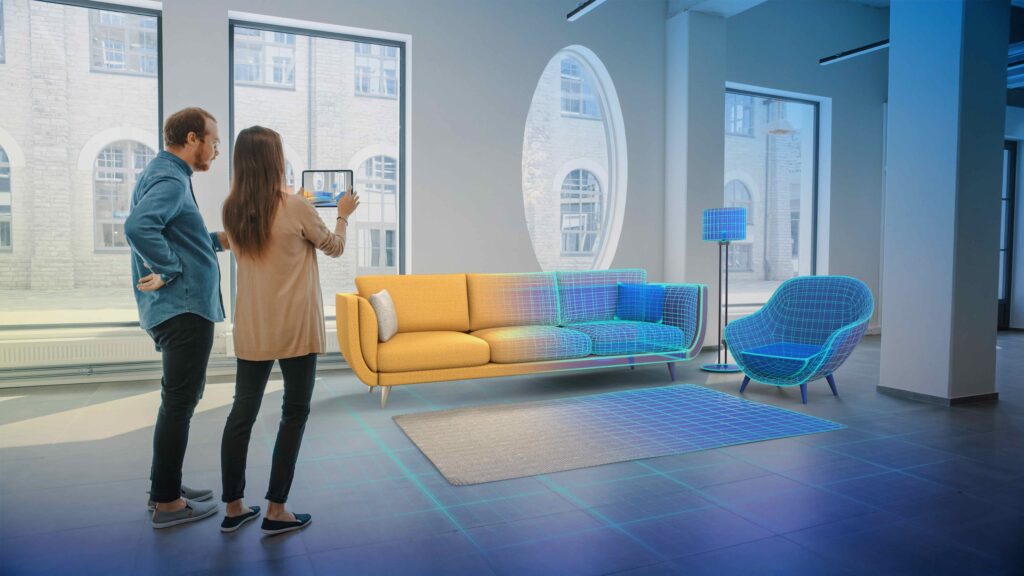
Furniture design company Gautier has been doing exactly this for years, equipping its shopfloor employees with HomeByMe to enable customers to envision how certain pieces would look in their own home. For investors, government officials, developers and potential dwellers, this kind of visualization tool makes projects like office conversions so much more appealing. It takes something that can feel cold and abstract into something living, providing a real proof of concept for the possibilities involved in these conversions.
Beignon recalled a French consortium that approached Dassault Systèmes for technological assistance during a project to determine the technical feasibility of a large-scale adaptive reuse project in France.
“They recognized us for our ability to aggregate and harmonize all the necessary data to virtually run experiment designs and investigate through generative AI thousands of design options that humans may have never thought of, ultimately quickly converging on the best, most balanced option,” he said.
Using modeling and design software for digital sketching, structural analyses and construction planning, as well as for interior design and layout management through HomeByMe, turns a high-stakes, highly complex process into one that’s more manageable. The idea of an office-to-home conversion can sound at first abstract and difficult to imagine, so removing those mental boundaries through visual, virtual methods serves to benefit all involved parties, from construction crews mapping interior infrastructure to designers planning layouts to real estate developers and potential buyers getting a solid understanding of what they’re putting their money into. These kinds of technology bridge the gap between a cold, empty shell of a building and a warm, inviting residence. They allow stakeholders to validate their design decisions instantly, reducing the risk of costly changes during the physical construction phase.
Redefining the future of urban living
The shift from cubicles to cozy corners represents the developmental trajectory of modern cities. In the 1950s, especially in the United States, there was an exodus from cities, as families moved to living in suburbs and commuting into urban areas for work. Aside from the mini-exodus during the pandemic, this trend has reversed itself, with urban populations growing at significant rates. Already today, more than 55% of people worldwide live in cities, and the United Nations projects that figure will rise to 68% in just under 15 years. To support this trend, cities need to adapt in order to meet the needs of an influx of urban residents.
Repurposing existing environments is a key factor in this transition. By giving new life to vacant infrastructure, it’s possible to address housing shortages and create sustainable, unique living environments.
Technology plays a vital role in this transition. Virtual twins can solve so many of the obstacles involved in these projects. Design woes and architectural challenges can be overcome through full-scale virtual mapping of spaces. Construction costs can be reduced through virtually configuring the different processes that need to be carried out and all the materials and manpower needed to complete them. For potential residents, exploring a virtual twin of their future home or playing around with interior design with something like HomeByMe offers an experiential approach to real estate. By integrating technologies like these into the planning process, converting office spaces into residential ones becomes a much less daunting endeavor.
 Shoshana Kranish
Shoshana is a Senior Communications Manager on the Corporate Publishing team here at Dassault Systèmes. With experience in journalism, marketing, and PR, her work has been published around the world and across the internet.