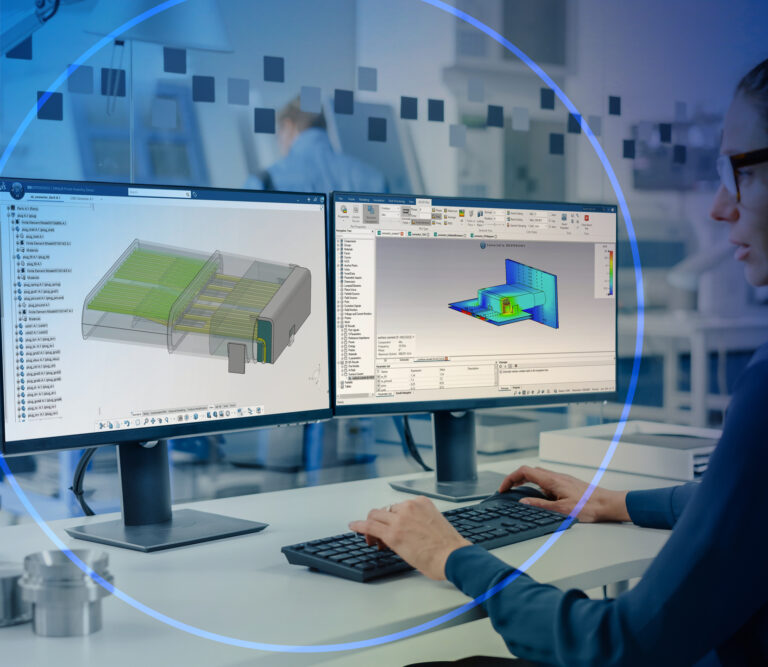
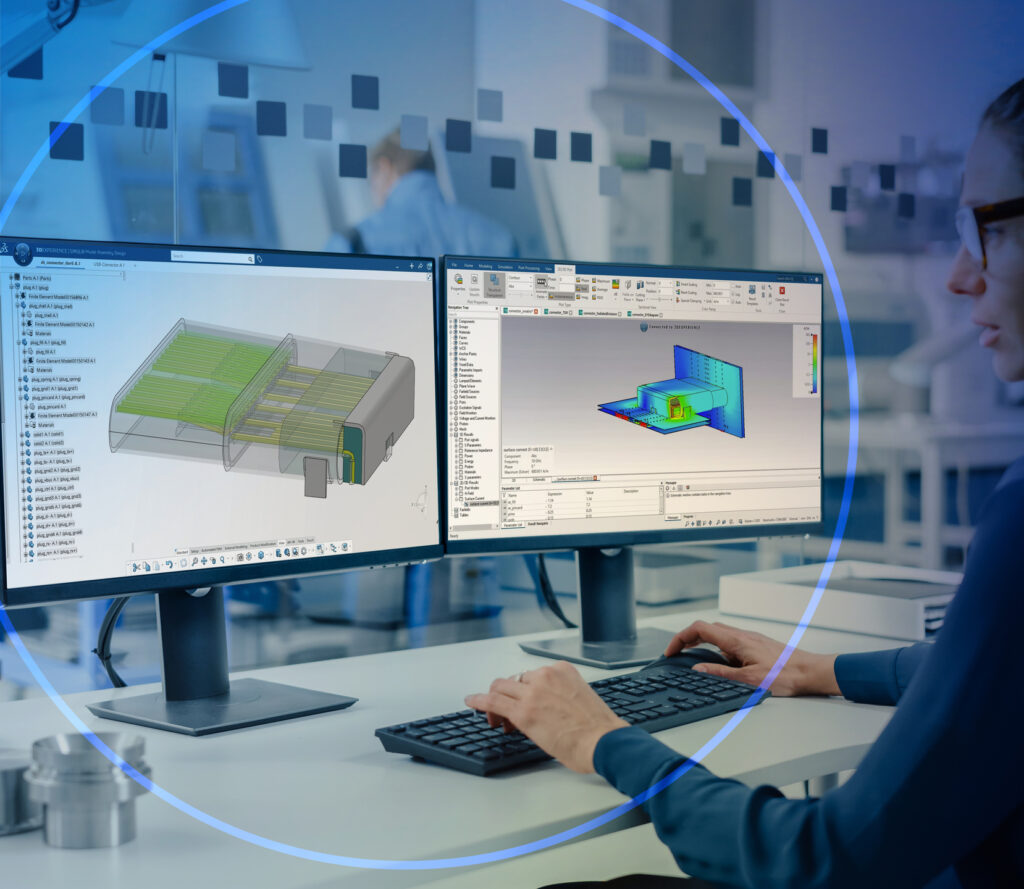
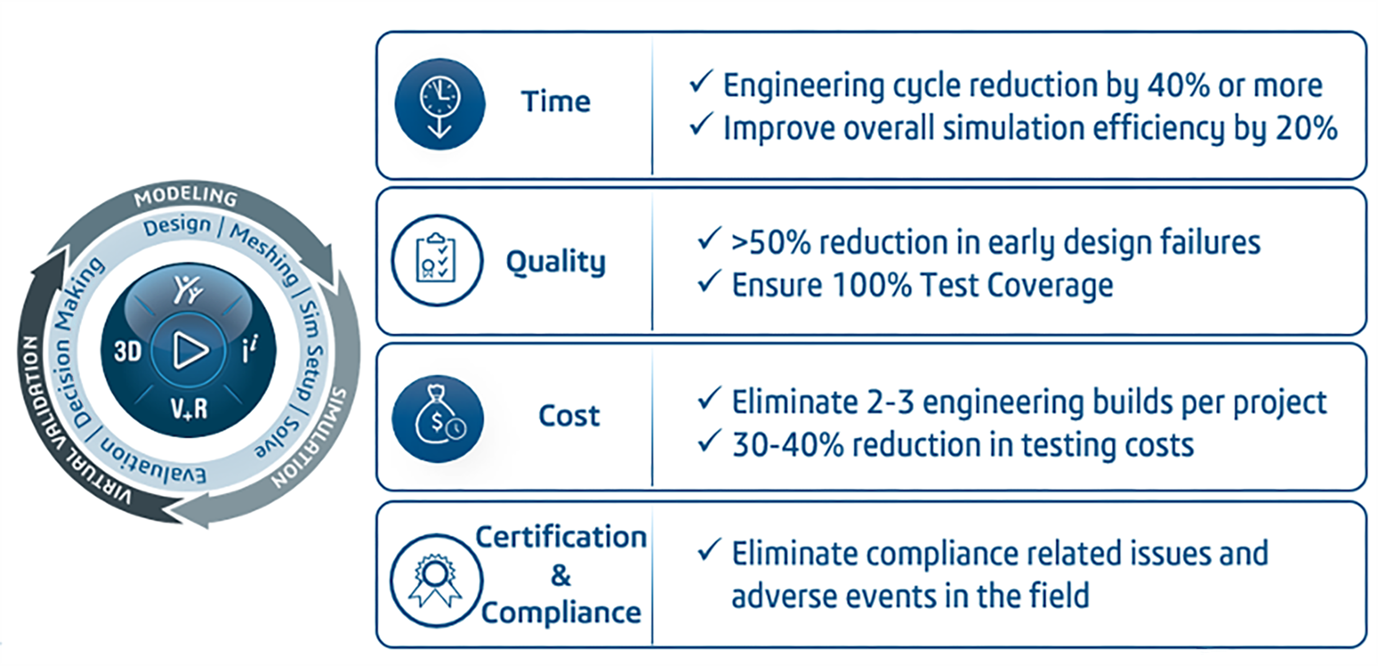
High-tech innovation moves fast. Product development cycles for smart electronic devices now average just three to four months. Yet engineering teams face a massive hurdle. Studies show that over 70% of simulation time goes toward non-value-added tasks like model cleanup or manual meshing.
Traditional sequential workflows cannot keep up. Disconnected tools lead to wasteful handoffs and slow iteration loops. This prevents teams from simultaneously optimizing for structural integrity, thermal performance and signal integrity. The industry needs a new approach. It requires a strategy that unifies modeling, simulation and artificial intelligence.
The Three Pillars of Generative Simulation
You can view a generative simulation strategy as the braiding of three capabilities into a single framework. This approach combines AI technologies, integrated modeling and advanced exploration methods. It generates optimal design results efficiently.
The three essential components include:
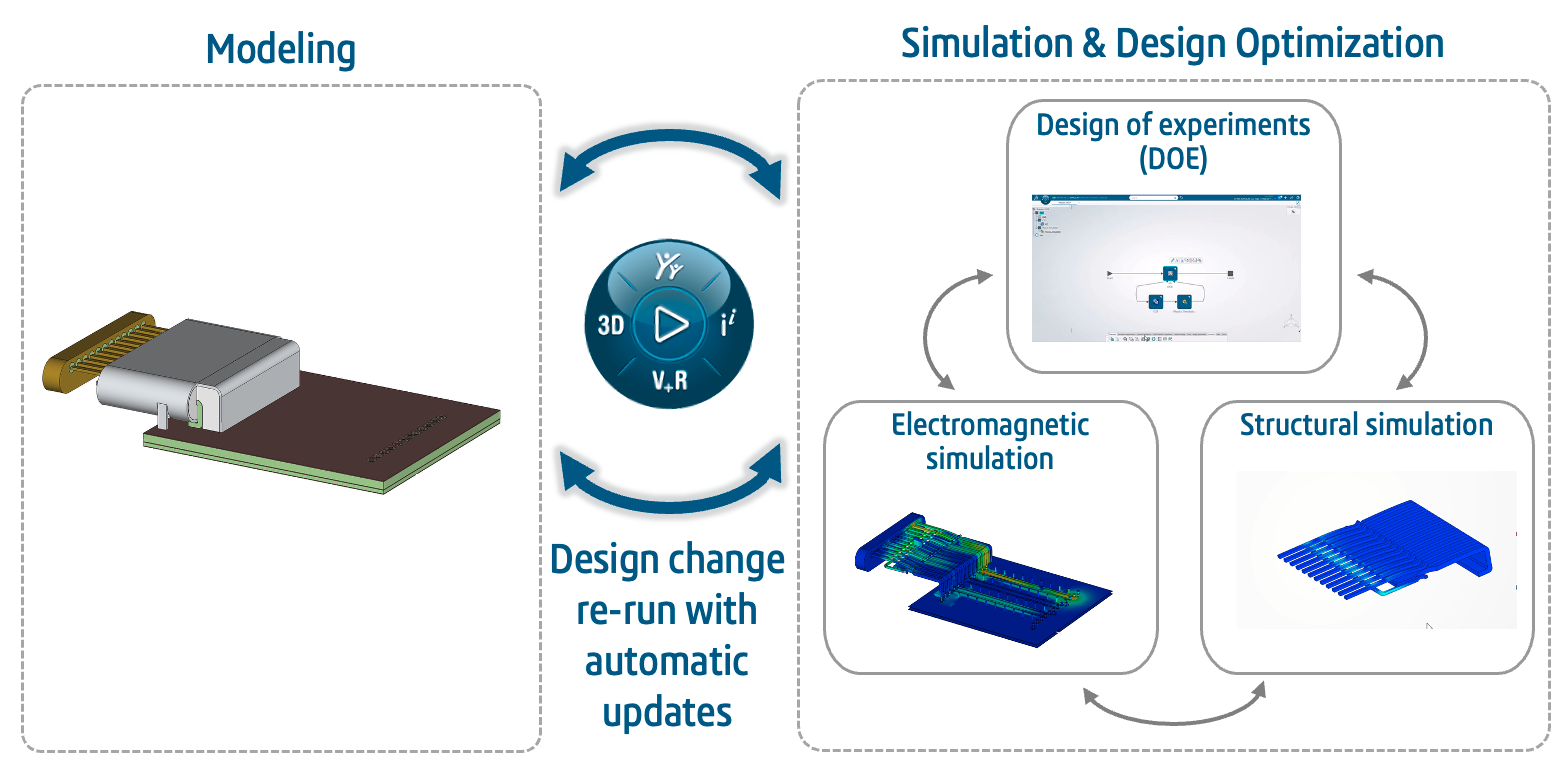
- Unified Modeling and Simulation: This removes data exports and handoffs. Teams receive real-time feedback as designs and simulations evolve together rather than in isolated stages.
- AI-Powered Assistance: Optimization algorithms and machine learning streamline simulation setup. This guides intelligent design exploration. Teams can generate designs that meet multiple performance KPIs early in the process.
- Collaborative Environment: A central repository secures intellectual property. It ensures a single source of truth for all data. This includes models, parameters and materials.
Consider a high-speed connector design for a smart device. Engineers must balance electromagnetic compatibility (EMC) with structural reliability. In a disconnected workflow, every CAD update forces a model rebuild. A unified platform instantly updates the parametric CAD model across all disciplines. The EMC engineer runs signal integrity checks while the structural engineer evaluates insertion forces. This integrated process minimizes the need for physical prototypes and shortens development time.
Applying AI and Machine Learning
AI and machine learning (ML) introduce new ways to improve the user experience for experts. You can use AI-powered assistance to guide the simulation process. One option is using Virtual Twin Physics Behavior. These provide a data-driven approximation of complex physics-based simulations. Trained on a curated set of results, they predict performance much faster. This allows designers and engineers to explore a vast range of design options without running computationally intensive simulations.
Case Study: EMC Shielding vs. Thermal Management
Designers often need to balance conflicting requirements. Electronic devices need metallic enclosures for EMC shielding. They also need ventilation apertures for thermal cooling. However, ventilation reduces shielding effectiveness.
Performing a full parametric study for all variables is costly. An effective method breaks the problem down. You can run two focused Design of Experiments (DOE). One focuses on thermal performance. The other focuses on electromagnetic shielding. You then construct two machine learning models.
These models allow you to perform a trade-off study efficiently. In one example, this approach reduced total simulation time by a factor of 121 compared to a full parametric optimization. The ML models maintained high accuracy while enabling rapid design balancing.
Unified modeling and simulation stores models and results using one common data model on the 3DEXPERIENCE platform. It serves as the single source of truth, ensuring transparency and concurrent access to project details and status, as required, thereby enabling collaboration across multidisciplinary teams. By capturing and supplying technical and simulation knowledge & know-how, it speeds up simulation processes and supports the democratization of simulation.
Future-Proofing Your Engineering Stack
The generative simulation strategy represents a paradigm shift. It fuses unified modeling with machine learning technologies. This approach accelerates time-to-market and drives continuous innovation.
The synergy between data-driven AI and physics-based simulations will only deepen. Future advancements will focus on automated model calibration and training AI to understand physical laws. Organizations that adopt this unified approach now will gain measurable advantages. These include reduced development cycles, fewer physical prototypes and higher design quality. Learn more and download our whitepaper, Transforming High-Tech Innovation with Generative Simulation.

Katie is the Editor of the SIMULIA blog, an expert in engineering and scientific communication, and a strategic digital marketer. Katie has a BA in English and Writing from the University of Rhode Island and a MS in Technical Communication from Northeastern University. She is also a proud SIMULIA advocate, passionate about democratizing simulation for all audiences. Katie is a native Rhode Islander who lives just outside of her favorite city, Providence. She is a true New Englander and loves sharing all the cool things NE has to offer. She enjoys a variety of hobbies including history, astronomy, science/technology, science fiction, true crime, fashion and anything associated with nature and the outdoors. She is also mom to a 6-year old budding engineer and two crazy rescue pups.