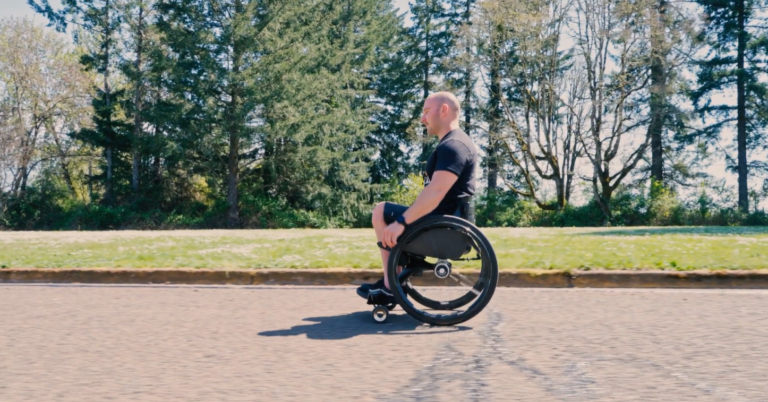
Founded by Christian Bagg after a life-changing snowboarding accident left him paralyzed from the waist down, Bowhead was built on a simple belief: everyone deserves the freedom to explore the outdoors. Today, that mission drives every engineering decision the company makes.
Challenge
Bowhead’s mission requires engineering products that balance innovative, ergonomic designs with uncompromising reliability. Unlike a conventional bicycle, a failure in an adaptive bike or wheelchair can leave a rider stranded, making every design decision critical. The company also needed to reduce dependence on physical prototypes, streamline collaboration with manufacturing partners and accelerate product development without compromising quality.
Solution
Bowhead leveraged SIMULIA on the 3DEXPERIENCE platform throughout its product development process. Using the Durability and Mechanics Engineer role, engineers validated structural performance, optimized stiffness and identified fatigue failures before building prototypes. The Plastic Injection Engineer role enabled the team to predict manufacturing defects such as weld lines and sink marks early in development, giving engineers greater confidence in their designs while improving collaboration with manufacturing partners.
Results
Simulation increased Bowhead’s confidence in every design while reducing the number of physical iterations needed to achieve production-ready products. The engineering team reduced one critical seat insert redesign from five physical iterations to a single simulation-driven iteration, increasing durability from 16,000 cycles to more than 200,000 cycles to meet reliability requirements. By validating structural performance and manufacturability virtually, Bowhead improved collaboration with manufacturing partners by 20%, helping accelerate product development while reducing costly downstream changes.
Bowhead is a company on a mission. Founded in Calgary, Canada, in 2018, it revolutionizes the adaptive community by creating products that help everybody get outdoors and live a no-limits life. “The outdoors should be accessible to everybody,” says Bagg. “There shouldn’t be anything that limits you from leading the lifestyle that you want.” That mission shapes how Bowhead approaches engineering. The company’s products enable people to lead lives they otherwise couldn’t, and that responsibility raises the stakes for every part of the team’s design. Engineers must continually push product innovation while ensuring every design is reliable, manufacturable and ready for real-world use.
A Higher Standard for Reliability
For most cyclists, a mechanical failure is an inconvenience. If a chain comes off, you push the bike home and fix it later. Bowhead’s users don’t have that option. Sanket Patil, Senior Mechanical Engineer at Bowhead, learned this firsthand while working on the Bowhead Rogue. A rider went out for a test ride and, within minutes, sent a text back to the Bowhead team: “the bike broke, got stuck, come rescue.” A linkage holding the rear suspension had suffered a fatigue failure. “Our products have to be reliable to an extreme level,” Patil says. “Our users simply can’t get off their bikes and push them home. That’s when I realized how very important it is for us to engineer our products using all the best tools available, like SIMULIA.”
Bowhead makes four bike products, plus the Bowhead Era, a wheelchair unlike anything else in the world. As the company has grown, so has the challenge. Bowhead sets the bar for adaptive mobility. Each new product has to be lighter, stronger and more durable than the last.
Engineering Confidence Through Simulation
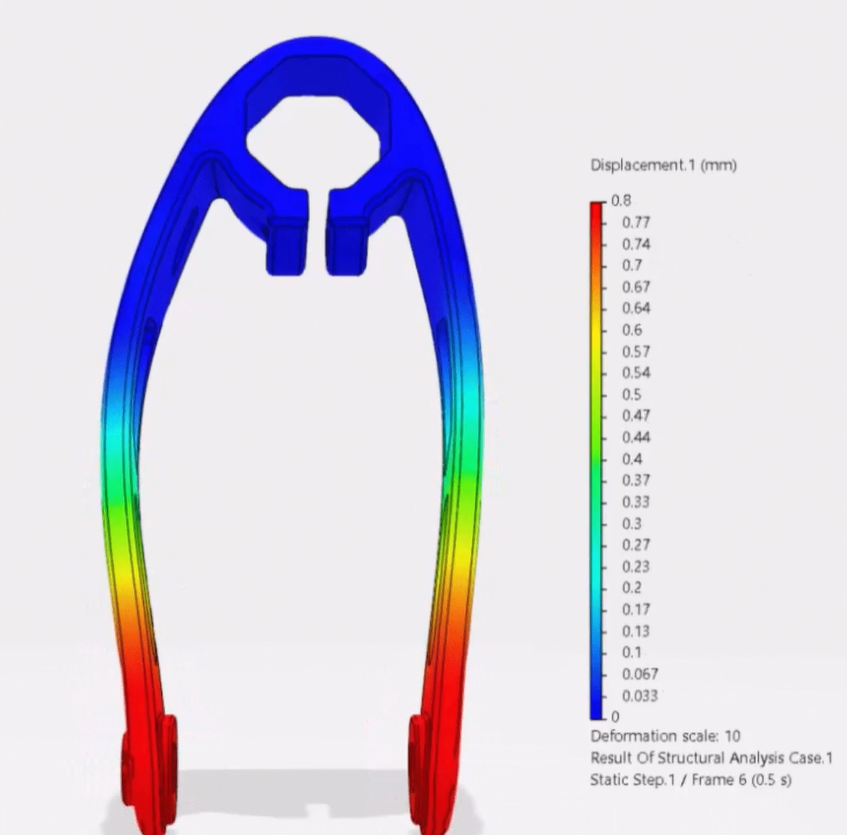
Developing the Bowhead Era’s carbon-composite seatpost illustrates why physical testing alone wasn’t enough. As Bowhead introduced increasingly lightweight, ergonomic designs, traditional trial-and-error development made it difficult to move quickly without sacrificing confidence. The Era seat insert became the perfect example of how simulation could transform the company’s engineering process. The wheelchair’s carbon-composite seatpost bonds to an aluminum seat insert. During testing, that seat insert failed consistently at 16,000 cycles. The team tried to redesign it, but it kept failing at the same point. Medical device regulations required the wheelchair to last 200,000 cycles without any failure.
Before adopting simulation, Bowhead’s engineers worked largely in the dark. They knew the use cases and the forces acting on the bike, but diagnosing why a specific part failed was difficult. “Sometimes a customer reaches out saying their part broke and sends an image,” Patil says. “It’s really hard to diagnose what happened by just looking at an image. So, we were almost always over-engineering our products.”
Simulation changed that. Using the Durability and Mechanics Engineer role on the 3DEXPERIENCE platform, the team conducted a fatigue analysis. The results revealed critical areas that matched exactly where the part was failing. “We added material around these areas and made the design stronger,” Patil says. “When we tested the next time around, there were no failures. It lasted more than 200,000 cycles. Before we used SIMULIA, we had made five iterations. When we utilized simulation, it was just one iteration, and we were done.”
Faster Iteration, Tighter Collaboration
Simulation on the platform does more than catch failures. It compresses the design cycle. Faster iteration doesn’t simply save engineering time; it gives Bowhead the confidence to pursue more ambitious designs. Instead of waiting for multiple rounds of prototypes to validate new ideas, engineers can evaluate concepts virtually, identify potential issues earlier and refine products before they reach manufacturing. The result is higher first-pass design success and a faster path from concept to production.
“That’s where simulation and SIMULIA have come to play a huge role at Bowhead,” Bagg says. “We’re able to iterate that much faster. And so, our leaps forward are that much quicker.”
A key advantage is the integration between CAD and simulation. In Patil’s previous experience, every design change forced him to rebuild the simulation from scratch because the software couldn’t recognize the changes. “The simulation on the platform recognizes the changes in the CAD and keeps your boundary conditions and your abstractions intact,” Patil says. “All you need to do is run the simulation and wait for it to show if that particular design iteration is good enough.”
Plastic Injection Engineer
Plastic parts present their own challenges. Designing them is time-intensive because engineers rely heavily on manufacturing vendors, which creates constant back-and-forth communication. “You approach the problem from a design point of view, whereas your vendor is approaching it from a manufacturing point of view,” Patil says. “Because of this dichotomy, it ends up taking a lot of time to arrive at a mold design that’s agreeable to both.”
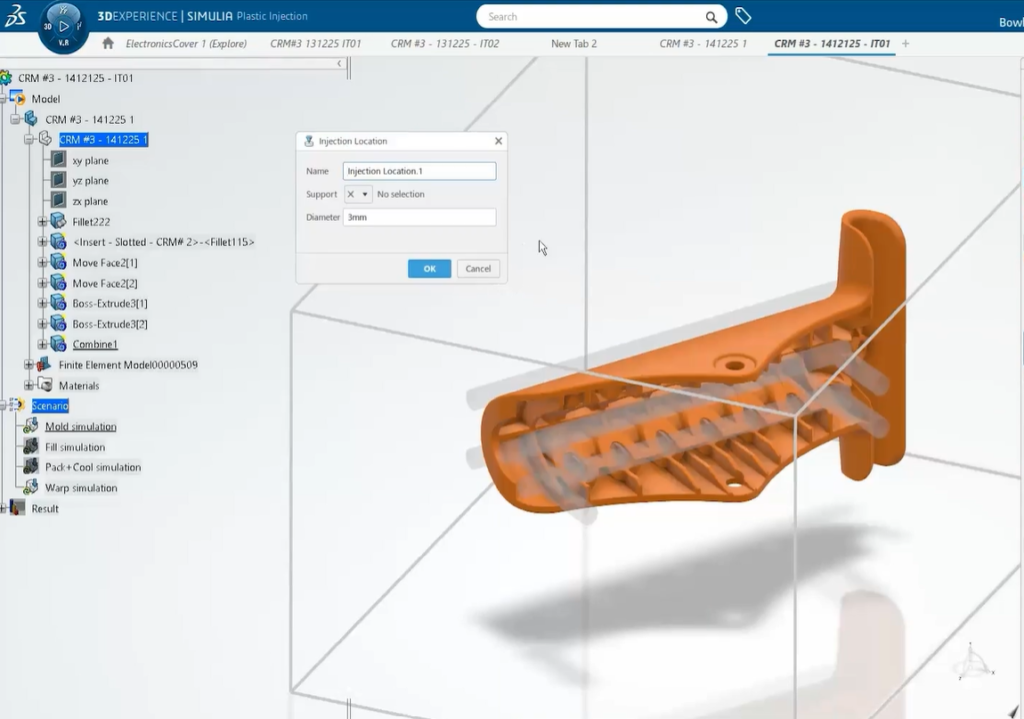
The Plastic Injection Engineer role shifts control back to the design engineer. Patil used it to simulate the calf rest mount on the Bowhead Era, a part that addresses spasticity, an involuntary spasm in the lower limb that most wheelchairs don’t account for. With injection molding simulation, Patil could see the effects of changing the gating location in real time. He could predict weld lines, warpage and residual stresses before any tooling existed. “You’re able to determine the optimal location of your gating to reduce weld lines and other defects like warpage,” Patil says. This matters because vacuum-cast prototypes don’t reveal everything. The injection molding process itself can compromise part strength through weld lines and residual stresses that a prototype won’t show. “What you get in prototyping might not really be representative of the part you get when you actually injection mold,” Patil says. “Simulation helps you understand what those potential defects could be and mitigate them early in the design process.”
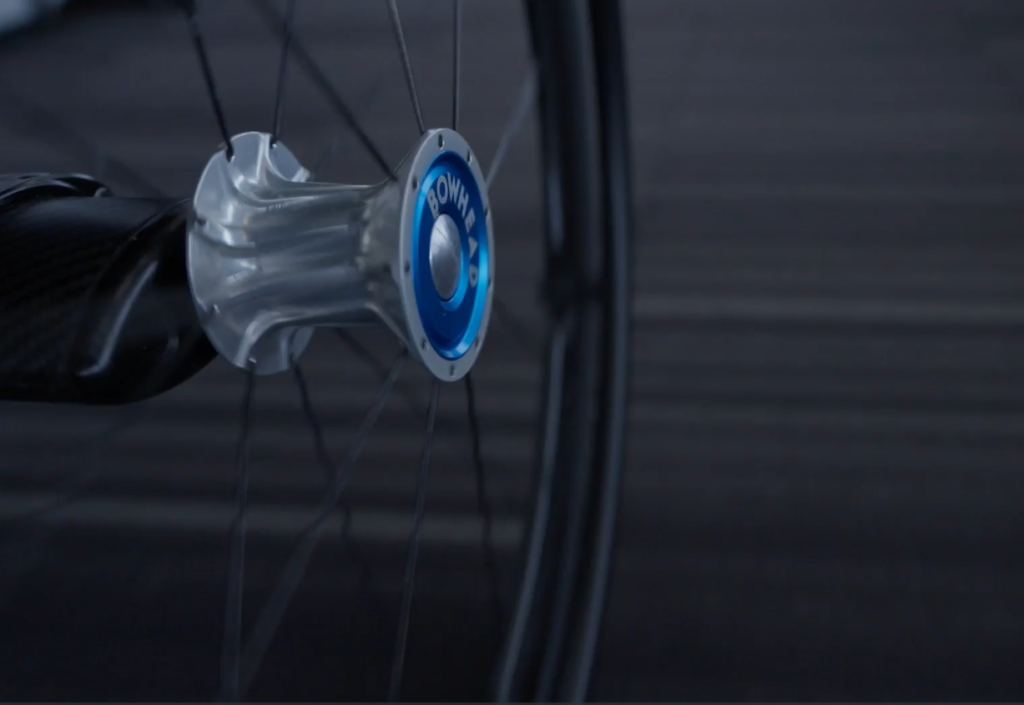
Early insight during development strengthens collaboration with manufacturing partners. “Plastic Injection Engineer helps you have better conversations with your vendor. It brings the design engineer back in control of the part,” Patil says. Rather than reacting to tooling issues after production begins, Bowhead can work proactively with suppliers using simulation results to resolve concerns earlier in the process. That collaboration reduces costly downstream changes while helping products reach production more efficiently.
Diagnosing Field Failures
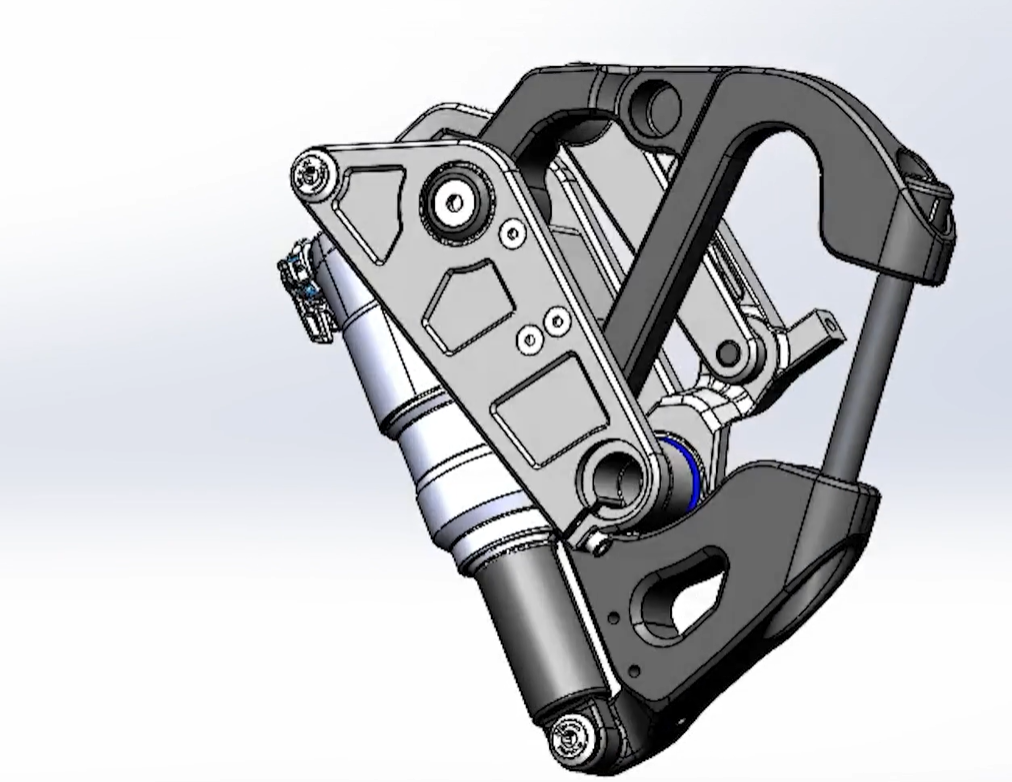
Simulation also helps Bowhead solve problems after products ship. Field failures are hard to diagnose from a photo sent over email or WhatsApp. When suspension brackets on the Reach rear end started failing, the team suspected a fatigue or impact failure. Using simulation roles on the platform, they recreated the exact failure. “That helped us understand the loading conditions and the failure mechanisms,” Patil says. “We made design changes that improved the rear suspension of the Reach bike. There’s been no failures ever since.”
Building Trust Through Engineering
The adaptive equipment space has traditionally seen little innovation. Since customers need their wheelchairs, manufacturers have faced less pressure to push the technology forward. Bowhead takes the opposite approach, and simulation is central to it. “For Bowhead, the value of showing the customer what’s behind the curtain, how deeply we care about the products and how deeply we focus on them, simulate them, test them, that really lends to their confidence and their trust in us as a company,” Bagg says.

Better engineering also closes a visible aesthetic gap. For years, adaptive products looked very different from mainstream consumer goods. A mountain bike features carbon fiber, industrial design and flowing lines. The first adaptive mountain bike simply did the job without much thought to its appearance. Today, simulation has become more than an engineering tool at Bowhead. It enables the company to innovate faster, build greater confidence into every design and collaborate more effectively with manufacturing partners, all while delivering great products that customers trust with their independence.
Looking Ahead
Bowhead’s future plans are ambitious and exciting. Patil is especially excited about building a digital twin of the test lab. The goal is to run virtual drop tests and drum tests, doing 80 to 90 percent of the work using simulation before committing time, money and energy to physical prototypes. For Bagg, the path forward is wide open. “I’m really excited to see five years from now where we are. That’s the beauty of the future and the path we’re on. We don’t know where it’ll take us. That’s the exciting part.”
“Simulation has drastically increased the reliability and durability of our products,” Patil says. “Our Bowhead products are for life.”
FAQs
Bowhead Design Corp. was founded in Calgary, Canada, in 2018 by Christian Bagg. Bagg was paralyzed from the waist down in a snowboarding accident. The company makes adaptive mobility products, including four bike products and the Bowhead Era wheelchair, so people with disabilities can get outdoors. A failure can leave a rider stranded. As Senior Mechanical Engineer Sanket Patil puts it, “Our users simply can’t get off their bikes and push them home.”
Engineers use two roles. The Durability and Mechanics Engineer role validates structural performance, optimizes stiffness and finds fatigue failures before prototypes are built. The Plastic Injection Engineer role predicts manufacturing defects such as weld lines, sink marks and warpage early in development.
The aluminum seat insert kept failing at 16,000 cycles, and medical device regulations required 200,000 cycles without failure. A fatigue analysis showed the critical areas, which matched where the part was failing. The team added material there, and the redesign lasted more than 200,000 cycles. Before simulation it had taken five physical iterations. With simulation it took one.
Designers think about function and vendors think about manufacturing, so reaching a mold design both sides accept used to mean a lot of back-and-forth. With the Plastic Injection Engineer role, Bowhead can see the effect of changes such as gating location before any tooling exists. Engineers bring simulation results to vendor conversations, which helped improve collaboration with manufacturing partners by 20%.
Yes. When suspension brackets on the Reach rear end started failing, the team recreated the failure in simulation and identified the loading conditions and failure mechanisms. The design changes they made have led to no failures since.
Patil is looking at building a digital twin of the test lab. The goal is to run virtual drop tests and drum tests, doing 80 to 90 percent of the work in simulation before committing to physical prototypes.

Katie is the Editor of the SIMULIA blog, an expert in engineering and scientific communication, and a strategic digital marketer. Katie has a BA in English and Writing from the University of Rhode Island and a MS in Technical Communication from Northeastern University. She is also a proud SIMULIA advocate, passionate about democratizing simulation for all audiences. Katie is a native Rhode Islander who lives just outside of her favorite city, Providence. She is a true New Englander and loves sharing all the cool things NE has to offer. She enjoys a variety of hobbies including history, astronomy, science/technology, science fiction, true crime, fashion and anything associated with nature and the outdoors. She is also mom to a 6-year old budding engineer and two crazy rescue pups.