German automaker BMW uses SIMULIA Abaqus, Simpack and Tosca tools to simulate the performance of lightweight electric drivetrain systems with complex roller bearing interactions
Challenge
BMW faced the challenge of developing lightweight, safe and efficient electric drivetrain systems. It needed tools to capture the complex behavior of roller bearing seats – the part of a component that supports a roller bearing – under real-world conditions.
Solution
By leveraging SIMULIA technology, including Abaqus, Simpack and Tosca, BMW engineers created detailed system-level simulations of electric drive systems, including highly accurate modeling of roller bearing behavior under realistic operating loads.
Results
- Achieved reliable system-level simulations of complex electric drivetrain systems
- Prevented system failures such as excessive noise, friction and housing breakage
- Eliminated guesswork in early design stages
- Provided a solid foundation for transitioning to the 3DEXPERIENCE platform
—
For over 100 years, German automaker BMW has been committed to advancing the automotive industry by solving complex engineering problems. Now, its engineers face what is perhaps their biggest challenge yet: Reimagining vehicle systems for a fully electric future.
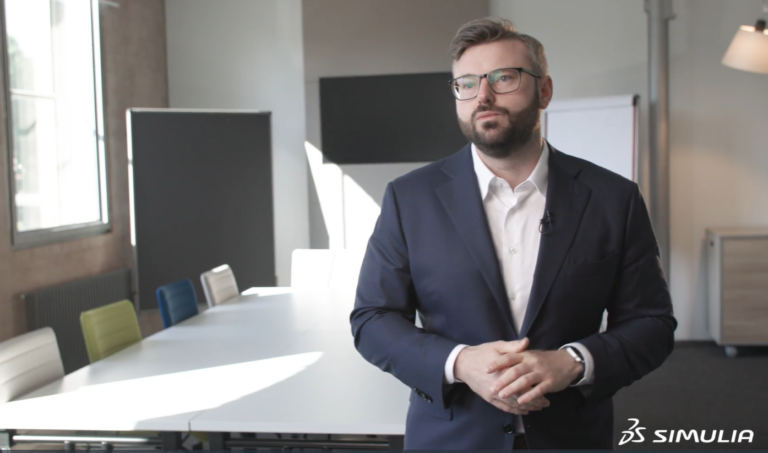
Norbert Schroeder, a simulation specialist at BMW and a SIMULIA 2025 Champion, is working at the heart of the industry’s transformation. “Originally, I worked in combustion engine development,” he said at the recent EuroCentral 2025 SIMULIA Regional User Meeting, which took place in Bamberg, Germany.“We used to simulate traditional engines – mainly isolated components like the crankshaft. But with electric drivetrains, everything is integrated. The rotor, gearbox, housing and electromagnetics must be considered as one system.”
This integration demands a new approach to simulation. “The detail of each part may get smaller, but the scope of what you have to consider becomes much broader,” Norbert said. “That’s where system-level simulation becomes essential.”
Norbert is uncompromising in his choice of simulation tools, having used SIMULIA products since university; first Abaqus and shortly after Simpack. Today, he regularly works with the latest versions of Abaqus for nonlinear and contact problems, Simpack for engine-related multi-body dynamics and Tosca for topology and non-parametric optimization.
In isolation, these solutions are incredibly effective. But it’s their combined capabilities that Norbert believes set them apart. “It’s a fully integrated workflow,” he said. “There’s a huge benefit when you combine tools from the same ecosystem. That synergy really boosts outcomes.”
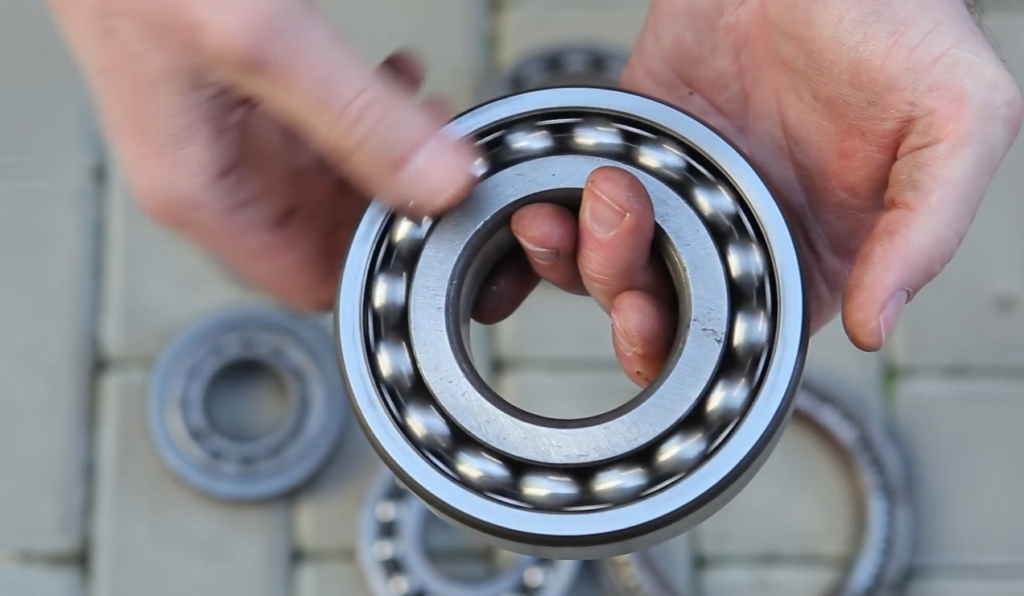
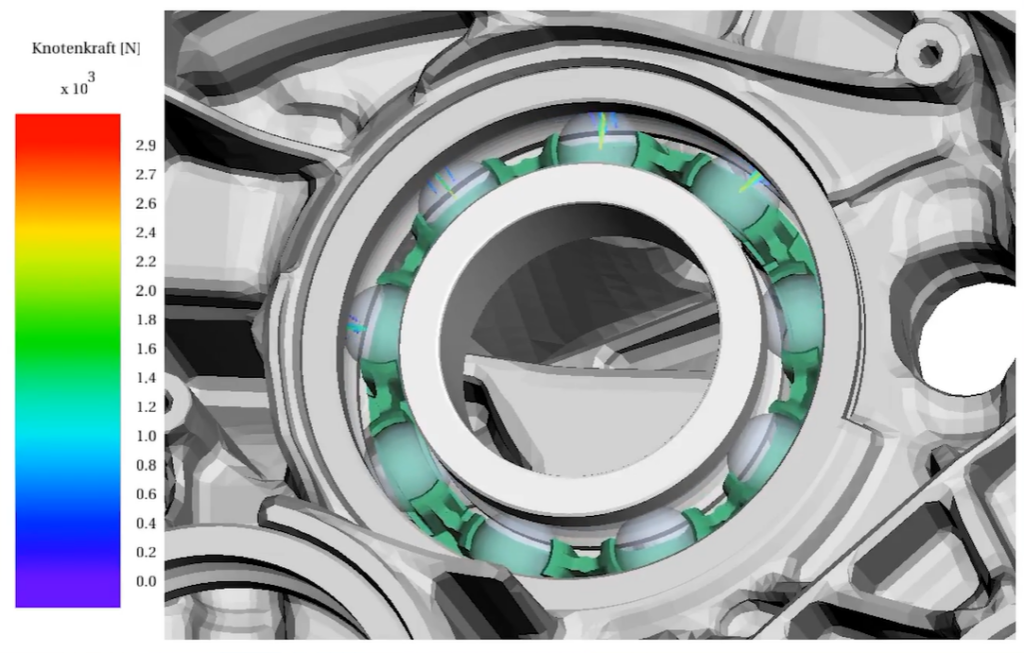
Using these SIMULIA solutions, Norbert and his team can tackle some of the most demanding areas of electric drive simulation like roller bearing seat design, for example. A roller bearing seat is the part of a component (usually a casing) that supports a roller bearing – a type of bearing that uses rolling elements to reduce friction and support loads.
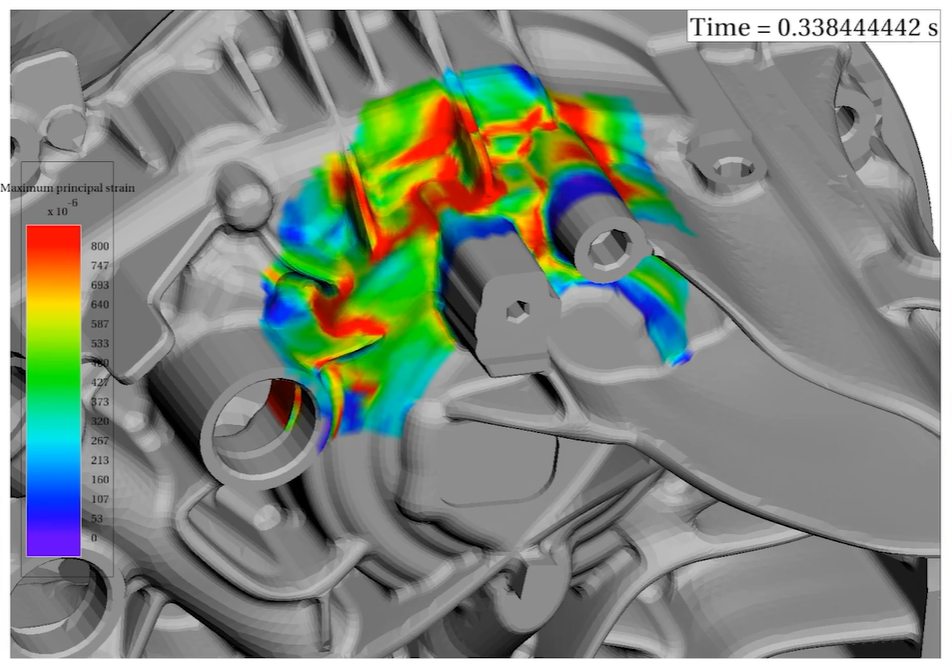
“In traditional engines, large stiff bearing seats absorbed the loads,” Norbert said. “However, in lightweight electric vehicle structures, we must reduce the housing weight. But that also reduces stiffness. We’re pushing things to their limits, so now we need highly detailed roller bearing models to ensure safety.”
Using simulation tools, BMW engineers can model precisely how the rollers in the bearings apply force to the outer ring, and how that force transfers to the gearbox cover. “These components must be precisely supported within the housing,” Norbert said. “If we get it wrong, the system can get too noisy, produce excess friction, or even fail.”
To ensure the accuracy of their simulations, Norbert and his team rely on a sequential coupled process. “We use Simpack to calculate system-level forces, Abaqus to compute the structural response and Tosca to optimize the design based on those forces,” Norbert said.
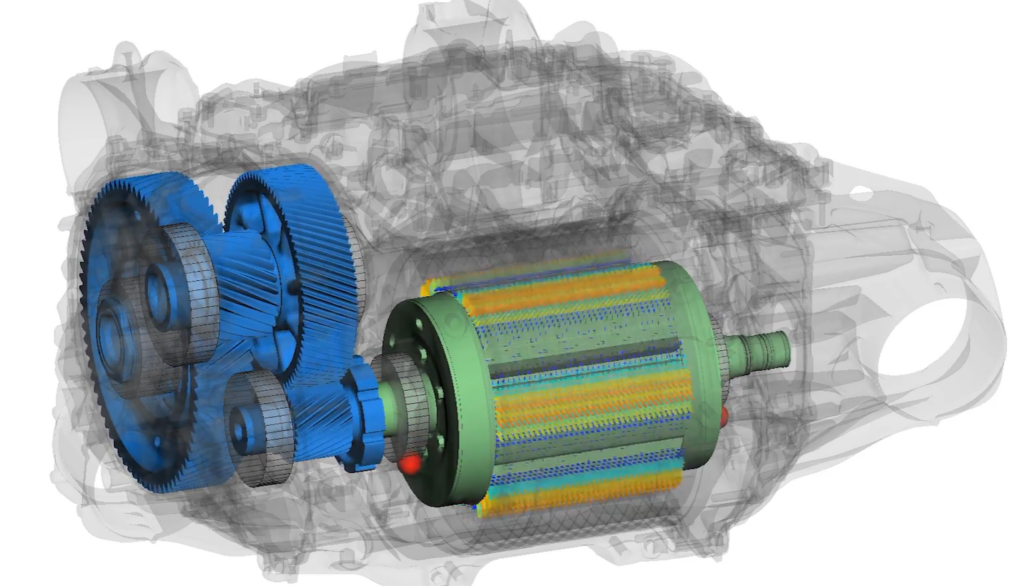
Simulation doesn’t just help BMW validate its designs – it delivers insights that physical testing alone can’t uncover. “There are cases where, without simulation, we wouldn’t even know what the problem was,” Norbert said. “Simulation doesn’t just shorten development – it enables it.”
For the team at BMW, simulation has become a trusted stand-in for real-world testing. “We’re very confident in our simulations,” Norbert said. “In some cases, we can apply cleaner boundary conditions virtually than we can in physical testing.”
As the further electrification of the automotive industry brings more challenges, Norbert is confident that SIMULIA simulation solutions will help BMW find more innovative solutions. “The future lies in multiphysics,” he said. “It’s a very challenging – but necessary – field, especially for battery development. Moving to the 3DEXPERIENCE platform is key. We’re using SIMULIA to adapt our well-established workflows to that platform, which allows us to reuse them effectively in future projects.”

Interested in the latest in simulation? Looking for advice and best practices? Want to discuss simulation with fellow users and Dassault Systèmes experts? The SIMULIA Community is the place to find the latest resources for SIMULIA software and to collaborate with other users. The key that unlocks the door of innovative thinking and knowledge building, the SIMULIA Community provides you with the tools you need to expand your knowledge, whenever and wherever.

Katie is the Editor of the SIMULIA blog, an expert in engineering and scientific communication, and a strategic digital marketer. Katie has a BA in English and Writing from the University of Rhode Island and a MS in Technical Communication from Northeastern University. She is also a proud SIMULIA advocate, passionate about democratizing simulation for all audiences. Katie is a native Rhode Islander who lives just outside of her favorite city, Providence. She is a true New Englander and loves sharing all the cool things NE has to offer. She enjoys a variety of hobbies including history, astronomy, science/technology, science fiction, true crime, fashion and anything associated with nature and the outdoors. She is also mom to a 6-year old budding engineer and two crazy rescue pups.