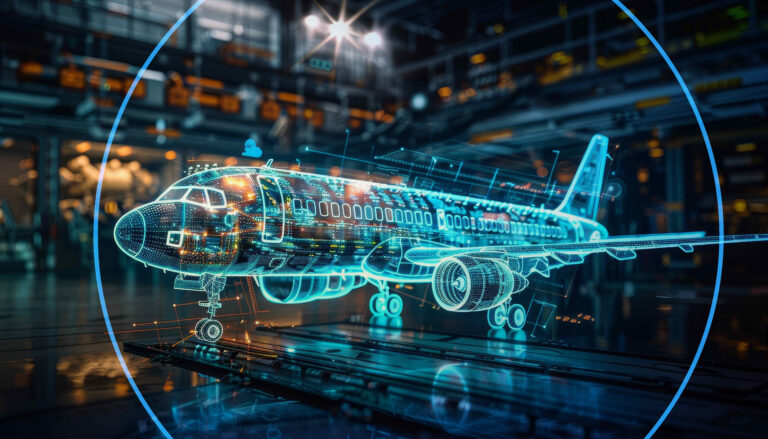
The aviation industry faces an existential paradox. On one hand, global connectivity is essential for economic growth and social cohesion. On the other, the environmental cost of air travel is no longer sustainable. For decades, the engineering consensus was that battery-electric propulsion for commercial flight was a distant dream—limited by weight, range and the laws of physics.
That consensus was wrong.
We are currently witnessing a paradigm shift in aerospace engineering. The challenge is no longer about waiting for a magical breakthrough in battery chemistry; it is about optimizing the integration of existing technology. To achieve net zero, manufacturers must do more than simply swap a jet engine for an electric motor. They must fundamentally rethink the aircraft architecture.
This level of complexity cannot be managed within traditional silos. Leading innovators are proving that the only way to solve the equation of lower emissions, range and reliability is through the use of high-fidelity Virtual Twins.
Breaking the “Impossible” Physics Barrier
For years, industry skeptics argued that battery-electric aircraft would be relegated to small, short-range hoppers. They claimed the energy density required for larger passenger loads simply didn’t exist.
Elysian Aircraft, a Netherlands-based pioneer, is dismantling this myth. The company is currently developing the E9X, a 90-seat battery-electric aircraft capable of flying over 800 kilometers on a single charge. Elysian isn’t relying on futuristic batteries; it is relying on superior design integration.
Using the 3DEXPERIENCE platform on the cloud, Elysian’s engineers can simulate the structural and thermal implications of integrating batteries directly into the wings. This design choice lightens the fuselage and improves aerodynamics, but it introduces complex challenges regarding high-voltage transmission and thermal runaway.
By creating a Virtual Twin of the aircraft, Elysian can:
- Simulate performance: Test battery behavior under varying temperatures and discharge rates without physical prototyping.
- Optimize Aerodynamics: Validate the structural integrity of a larger wing span required for electric efficiency.
- Create a Single Source of Truth: Ensure that lessons learned from digital simulations were instantly fed back into the master design.
As Daniel Rosen Jacobson, Elysian’s co-CEO, stated, “Most people thought it would not be possible to fly with larger aircraft commercially on batteries. We found a way to do it.”
Revitalizing Regional Connectivity
The push for sustainability also opens the door to democratizing air travel. Regional connectivity has suffered in recent years due to the high operating costs of conventional fossil-fuel aircraft.
Vaeridion, a German aircraft manufacturer, is tackling this by designing the Microliner, a nine-passenger electric aircraft intended to connect up to 2,300 airports across Europe. Its goal is to make regional travel sustainable, affordable and accessible.
Speed to market is critical for startups like Vaeridion. However, the aviation industry is heavily regulated, and “move fast and break things” is not a viable strategy when passenger safety is on the line. Vaeridion utilizes the 3DEXPERIENCE platform to parallel-path its engineering and its certification.
By integrating ENOVIA for project management and CATIA for design, Vaeridion established a framework where certification data is traceable from the very first sketch. This allows the company to de-risk their certification strategy with EASA (European Union Aviation Safety Agency) long before a physical prototype takes flight.
“The 3DEXPERIENCE platform allowed us to accelerate development while keeping processes simple and effective for the company of our scale,” notes Ivor Van Dartel, CEO & Co-Founder of Vaeridion.
Sustainability as a Lifecycle Strategy, Not a Checkbox
A common pitfall in modern manufacturing is treating sustainability as a final compliance step. True sustainable innovation requires embedding these principles across the entire product development lifecycle—from the initial sketch to the factory floor and eventually to the aftermarket.
Deutsche Aircraft provides a textbook example of this holistic approach with its D328eco, a next-generation turboprop designed to run on Sustainable Aviation Fuel (SAF). The company’s objective is to deliver jet-level comfort with significantly lower emissions.
Deutsche Aircraft leverages the Virtual Twin not just for aerodynamics, but to optimize its entire industrial system.
- Immersive Collaboration: Using the 3DLive app and Apple Vision Pro, suppliers and customers can step into a full-scale virtual model of the aircraft, visualizing cabin layouts and assembly lines to reduce miscommunication and waste.
- Manufacturing Efficiency: By virtually engineering its carbon-neutral assembly line in Leipzig, the company can plan material flow and resource allocation to minimize energy consumption during production.
- Flight Testing: Engineers fly the aircraft virtually before the physical prototype leaves the hangar, reducing the risk and carbon footprint of the flight test campaign.
Nico Neumann, CEO of Deutsche Aircraft, puts it succinctly: “Sustainability comes from doing things smarter. When you reduce fuel consumption and improve efficiency across certification and production, you’re also reducing waste, effort and emissions. It’s all connected.”
The Path Forward
The transition to sustainable aviation is not a future ambition; it is an active engineering reality. The data is clear: Virtual Twin technologies have the potential to unlock $1.2 trillion of economic value and reduce global CO2e emissions by 7.5 gigatons by 2030.
Companies like Elysian, Vaeridion, and Deutsche Aircraft are not waiting for the future to arrive. They are designing it. By leveraging a unified platform that connects design, simulation, and manufacturing, they are proving that we do not have to choose between connectivity and the climate.
To meet your sustainability goals, you need more than good intentions. You need the right tools.
Learn more about how ENOVIA solutions can help you meet your sustainability goals.

Lisa serves as ENOVIA Marketing Senior Manager on the ENOVIA User Advocacy team. Lisa manages customer reference development and supports the ENOVIA Champions Program.