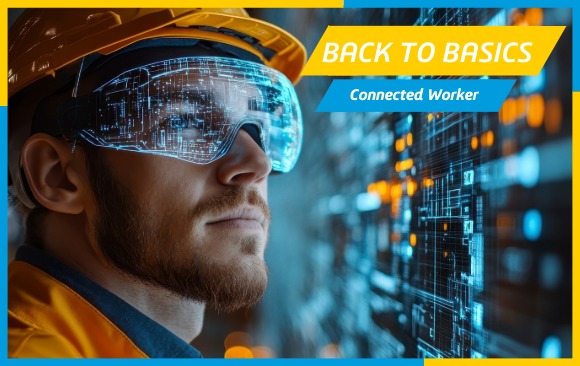
What is a Connected Worker
A connected worker is a frontline employee who uses digital technologies such as mobile devices, wearables, and IoT sensors to stay integrated with their team, equipment, and work processes in real-time. This approach prioritizes giving workers the right information at the exact point of action, replacing traditional paper-based manuals and siloed communication.
In fact, the modern industrial landscape is undergoing a significant transformation with a connected worker at the heart of this evolution. This concept moves beyond simple device usage to create an integrated ecosystem where people, data and machinery interact seamlessly. In this article, you will understand how the connected worker is fundamental to navigating the future of industrial operations and unlocking new levels of productivity and safety.
What Does it Mean to be Connected at Work?
It means using tools to link the worker to the broader operational environment, including colleagues, managers and intelligent systems. By bridging the gap between the physical and digital worlds, connected workers can execute tasks with greater precision, efficiency and awareness. This integration is a cornerstone of Industry 4.0, transforming traditional labor into a dynamic, data-driven function.
The Technology Enabling the Connected Worker
The power of the connected worker comes from a suite of integrated technologies. These tools work together to capture, process and deliver critical information directly to the point of action.
Mobile Devices and Wearables
Smartphones, tablets and specialized handheld devices are the primary interfaces for many connected workers. They provide access to digital work instructions, data entry forms, and communication platforms. Wearable technology, such as smart glasses, smartwatches and sensor-embedded apparel, takes this a step further. As a result, smart glasses can overlay digital information onto a worker’s field of view, while biometric sensors can monitor health and safety indicators, providing immediate alerts for fatigue or environmental hazards.
Internet of Things (IoT)
IoT devices are the sensory organs of the connected ecosystem. Sensors embedded in machinery, equipment and the physical environment collect vast amounts of data on performance, location and operational status. This information is streamed to a central platform, giving connected workers unprecedented visibility. For example, a technician can receive an alert that a machine is vibrating abnormally, allowing for preemptive maintenance before a failure occurs.
Cloud and Edge Computing
Cloud platforms provide the scalable infrastructure needed to store and analyze the massive datasets generated by IoT devices and worker interactions. They enable centralized management of applications and data, making information accessible from any location. Edge computing complements the cloud by processing data closer to its source. This reduces latency and is critical for applications requiring real-time responses, such as automated safety shutdowns or immediate feedback on an assembly line.
Augmented Reality (AR) and Virtual Reality (VR)
Augmented Reality enhances a worker’s perception by superimposing digital content onto the real world. A maintenance worker wearing AR glasses can see step-by-step repair instructions or view the internal components of a machine without disassembling it. Virtual reality provides fully immersive digital environments for training. New manufacturing employees can learn to operate complex machinery or practice emergency procedures in a safe, simulated setting, significantly reducing training time and risks.
Benefits of a Connected Workforce
Integrating connected worker solutions delivers tangible improvements across safety, efficiency and operational intelligence. These benefits are realized across diverse sectors, from the factory floor to the hospital ward.
Enhanced Operational Efficiency
Connected workers eliminate wasted time and motion. Digital checklists replace paper-based forms, automating data entry and reducing errors. Real-time access to work orders, schematics and expert support means less time spent searching for information. In a warehouse, for example, a connected worker with an AR-enabled device is guided along the most efficient route to pick items, scan them automatically and update inventory levels instantly. This direct access to information streamlines workflows and boosts throughput.
Improved Safety and Compliance
Safety is a primary driver for connected worker adoption. Geofencing can alert workers and supervisors when someone enters a restricted or hazardous area. Biometric sensors can monitor vital signs for signs of heat stress or overexertion, prompting preventative breaks. In the event of an incident, lone worker devices can automatically send an alert with the worker’s exact location, enabling a faster emergency response. This proactive approach to safety minimizes risks and helps organizations maintain strict compliance with regulatory standards.
Data-Driven Decision-Making
By capturing data at every step of a process, connected worker platforms provide managers with a detailed, real-time view of operations. This information reveals bottlenecks, identifies areas for process improvement and validates the effectiveness of new procedures. A manufacturing supervisor can analyze production data from connected workers to pinpoint which assembly station is underperforming and why. This level of granular insight empowers leaders to make informed decisions that optimize performance and resource allocation.
The Future of the Connected Worker in Industry 4.0
The role of the connected worker will only expand as industries continue their digital transformation. As technologies like 5G, artificial intelligence (AI), and advanced robotics mature, the capabilities of the connected workforce will grow exponentially. AI algorithms will analyze data from connected workers to predict machine failures with even greater accuracy and provide personalized, context-aware instructions.
In the next phase of Industry 4.0, the connected worker will become the central hub of a collaborative ecosystem that includes autonomous robots and intelligent systems. They will not be replaced by automation, but rather elevated by it, focusing on complex problem-solving, oversight and exception handling that still require human ingenuity. This human-machine collaboration is the key to creating resilient, agile and highly productive industrial operations.
What is a Connected Worker Platform?
A connected worker platform serves as the comprehensive digital foundation that enables frontline employees to access real-time data, collaborate seamlessly and execute tasks with precision. These integrated systems combine mobile applications, cloud-based analytics and IoT connectivity to transform how teams operate across manufacturing, maintenance, and quality assurance processes.
Therefore, these platforms, unlike traditional software solutions, create a unified digital workspace where workers can receive step-by-step guidance, report issues instantly and share knowledge across the organization. For manufacturers seeking better decisions and less waste, the platform captures every interaction and process step, generating valuable insights that drive continuous improvement on the shop floor.
Finding Connected Platforms
Ultimately, investing in a connected workforce is an investment in a more intelligent and efficient future. By empowering frontline employees with the right digital tools, organizations can drive continuous improvement, foster a stronger safety culture and secure a competitive advantage in an increasingly connected world.
Discover how DELMIA supports and builds the workforce of the future with AI, AR, automation and Virtual Twin technologies with a Smart Connected Worker Platform.
DELMIA’s Back to Basics blog series is your go-to resource for foundational insights into manufacturing, operations, and supply chain management. Designed for both newcomers and those seeking a refresher, this series delves into core topics and addresses key industry questions. Explore the essentials with DELMIA today.
 Prashanth Mysore
Senior Director for Strategic Business Development, DELMIA