Every supply chain manager knows the sinking feeling of a sudden order spike that the warehouse can’t fulfill. Conversely, staring at warehouses of unsold products gathering dust is equally frustrating. These scenarios are symptoms of the same problem: a disconnect between what you expected to happen and reality.
The solution lies in robust demand planning. It is the compass that guides the rest of the supply chain journey. Without it, you are navigating blind.
Demand planning is more than just guessing sales numbers. It is a strategic process that aligns your company’s output with market needs. When done correctly, it transforms a reactive supply chain into a lean and agile powerhouse. This shift is essential for mastering inventory planning, optimizing production, and keeping customers happy.
Here is how demand planning acts as the backbone of a successful, modern supply chain.
The Foundation of Accurate Demand Forecasting
At the heart of demand planning sits accurate forecasting. This isn’t about having a crystal ball; it is about leveraging comprehensive data to create a reliable roadmap for future production and distribution.
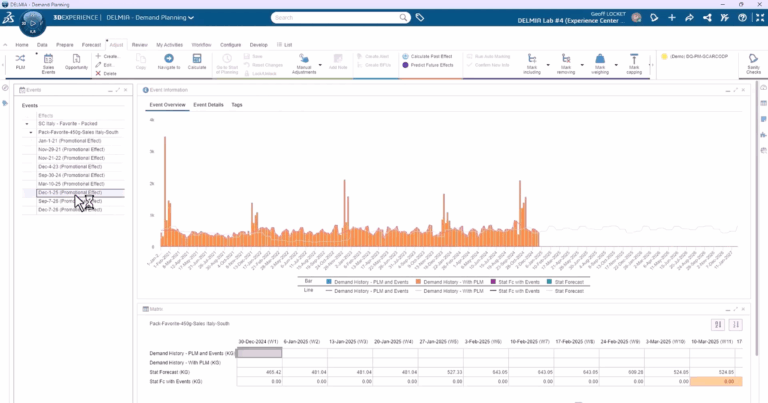
Accurate demand forecasting uses a wide scope of data, including historical sales data, market trends, field inputs and seasonality to predict what customers will want and when they will want it. The most effective forecasts incorporate both historical and real-time qualitative data to provide insights.
Leveraging Data Analysis and Market Research
Modern demand planning utilizes data analytics and advanced artificial intelligence. By leveraging AI techniques, like machine learning, to analyze patterns, businesses can identify fluctuations caused by external factors, such as economic shifts or changing consumer preferences. Market research adds another layer of understanding. Measuring competitor activity and emerging trends allows you to adjust forecasts before changes hit the market.
The Role of Collaboration
Data is only one piece of the puzzle. Internal collaboration is vital. Sales teams often have on-the-ground insights that algorithms might miss. Marketing teams know about upcoming promotions that will spike demand. When these departments share information with demand planners, the forecast accuracy improves dramatically. This alignment ensures that production, procurement, and distribution are all aligned and working toward the same goals.
Achieving Optimal Inventory Planning
One of the most direct benefits of demand planning is its impact on inventory planning. Striking the balance between “too much” and “not enough” is the perennial challenge of supply chain management.
Avoiding the Extremes
Without a clear demand plan, businesses often fall into the trap of overstocking to be safe. This “just in case” mentality leads to bloated warehouses and tied-up capital. On the flip side, understocking leads to stockouts and missed revenue. Effective demand planning provides accurate targets needed to maintain optimal stock levels. You know exactly how much safety stock is required based on forecast variability, rather than gut feeling.
Financial Health and Cash Flow
Effective inventory planning does more than just clear up shelf space; it frees up cash. Inventory is literally money sitting on a shelf. When you align your stock levels with actual demand, you reduce carrying costs significantly. You also minimize the risk of inventory obsolescence—products that become outdated before they can be sold. By reducing wastage and holding only what is necessary, you improve the organization’s overall cash flow position.
Driving Efficient Production Planning
For manufacturers, the demand plan is the trigger for the entire production line. It dictates what to make, when to make it, and in what quantities.
Optimizing Schedules and Resources
When production managers have a reliable view of future demand, they can create stable, efficient schedules. They avoid the chaos of last-minute “fire drills” where production lines must be stopped and retooled for rush orders. A steady schedule allows for better utilization of machinery and labor. You avoid paying overtime for rush jobs one week, only to have idle workers the next.
Managing Raw Materials
Production efficiency also depends on having the right raw materials on hand. Demand planning ripples backward through the bill of materials. It ensures that the necessary components are available exactly when production is scheduled to begin. This synchronization reduces lead times significantly. The factory becomes more responsive to customer orders because the groundwork has already been laid based on the forecast.
Streamlining Procurement and Supplier Management
Your suppliers are critical partners in your success. Demand planning gives you the ability to treat them as such, rather than simply reacting to your immediate needs.
Negotiating Power
When you can share a long-term forecast with your suppliers, you gain leverage. Suppliers prefer predictable orders. If you can commit to specific volumes over six months or a year based on your demand plan, you are in a stronger position to negotiate better pricing or payment terms.
Reducing Lead Times and Ensuring Consistency
Surprise orders are difficult for suppliers to fulfill, often leading to delays. By anticipating future demand, you give your suppliers the lead time they need to produce high-quality materials. This consistency ensures a steady flow of materials into your production facility. It removes the friction from procurement, transforming it from a transactional headache into a strategic advantage.
The Ripple Effect on Customer Satisfaction
Ultimately, the supply chain exists to serve the customer. No matter how efficient your internal processes are, if the customer doesn’t get their product on time, the system has failed. Demand planning is a key driver of customer happiness.
Minimizing Stockouts
There are few things more frustrating for a customer than seeing “Out of Stock” on a product they intend to buy. In a competitive market, that customer will simply click over to a competitor. By aligning inventory with predicted demand, you ensure product availability. The right products are in the right place at the right time.
Improving the Experience
Beyond just availability, demand planning reduces order fulfillment delays. When the warehouse is stocked correctly and production is running smoothly, orders ship faster. This reliability builds trust. Satisfied customers become loyal customers. They are more likely to make repeat purchases and recommend your brand to others. In this way, supply chain efficiency directly fuels revenue growth.
Unlocking Cost Reduction and Operational Efficiency
While we have touched on costs in previous sections, the financial impact of demand planning deserves specific focus. It is one of the most effective tools for stripping waste out of an operation.
Resource Optimization
Every part of the supply chain consumes resources—labor, energy, storage space, and capital. Demand planning ensures these resources are used only when necessary. You don’t pay for warehouse space for products that won’t sell for six months. You don’t pay for expedited air freight because you forgot to order raw materials.
Profitability Through Precision
The costs associated with excess inventory are high. There are storage fees, insurance, taxes, and the eventual cost of discounting or destroying unsold goods. By tightening inventory planning through better forecasts, these costs evaporate. The result is a leaner operation with higher profit margins. Every dollar saved in supply chain inefficiency is a dollar added directly to the bottom line.
Fostering Collaborative Supply Chain Management
The modern supply chain is an ecosystem. It involves suppliers, manufacturers, distributors, logistics providers, and retailers. Demand planning acts as the common language that allows these diverse partners to communicate.
Breaking Down Silos
In many organizations, departments work in silos. Sales chases revenue, operations chases efficiency, and procurement chases cost savings. Demand planning forces these groups to synchronize their activities.
Synchronizing Logistics
This collaboration extends outside the company walls. When you share demand forecasts with logistics partners, they can plan their trucking and shipping capacity better. This leads to streamlined logistics and lower freight costs. Open communication and data visibility allow the entire chain to react to changes as a single unit rather than a disjointed collection of companies.
Conclusion
Demand planning is not a trivial, or isolated process; it is the strategic engine of supply chain management. It connects the dots between what the market wants and what your business does.
By investing in accurate forecasting, businesses can master inventory planning, streamline production, and negotiate better with suppliers. The result is a more resilient supply chain that costs less to operate and serves customers better.
For organizations looking to thrive in a volatile market, the path forward is clear. Move away from reactive guessing and embrace data-driven demand planning. Your bottom line—and your customers—will thank you.
DELMIA, a Dassault Systèmes brand, transforms supply chain planning and operations by connecting the virtual and real worlds through the 3DEXPERIENCE platform. Our solutions enable businesses to model, simulate and optimize a virtual twin of the supply chain, delivering resilient and efficient planning across horizons. By combining virtual twins with trusted industrial AI and advanced optimization, DELMIA provides real-time, explainable insights for smarter decision-making, reducing waste and improving agility. From end-to-end planning through detailed scheduling and execution, we empower organizations to adapt to disruptions, enhance sustainability and deliver exceptional customer experiences across the entire value chain.

Adrian Wood has been the Director of Strategic Business Development for the DELMIA brand at Dassault Systèmes since 2019. He is responsible for developing new and innovative business markets and reinforcing the company position as an innovative leader in key industries.